“All my life I’d lived out of step and synch with the larger world, forever tottering on borders and fault lines.”
By combining all three books of the John Turner trilogy under one title, author James Sallis creates one of the most unforgettable characters ever created, in a series of stunning, connected novels. However dramatic, skillfully developed, and intelligently written each novel is separately (and one could argue convincingly that each of these is individually a prize-winner deserving of the best of the year award for noir fiction), the idea of reading them all in one package is a no-brainer.
Sallis is a writer of the first order, one of the best contemporary novelists in America today–and I say “novelists,” without adding any limitations, such as “mystery writer,” “thriller writer,” or “southern gothic writer.” Sallis is a writer so good that he should be known by every lover of dark literary fiction in America by now.
Sallis’s novels are bleak, even noir, versions of what he and his characters see as reality. Cypress Grove, the first in the series, introduces Turner, a man who was a soldier, a Memphis cop turned convict, then therapist, who has decided to escape from the pressure cooker of big city police work and go to the boondocks, far from Memphis. When local Sheriff Lonnie Bates, a continuing character in the series, asks for his help solving a murder, Turner reluctantly agrees.

In Cripple Creek, the second novel, he is also drawn into the investigation of local crime when a routine traffic stop uncovers a satchel with two hundred thousand dollars in the car of a speeder. “Goombahs” from Memphis organized crime attack the station house to release a prisoner from jail, and Sheriff Lonnie Bates and his daughter are seriously injured. As acting sheriff, Turner investigates, making some serious enemies.
The concluding novel, Salt River, takes place two years later. Turner, by now, has seen and done it all. Though he has remained in Cripple Creek, his life is dark, sad, and full of the knowledge that unexpected horrors can cripple, if not kill, even the most flickering of one’s personal hopes. As he investigates a car theft involving the son of the sheriff, a murder near a utopian commune in the hills, and  the possible kidnapping of the sheriff’s wife, Turner shows us that life is messy, that people’s lives are always unfinished stories, and that all one can do is muddle through, with little expectation that one’s efforts will bear fruit. “There are mountain men or cowboys inside us all, Henry David Thoreau and Clint Eastwood riding double in our bloodstreams and our dreams.”
Spare with details and minimalist in style, Sallis emphasizes characters in these intelligent and compressed novels of ideas and identity. Every word counts here, even when those words are not adding to the plot. Sallis’s lean, mean style reflects both his main character’s personality and that style of noir writing in which events are presented and the reader is left to draw conclusions.

Through flashbacks and flashforwards, he shows Turner in action, a man genuinely kind and empathetic, at the same time that he is violent and filled with bloodlust. Beautifully crafted, carefully written, and stylistically unforgettable, Sallis’s John Turner series creates one of the most fascinating characters in contemporary mystery writing.
ALSO by James Sallis: THE KILLER IS DYING, DRIVE, DRIVEN (the sequel to DRIVE), OTHERS OF MY KIND, WILLNOT, SARAH JANE
Photos, in order: The author’s photo is from his website: http://www.jamessallis.com
The Loveless Market is in rural Tennessee, outside Nashville: http://www.igougo.com
The town center of Bradford, Tennesse, is, perhaps, similar to Cripple Creek: http://www.anniesolomon.com
 hose who are interested in reading about the sociological underpinnings of the current rebellion in Egypt will be interested in a novel which has been the best-selling novel in the Middle East for the past two years. It is also the basis of a blockbuster film.
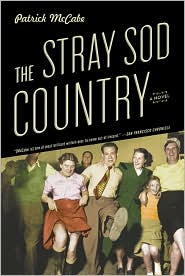 r Patrick McCabe became world famous in 1992 with the publication of The Butcher Boy, a psychological study of a young schoolboy whose tormented inner world, combined with the extreme cruelty he faces in the outside world, eventually leads to his descent into madness and murder. Winner of the Irish Times Best Novel of the Year Award for that novel, McCabe followed up his success with The Dead School (1995), a novel about two teachers, also facing extreme real world stresses, both of whom also waste their lives in madness or near-madness. Other novels, such as Call Me the Breeze (2003) and Winterwood (2006) continue McCabe’s fascination with the emotional decline of main characters, leading to McCabe’s identification as the King of “Bog Gothic”—novels set in rural Ireland with Gothic twists and turns—which he sometimes embellishes with black humor.
 establishes the feeling of menace which permeates the book, affecting virtually every character, some of whom find their bodies taken over momentarily by a malevolent outside force which impels them to say and do things that they would never do on their own. Who the spirit is is not quite clear at the beginning, but he appears to be The Fetch, a kind of devil who, along with Nobodaddy (from William Blake), has played a role in community folklore and history whenever evil has occurred. Powerful and always ready to take down residents who appear to be happy in their lives, the spirit is well known to the residents of the community, but they tend to see and know him only in their own lives, not realizing that he has similar effects on others. They are busy and spend little time contemplating the mysteries in the lives of their friends and neighbors. “[In Stray Sod Country] your neighbors—or who you thought were your neighbors—[reveal] themselves to be the unknown. Which is what they have been all along.”
 questions about the nature of good and evil here, but the amount of free will that his characters have is an open question as long as The Fetch or Nobodaddy is around. McCabe also asks whether blaming a spirit (“the Devil made me do it”) may be related to a lack of self-awareness, whether it reveals a person’s ignorance about the people they think they know, or whether it shows that other community influences, such as the church (both Catholic and Protestant), family values, and traditional community values have outlived the times. As he brings the novel up to the present, the mysterious evil spirit continues to play a role in the characters’ lives, taking over souls, creating images (often sexual) which either horrify or (more often) electrify the repressed victims, and leading strait-laced community members to say and do what they really want to say and do and not what society has expected of them. The conflict between Irish tradition and modern sensibilities has rarely been explored in such energetic fashion.
 riting to her neighbor Joan, not a close friend, almost immediately after Joan leaves her husband Charles and disappears, leaving behind only a series of addresses around the world where she may be contacted by her family. Eliza takes it upon herself to write to Joan repeatedly, offering unsolicited advice, observations (unintentionally insulting) about Joan’s husband and children, and comments about her own marriage and beliefs about her role as a woman, which she knows that Joan does not share. Joan never answers. Gradually, over the course of more than a year, the letters become longer and more revealing, until Eliza finally reveals herself as a frustrated and mentally disturbed woman who may need hospitalization. It is only when Eliza hits bottom that she becomes a candidate for rehabilitation and redemption.
 urdity of the repressive suburban lifestyle that Joan has escaped and which Eliza wants to preserve, Jane Gardam creates a leisurely and assured novel about self-awareness, and the opportunities and limitations of marriage, questioning whether one can become a fully-developed personality within the constraints of overly restrictive social expectations. The liberating role of sex in a healthy relationship, and the role of fantasy, especially as it relates to sex, permeates the novel.
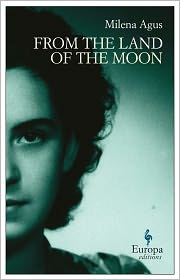 nfess that one of the reasons I was attracted to this novel initially was that I had never read a novel written by a Sardinian author before, and I wondered how different this novel might be from other Italian novels. While it is different from urban Italian novels, it has much in common with novels set in rural Italy, at least those by authors like Carmine Abate, who sets his novels in Calabria, in the toe of Italy. Both authors focus on families who are from poor communities which have suffered from World War II, and both have as their main characters independent people who are trying to be true to their own values and the values of their communities, while also following their dreams, however simple they may be.
 unmarried, and she had never had a real love. The local boys had always seemed to be attracted to her initially but were then somehow repelled within a few meetings with her, despite her beauty. In fact, just before she met the man who would become her husband, she had thrown herself down a well, frustrated and despairing at having missed the love that she so desperately wanted. She believed, however, that “she wasn’t mad, she was a creature made at a moment when God simply had no wish for the usual mass-produced women and, being in a poetic vein, had created her.” Her eventual marriage was forced upon her by her father, who feared that her growing reputation of being mad would eliminate all future possibilities of marriage. This marriage was to an older man, a widower who had lost his family in the Allied bombing. Neither partner expected anything from the marriage, and she encouraged her new husband to continue to visit the local brothels. When, after seven years and many miscarriages, her doctor advises her to go to a spa for treatment, her life changes. Exactly nine months after the spa visit, she bears a son—the speaker’s father. The speaker’s other grandmother, Lia, had a daughter at age eighteen with a local shepherd, who was married, and this daughter becomes the speaker’s mother.
 tories of these characters, the narrative swirls in time and place, and it is impossible to tell the extent to which the speaker may be embellishing them. Several story lines overlap, and the two grandmothers have similar experiences in love bearing children who are not fathered by their husbands. The shepherd who fathered Lia’s baby throws himself into a well, just as the other grandmother has done. Both grandmothers write poetry, and the deaths of true lovers (or those believed to be true lovers) seem to happen simultaneously. The reader does not know whether these are coincidence or if, memory being fallible, the speaker is confusing family lore and the people who experienced these events. Then again, she could be inventing everything, following in the tradition of her two writer grandmothers.