Note: This novel was WINNER of the Grand Prix de Litterature Policiere 2011, for Best Foreign Crime Novel of the year in France.
“Before you go splashing paint, making a gigantic picture of Hannibal’s battles, you need to know how to draw a horse.”
In 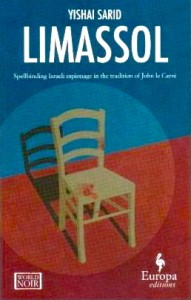 this novel by Israeli author Yishai Sarid, an unnamed speaker is clearly “drawing the horse” of Israeli society and establishing the setting in which the animosity between Arabs and Jews has festered, then exploded into a series of continuous battles. Working undercover for the Israeli secret service, the speaker approaches Daphna, an Israeli woman who has written a book and now teaches writing. The speaker has written a story about a Jewish trader who travels to an island in Greece to buy etrogs, citrons used during the weeklong Jewish holiday of Sukkot, and then bring them back to Israel for sale. He says he wants to learn more about writing so that he can develop this story of the etrog trade further. In reality, etrogs are also grown in Israel, and his story about a dealer going to Greece to buy them is not very realistic, but his primary purpose is not learning to write or develop a short story. He is far more interested in befriending Daphna, whose long-time friendship with Hani, a seriously ill “man from Gaza,” might lead him to Hani’s son Yotam, regarded as an Arab terrorist and hiding from security, perhaps in another country.
The speaker has been totally committed to his job in the secret service, to the extent that it has dramatically affected his relationship with his wife Sigi and son, whom he allows to fend for themselves much of the time while he interrogates suspects, often using force–the ends of avoiding a terrorist attack seeming to justify the means, in the speaker’s mind. Gradually, the many forms of security, including active surveillance, interrogations, threats, the making of promises in exchange for information, and even physical brutality show the fear within the Israeli society, even at the highest levels, and the determination to do whatever is necessary to protect the country. As the speaker’s boss says, “With the Arabs we don’t have a problem…We’re so angry at them we don’t have any trouble being brutal.”
Gradually, the novel becomes more “domestic.” The speaker’s wife Sigi, tired of being ignored in favor of his job, gets a transfer of her job to Boston, and she begs the speaker to come with her and their son. Daphna wants the speaker to help her Arab friend Hani get treatment in Israel for the pancreatic cancer that is rapidly consuming his life. She also needs help for her son, involved with drugs and owing a huge sum of money to someone who financed a movie that the son never made. By contrast, Hani’s son, trained as a terrorist, has a sense of mission, a commitment that gives purpose to his life. The speaker’s little son, who may be going to Boston with his mother, may soon drop from his life, a sad little coda to the story of a devoted security man.
These domestic issues put the security situation into a larger perspective, showing the effects that the lack of peace has on all levels of society, both in Israel and in Gaza. As the speaker’s advisor comments, “We are two tribes of gorillas hitting one another. Like Kubrick’s 2001: A Space Odyssey, only our sticks are more advanced.” As the speaker succumbs to the pressures of his job, the toll that Israel’s fraught relationship with its neighbors takes on the society becomes more and more clear. Enemies have become inhuman ciphers, and little attention is paid to their common humanity and the understandable goals each has for the same land. Eventually, the speaker must decide whether to allow his humanity to become more important than his lock-step adherence to the age-old belief in the inherent enmity of all “others.” In the process the reader comes to understand the agonizing tension between these two traditional foes and hope that at some point it will be possible for reason to become part of the equation of their lives.
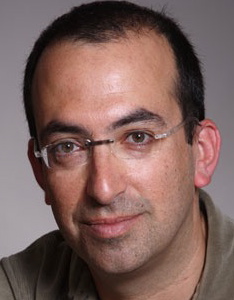
Author Sarid, an attorney who studied at Hebrew University in Jerusalem and who contributes to the Hebrew press, raises and discusses through his fiction important issues affecting all sides in the Israeli-Arab conflict, providing the reader with many new insights. His clear prose and realistic vision of some of the issues common to all humans, yet dividing these foes, make this a novel from which readers will gain new perspectives and new understandings.
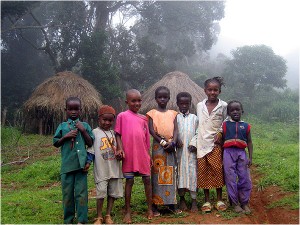
Photos, in order: The author’s photo by Dan Porges appears on http://www.ithl.org.il/authors.html
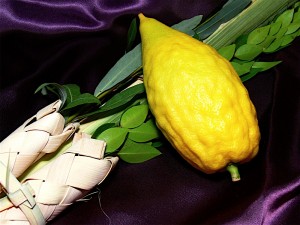
An etrog is a citron used in Sukkot holidays:
http://www.mkhc.org/
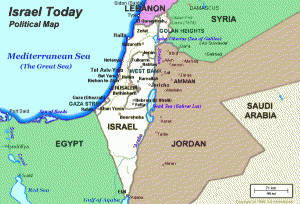
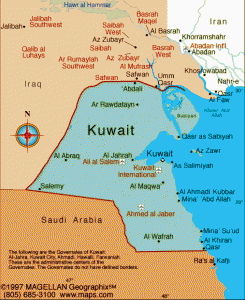
Limassol, the title of the book, is the second largest city on the island of Cyprus in the Mediterranean, northwest of Lebanon. An important meeting involving the speaker is scheduled to take place there. See map of Israel and surrounding areas, including Gaza, which appears on http://www.historicjesus.com/maps/israel.html
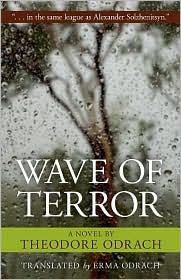 tive and memorable depiction of the establishment of Soviet Socialist Republics by Bolshevik revolutionaries in 1939, with its bloodshed and violence, is filled with incisive observations of real people behaving realistically during times of real crisis. In clear, unadorned prose, author Theodore Odrach depicts the lives of rural peasants with sensitivity and an awareness both of their independence and of their shared values, contrasting them with the mindless, bureaucratic officials who enjoy wielding power over human beings which have become mere ciphers to them. A sense of dark humor and irony, which may be the only thing that makes survival possible, distinguishes this novel from other novels of this period, and no reader will doubt that this book is written by a someone who has seen the atrocities unfold, experienced the injustices, empathized with his fellow citizens, and felt compelled to tell the world about the abuses.
 teach it. The penalties for non-compliance are extreme and trigger some of the novel’s many horrors. The largest farm in the area is collectivized, its owner beaten to death. The innocent people employed on that farm are under suspicion of subversion. All churches and temples are outlawed. The former headmaster of the school has been killed while trying to escape the Bolsheviks, and the new headmaster, the intelligent and sympathetic Ivan Kulik, is hard pressed to remain silent as he sees innocent people taken from the village to the nearest rail line and put into boxcars for Siberia–if they are lucky.
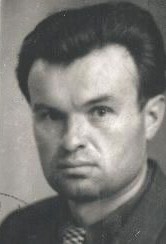
 Details such as this emphasize Odrach’s instinctive recognition of key details, which allows him to tell stories within stories with a straightforward simplicity which makes the novel come alive. As the winter turns into spring, the well developed characters search for love, go to a New Year’s Eve dance, travel to conferences, attend a general meeting (where they show their displeasure by electing three outcasts to the Praesidium), and deal with rebellious second-graders, always, however, on the lookout for informers and always unable to share their feelings about the revolution. Several are arrested, interrogated, and released, raising suspicions that dossiers are being prepared for their expulsion from the community, if not their deaths. As the novel comes to a close, the reader is reminded again of Theodore Odrach’s own life (described in the Introduction by T. F. Rigelhof), and one can only wonder if the novel’s moving conclusion is truth, not fiction.
 as possible in Toronto, thereby protecting his young family there, as well as any surviving family in the Ukraine. Now, with the publication of this remarkable novel, the world may finally discover a writer whose war-time observations have been compared with those of Alexander Solzhenitsyn and whose dark humor has been compared to that of Anton Chekhov.
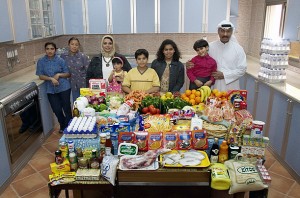
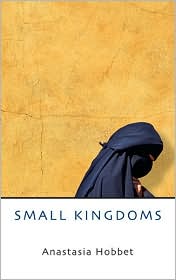 it in the time between the two Gulf wars, Small Kingdoms is as close to a perfect novel as I’ve seen in years. Not a word is out of place. Every image works, and many show a startling originality. All the plot lines are successful, without an overwhelming reliance on coincidence to tie them together and resolve them at the end. The characters, even those from Kuwait, with their completely different society and culture, feel natural and comfortable as we read about them, people we can recognize for their common humanity and can respect for their differences from our own way of thinking. The novel is rich with ideas, complete in the depiction of cultural differences and sensitive to ideas which Americans, especially women, may find alien, ideas which are an integral part of Kuwaiti Muslim culture. The author’s five years of living in Kuwait during the same time period as this novel make her a particularly honest and understanding commentator on both American expatriate society, with their often difficult adjustments to their host society, and on the difficulties Kuwaitis have in understanding the free and easy mindset of the Americans who are so prominent in their not-always-welcome midst.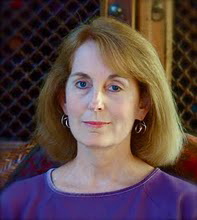
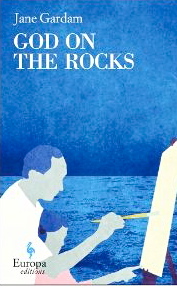 in the era between the two world wars, God on the Rocks, with its sly, multi-layered title, is one of Jane Gardam’s earliest novels, a delightful but carefully considered look at society, religion, personal responsibility, and acts of fate in the lives of several families. Eight-year-old Margaret Marsh, the primary speaker, is energetic and thoughtful, living comfortably with her very religious bank manager-father and her subservient and seemingly passive mother. The family has recently been joined, however, by Lydia, a “fallen woman” whom her father Kenneth believes he is called upon to “save.” On Wednesdays, Lydia takes the Bible-spouting Margaret on little trips, and through her, Margaret discovers a world she has never even imagined. Lydia usually abandons Margaret to her own devices shortly after arriving at their destination, often the beach, while Lydia enjoys her own activities with gentlemen she meets there in the woods. Margaret, on her own, has the time of her life.
 ed, and that of the spiritual life which her parents are encouraging in her. As Margaret questions the act of creation on all levels, along with what love really is, she is confused. She has already learned about dinosaurs, which she cannot talk about with her father, and she has concluded that life might have been better without people. “If I’d been God, I’d have left it at dinosaurs. I’d have been satisfied looking down at all that,” she decides. Her mother’s horrified response that God created people in His own image leads Margaret to look at her baby brother, getting his nappies changed. “His own image,” she muses. “If God looks like us…What’s the point?”

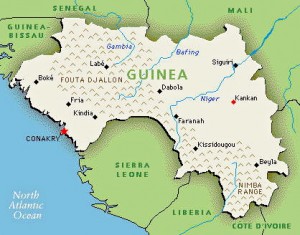
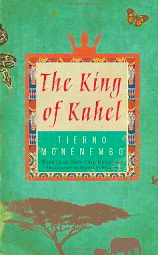 rno Monenembo recreates the story of Aime Olivier de Sanderval, an almost forgotten Frenchman who followed a childhood dream by going to remote Africa in 1879, describing Olivier’s experiences in Guinea just before it became an unwilling colony of France. Olivier was not representing the government when he arrived in Guinea and did not believe in colonization in the traditional sense. An explorer with an almost mystical sense of destiny, he wanted to build a railroad from the beautiful hill country in the center of the country to the coast so that he could create trading posts and ultimately claim for himself the plateau of Fouta Djallon, “a land of rushing water and fruit, pure milk and wise men! The land that quenches your thirst.”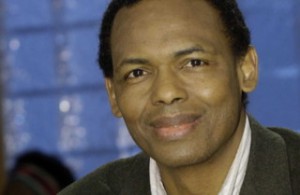
 more than a citizen on a lark,” one French rival declares. Over the next twenty years, both in Guinea and back in France, where he visits his family, Olivier tries to maintain a dream that he sees becoming smaller and smaller as he becomes more and more isolated, both physically and intellectually.