“The prizefighter is no more what the spectators imagine him to be than the lady with the wand and the star, in the pantomime, is really a fairy queen…I have never been given to close personal friendships, as you know, and Gene Tunney is among the very few for whom I have established a warm affection. I enjoy his company as I have that of few men.”–George Bernard Shaw
Jay R. Tunney, a 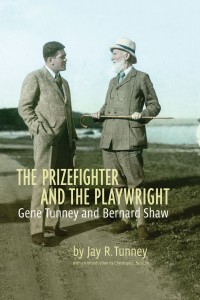 son of the famous prizefighter Gene Tunney (and also vice-president of the International Shaw Society), recreates the story of the twenty-year friendship between his father and George Bernard Shaw with such love, admiration, and sensitivity to the intensely intellectual relationship between these two men that the reader cannot help but be swept up by this story of two men who, ignoring a forty-year age difference, found enduring satisfaction in each other’s company: John James (Gene) Tunney was thirty-two; Shaw was seventy-three when they met in 1929. Both men had already achieved the peaks of their professions by that time, and they now had the leisure to explore new realms. Tunney had retired as heavyweight champion of the world in 1928, and Shaw had won the Nobel Prize for Literature in 1925.
Both men were Irish, both saw boxing as a noble sport representing Greek ideals, and both were passionately interested in serious literature. Shaw had participated in boxing matches as a young man himself, and he followed the sport religiously, even writing a novel about a prizefighter, Cashel Byron’s Profession. Tunney found in Shaw a mentor who treated him as an equal, listened to his ideas, and argued happily about the most erudite aspects of Shakespeare.
Tunney and Shaw met in 1929, while Tunney and his new bride, Polly Lauder Tunney, were on an extended honeymoon in Europe. Tunney persuaded Shaw and his wife to join them while they were staying on Brioni, an island in the Adriatic where their privacy was respected, and every day for a month, Tunney and Shaw would walk and talk for hours. Shaw has said that Tunney helped him “to plant my feet on solid ground.” And Tunney has said, “I think of Shaw as the most considerate person I have ever known. He was helpful, directing me aright on questions of literature, music, art, thought…No period of my life was more valuable than this. It was like a matriculation in a cosmic school.” When Polly, the new Mrs. Tunney, became deathly ill on Brioni, it was Shaw who spent hours there with his friend Tunney. Tunney never believed, as others did, that Shaw was the atheist he was purported to be.
The Tunneys were an exceptionally close couple, and their courtship – the story of a serious, young Irishman from Greenwich Village, who happened to be a prizefighter, and a shy young heiress of Andrew Carnegie from Connecticut – is a beautifully revealed love story by their son. Conducted in secret for about two years to avoid the press and to provide privacy for Mary Josephine (Polly) Lauder, the relationship became public only after Gene Tunney officially retired from the ring. Then, two weeks later, Polly’s mother announced her engagement. Their wedding was to be in Europe in the hopes that it would avoid the press, but, alas, that was not to be. They were pursued as relentlessly in Europe as they had been in the US. It was for this reason that they stayed on Brioni for a year – they had privacy there that they never had anywhere else.
Many years later, i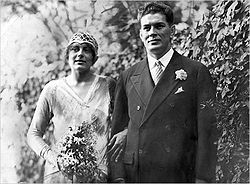 t was Mrs. Tunney who suggested to her son Jay, who wanted to write about his father, that he avoid doing a straight biography. Those had been done in the past, and they had failed to capture Tunney’s essence, often implying that his late-in-life academicism was a pose. She suggested that he write about the Shaw/Tunney relationship, which she had had ample opportunity to observe and to participate in. A testament to her vision and to her son’s commitment, this book is not only important to historians, but it is also a book with a great love story and an homage to a man who became a scholar without any traditional schooling.
Brilliant, sensitive, and committed, Gene Tunney was an autodidact who could quote reams of Shakespeare and other poets, and his eventual lectures at Yale on Shakespeare (conducted without notes) were serious scholarship, accepted by the university as such. A friend of Billy Phelps (William Lyons Phelps, of Yale, who was an English professor there for forty-one years), Tunney also was friends with Thornton Wilder, with whom he traveled in Europe, and with Somerset Maugham, John P. Marquand, F. Scott Fitzgerald, Horace Walpole, H. G. Wells, Charlie Chaplin, Max Beerbohm, and Ernest Hemingway.
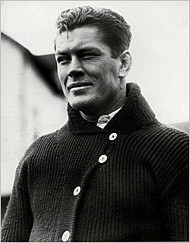
When Gene Tunney died in 1978, at the age of 81, the Boston Herald said, “Gentleman Gene left a legacy of physical and intellectual stamina that should inspire us all. The Washington Star added, “Mr. Tunney was given to quoting Shakespeare. He looked like an actor; he sailed to Europe to talk with George Bernard Shaw; he did not act like a pug…There was never any real understanding of this man, who was too gifted, too fast and driven, to stay where the people wanted him.” His son Jay has corrected that. His story of Gene Tunney will be considered the final, incisive word. (On my Favorites List for 2010, the best non-fiction I read all year.)
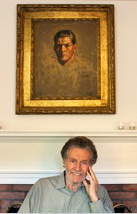
Photos, in order: The photo of Jay Tunney shows him in front of a portrait of his father by Sir John Lavery, which Polly Lauder Tunney purchased on their honeymoon. The photo is by Christopher Capozziello for the NYTimes: www.nytimes.com
The wedding photo is from http://en.wikipedia.org/wiki/Polly_Lauder_Tunner.
The photo of a smiling Tunney is by Associated Press: www.nytimes.com
 s Scudamore, at age thirty-four, has already achieved the kind of accolades for his first two novels that most authors only dream of. His debut novel, The Amnesia Clinic, won the Somerset Maugham Award and was shortlisted for the Costa First Novel Award, the Commonwealth Writers’ Prize, the Dylan Thomas Prize and the Glen Dimplex Award. Heliopolis, his second novel, was longlisted for the Man Booker Prize for 2009.
 Caught between the world of the favela, which he does not remember, and the world of the rich, to which he feels he does not really belong, Ludo is unsure of his place in the world. More sensitive than the bosses at the ad agency for which he works and infinitely more socially aware than Ze, his adoptive father, he admits that “Sometimes I want to run away from this life to which I have been promoted,” and he sees his life as a maze with ever-narrowing paths. A crisis erupts when Ze decides to create a whole new type of supermarket chain–MaxiBudget–to appeal to the poor in the favelas, taking the food to them for the first time. “Affordable food. Designated food. Official food,” not food which may have been “hanging above the butcher’s block crawling with flies for six hours.” His stepmother Rebecca’s Foundation will help support the effort. Ze, of course, will make a great deal of money selling to a huge new population, an effort which Ludo believes is made primarily to “stop [the poor] from staring hungrily through the windows of our own [regular] supermarkets” rather than from any sense of improving their welfare.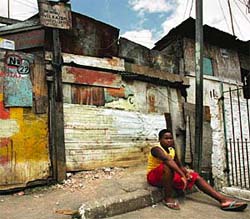
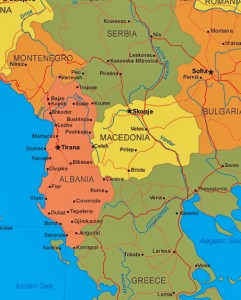
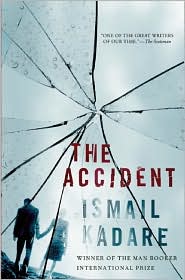 y after a taxi leaves the Miramax Hotel in Vienna for the airport, it veers off the autobahn, somersaults into a gully, and kills the man and woman passengers, both Albanian. The driver, seriously injured, is taken to the hospital in critical condition. A Dutch couple witnesses the accident, as does the driver of a Euromobil truck, and both give information to the Austrian police. The driver, when he is able to talk, tells investigators that when he looked into the rear view mirror, immediately before the accident, the couple were “trying to kiss,” a peculiar description. The dead man, Besfort Y., was an analyst for the Council of Europe on western Balkan affairs, and he had been a “thorn in the side of Yugoslavia” before its divisions–there is suspicion that he might have been responsible for the bombing of the country. Despite this, the accident is initially thought to be a routine traffic accident.

 way that Virginia Woolf focuses on one day in the life of Mrs. Dalloway, in the aftermath of World War I, to show the dramatic changes in everyday British life as a result of the war, author Mollie Panter-Downes shows the equally dramatic changes which have occurred in Wealding, near Portsmouth in the south of England, in 1946, in the aftermath of World War II. Panter-Downes lived in the picturesque village of Haslemere, and she uses her own experience to create sensitive, often unique, images about everyday life in her town (which becomes Wealding). Here she creates a vibrant portrait of ordinary people coping, or not coping, with a whole new way of life. In lush, often musical prose, she appeals to the reader’s senses, as well as the heart, as the Marshall family–wife Laura, husband Stephen, and daughter Victoria–go about their business in a world which no longer resembles anything they have known before. The village, the author tells us, “had very slightly curdled and changed colour.”
 aristocratic mother. Eventually she climbs Barrow Downs on this beautiful day so she can survey the village from a height, coming to new conclusions about her own life, her family, and the new direction she will take when she returns. Ironically, Stephen, on his way home, is also contemplating changes in his own life.
 chlink faces a monumental challenge in this novel in which he attempts to connect the terrorism of the Red Army Faction (represented by the Baader-Meinhof Gang in Germany in the seventies) with the earlier German national terrorism that the Nazis represented and the contemporary terrorism of Al-Qaeda. Here he investigates what makes people become terrorists and what happens to them in the aftermath of their crimes. At one point Schlink even has a character question whether Germany is the victim of a curse: “Isn’t it a curse, what’s being passed on from the [World War II] generation before Jorg [a Baader-Meinhof member who killed four people] to Jorg, and from Jorg to his son?… We still have witches and fairies, and there are curses that are sometimes lifted from us only after generations.”
 , as it evolves, is psychological action, primarily, and a sense of ominous prescience, as characters interact, is reminiscent of some of Agatha Christie’s “closed room” mysteries. Everyone wants answers to questions, but no one is sure what to ask or how to evaluate the answers. Jorg, the “hero” of the eighties, is a weakened man who is out of touch with present-day life, having little idea of the major changes that have occurred politically during the twenty-four years that he has been incarcerated. As the weekend guests connect and reconnect with each other, and former loves and former relationships are recalled and sometimes rekindled, the reader is left hoping that the author will get the novel out of the personal and into the universal which will give meaning to their actions.