“Your problem these days is getting information, and the cops are the best source available. They gather information, collect it in a central location, and it’s always for sale…Plus, all these organized crime families and rings of Mafiosi just use the cops to eliminate their competitors.”
Massimo Carlotto, who has achieved as much fame for his noir mysteries involving the Mafia in Italy as he has for his seven year incarceration for a murder he did not commit, puts his knowledge of law enforcement, lawyers (one of whom betrayed him personally), the criminal justice system, and the Mafia to use in this up-close-and-personal look at the growing power of international Mafias. Set primarily in Padua, just west of Venice, making it a good storage spot for illegal drugs brought in from the Adriatic, the novel introduces Marco, “the Alligator” Buratti, the owner of a small bar called La Cuccia, in which he shares ownership with Max La Memoria, “The Memory.” Together they also do investigations. Beniamino Rossini, a smuggler and armed robber, who was in prison with both of them, is also available to help out.

When Sylvie, Beniamino’s belly dancer-lover vanishes without a trace, the three men set to work turning the underworld upside down, finding evidence to suggest that the kidnapping was related to a huge drug robbery from two years ago. The Institute of Legal Medicine of the University of Padua had stored fifty kilograms of narcotics, including thirty kilograms of heroin and ten kilos of cocaine, for toxicological testing of the active ingredients. Access was blocked by an armored door, requiring a magnetic card and alphanumeric code for entry, but the robbery had taken place without any damage to the locks and by deactivation of the alarm system. Clearly, an inside job.
Shifting back and forth between the robbery and the present, Carlotto crafts his dark and terrifying story from the viewpoint of Buratti and his friends, none of whom have any qualms about doing whatever is necessary to gain information that will allow them to free Sylvie. When they discover a signet ring under the seat of Sylvie’s car, Marco Buratti and his friends recognize it immediately as belonging to a man they murdered two years before. They had left it under the seat of that victim’s car as a warning, and its reappearance forces them to make connections that they do not want to make. They are helped in their investigation by their friendship with Morena Borromeo, a prostitute who has become an informer. For a very high price Morena can often get information through pillow talk with influential people—in business, in the police, among lawyers, and among Mafia low-lifes.

MarketPlace Padua
Carlotto compresses time throughout this novel, telling what amounts to a three-hundred page novel in fewer than two hundred pages, and readers may find themselves flipping back and forth to the table of contents to remind themselves whether they are in Padua, Grenoble, or Lugano and whether the date is 2004, 2006, 2008, or 2009. Buratti and his associates must investigate criminals and criminal enterprises that cross the boundaries of many countries and territories, all with their own internal Mafias. “The boundary [of Italy] and eastern Europe is controlled by a cartel. Aside from the Croatians, the Bulgarians, the Hungarians, the Romanians, the Turks, and the Russians,” the Serbian intelligence services and the Kosovar Mafia are also angling for power in northeast Italy, trying to control the flood of drugs coming from Morocco and Algeria. Author Carlotto is effective in explaining the economic conditions in northeast Italy which have led to the “illegal machinations [that] were the order of the day in every sector of hard-working Northeast Italy…The Mafia money made the wheels spin round, business was booming, and there was a positive synergy with legal businesses of all kinds.”

Early blues singer Alberta Adams, whose CD is given to Marco
Despite their willingness to use violence and murder to accomplish what they regard as right, Marco Buratti, Max La Memoria, and Beniamino Rossini remain “human” in the hands of the author. All have ordinary interests that make it possible for readers to identify with them, despite everything else. Buratti is a lover of the blues and attends concerts, Rossini is passionately protective of his beloved Sylvie, and Max is a lover of fine cooking. Though the action is fast and furious, and the many characters are often hard to keep track of as the various international Mafias act to protect their interests, Carlotto’s novel is a satisfying noir achievement, written with insight, intelligence, and passion, even as its characters often seem to be living hopeless lives.
ALSO by Carlotto: FOR ALL THE GOLD IN THE WORLD and BLUES FOR OUTLAW HEARTS AND OLD WHORES
Photos, in order: The author’s photo appears on the Spanish language website: http://blogs.rtve.es/asuntospropios/2008/4/2/-esta-nasa-
His biography is here: www.massimocarlotto.it
Padua’s marketplace is shown on http://www.italianvisits.com
The very early blues singer depicted at the end of the review is Alberta Adams, whose classic CD is given to Marco by Morena. That CD, Born with the Blues, is listed on http://www.amazon.com with samples of her music.
 ated into English, The Blindness of the Heart, a debut novel by Julia Franck, spans the period between the two world wars in which Germany took part, focusing on the effects of these wars on seemingly ordinary German citizens who were somehow detached from full knowledge of the causes for which they were required to fight. In the dramatic Prologue, which takes place in 1945, a young boy and his mother arrive at a train station from which there is a chance that they might escape the post-war horrors. For the boy, however, the horrors are just beginning. His mother abandons him at the station, without any warning, leaving behind his suitcase and instructions to whoever discovers him on where to deliver him.


 anish Civil War (1936 – 1939), with its terrible effects on residents of the Basque country, near the French border, was a complex and brutal war in which soldiers, sometimes neighbors, often found themselves fighting for different sides. Author Manuel de Lope, who grew up in Burgos, not far from the Basque Country, obviously knows the landscape and the culture well, describing the overwhelming beauty of the land and mountains with an obvious love of nature, and the characters in his story with understanding and affection. Not a traditional war story, the author focuses instead on three characters who, though affected by the war in terrible ways, are peripheral to that bloody action—Maria Antonia Etxarri, the daughter of a former innkeeper from a nearby town; Dr. Felix Castro, a young, crippled doctor; and Isabel Cruces Herraiz, the bride (and soon widow) of a young officer, all living in the village of Hondarribia. When Miguel Goitia, a young law student studying for his exams, arrives at Las Cruces sixty-five years after the Civil War, he is greeted politely by Maria Antonia and allowed to stay in the inn which was once the home of his grandmother, Isabel Herraiz. Though she died a number of years ago, her presence in the lives of the other elderly characters is still very real, and as flashbacks occur, she becomes a significant force even in the present.
 Divided into four parts, the author focuses in Part I on Maria Antonia Etxarri, sixteen and temporarily alone at her father’s inn as war breaks out. When twenty soldiers arrive for the night, the inevitable happens, and Maria Antonia is raped. She soon leaves the inn and enters service for an old, wheelchair-bound man who collapsed at her father’s inn while on his way to witness the wedding of the elegant Isabel. Later Maria Antonia becomes Isabel’s servant. When Goitia arrives in the present, he observes the wedding picture of his grandmother, Isabel, in a cabinet, but shows little interest in the family connection. Part II describes the wedding and Biarritz honeymoon of Isabel and her captain, Julen Herraiz, who leaves shortly after for the war, leaving Isabel bereft, always convinced that he will return, though evidence, including his wedding ring, wristwatch, and the love letter delivered to her belie that. Part III is Dr. Castro’s story as he tries to protect life, and Part IV explains the mystery.
 ho are already familiar with the five earlier novels in this Icelandic mystery series featuring Erlendur Sveinsson know that Erlendur is a dark, gloomy, introspective, but caring man who does not share much about his life. A loner who survived a terrible divorce about twenty years ago and never remarried, Erlendur and his former wife have no contact—she blames him completely for the failure of the marriage. He tries to stay in touch with his son, Sindri Snaer, and his daughter Eva, though they have been indoctrinated by their mother and blame him for many of the problems they both have had with substance abuse. Even doing police work in Reykjavik, Erlendur often prefers to work on his own, and he never lets up when he thinks a crime has been committed, often investigating old crimes in order to solve recent ones. His discoveries, as shown in the previous novels, have resulted in very dark, violent, and psychologically tense thrillers, many of them prize winners, and at least one film, Jar City, also a prize-winner, which is terrifying in its details.
 While he is investigating this death, the elderly father of a young man who vanished thirty years ago visits Erlendur at this office. A widower, still distraught after all this time, he visits Erlendur periodically to see if there are any new leads, but there is a special urgency now. The old man is dying, desperately hoping to know his son’s fate before he dies. Erlendur’s contact with the old man and the reminders of these disappearances strike a special chord with Erlendur, whose eight-year-old brother disappeared when he, Erlendur, and their father were overtaken by a blizzard while checking on their sheep in Eskifjordur over forty years ago. He can identify with the old man, and the poignancy of his concern for him involves the reader’s emotions, too.
 Ghosts play a huge part in this novel. Maria has seen the ghost of her mother and is awaiting a message from her. The old father of the boy missing for thirty years is haunted by the uncertainty regarding his son’s death and wants only to know his son’s fate. Erlendur is emotionally paralyzed by the ghost of his brother. Concerns with death and the afterlife alternate with issues of responsibility and guilt and the attempts to reconcile these issues by many characters add to the thematic importance of the novel. Though this novel is somewhat different from others in this series with its focus on the life of Erlendur, instead of on dark action, I suspect that many other readers will also celebrate the emphasis on this fascinating main character.
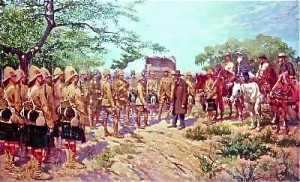
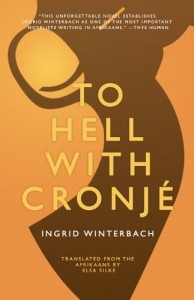 ally strong war novel which ranks with the very best, To Hell with Cronje by Ingrid Winterbach shows characters whose lives have been permanently changed by the Second Boer War (1899 – 1902), and raises the question of whether any of them—men, women, and children–will ever be able return to a peaceful life after the brutality which has created a new “normal” within their nation. How, she asks, can one cope with the horrors of war on any level? What resources can men develop that might allow them to survive personally? Boer men in their forties and fifties have been drafted, forced to leave their farms and their families to fight on horseback, often in other parts of the country, protecting “their” land against the British (the “Khakis”). Wives and children are left behind to defend their rural farms by themselves, and even if they survive both the climate and bloody attacks from the enemy, they are often taken to concentration camps while their property is looted and burned. Most do not survive the incarceration.
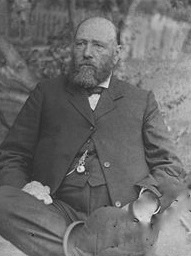 Though Winterbach can be lyrical in describing the countryside, her sentences are usually short and clear, and the action is mostly internal, rather than external. Her treatment of themes is just as clear. Her description of the process of evolution, as revealed in the landscapes through which her characters travel, for example, is also seen in the evolution of her characters’ own thinking. The scientist Reitz, who becomes the main character in the latter part of the novel, goes through a period in which he seeks answers in religion, evolving into a man who considers all possibilities. All the characters, however shy they may be to “talk” about it, begin to wonder about love and its power–religious love, sexual love, love of country, love of fellow man, love of family—and ultimately to question the power of man ever to know answers on a grand scale. Perhaps, as one character suggests, there are no answers. Perhaps our objective should be “to take from life whatever little we can get. It all goes so swiftly.” Powerful, dramatic, and filled with characters one cannot help but like, the novel gains impact in its presentation of big themes which expand beyond its South African setting. To Hell with Cronje is one of my