“How strange that technology has brought us into a world where there are no fixed places anymore. You speak out of nowhere [on cellphones and the internet], you can be anywhere, and because nothing can be checked, anything you choose to imagine is, at bottom, true.”
 Described as a “prodigy,” thirty-five-year-old Daniel Kehlmann, with German and Austrian citizenship, has already published four novels and a short story collection, winning the 2005 Candide Award, the 2006 Kleist Award, and the 2008 Thomas Mann Award. His novel Measuring the World has sold an incredible 1.5 million copies in Europe alone, and his works have been translated into forty languages. This novel can only add to his luster. It is brilliant—clever, thoughtful, satirical, ironic, humorous, and beautifully structured within its experimental style.
Non-stop fun at the same time that it deals with important existential issues, Kehlmann’s collection of nine seemingly unrelated stories becomes a labyrinth of overlapping relationships, some of them within the plots of the stories, some in the surprising connections among characters, some through his imagery (and one repeating character/symbol), and some through his development of his themes. Kehlmann is exploring the effects of technology on our perceptions of reality, and while this may sound esoteric and ponderous, it is done within a lively assortment of stories in which the characters and points of view are not only realistic and satiric—but often wickedly funny.

Kehlmann raises questions about what happens to our thinking about the real world when we spend hours of our real lives “communicating” on the internet, often in chat rooms using monikers instead of real names, where we are able to create whole new fictional lives for ourselves. We converse on cellphones, often giving on-the-spot descriptions of what we are seeing and feeling. We record cellphone videos, and we often post these on YouTube, allowing the world to share them. How “real” are all these versions of reality? And how “real” is the fame that often accompanies our recorded achievements in film, TV, and literature? Where does reality begin and end? And what does fame really mean?
Kehlmann’s nine stories all deal with the ironies of people caught between reality and fiction. In “Voices” Kehlman tells the story of Ebling, who is mistakenly assigned the private number of famous actor Ralf Tanner when he buys a new cellphone. When he begins to answer as the actor, “It was as if he had a doppelganger, his representative in a parallel universe.” In “The Way Out,” Ralf Tanner the actor illustrates what has happened to his life since Ebling started answering his phone calls, his professional career and personal life in ruins. He participates in a disco contest which awards prizes to the person who most resembles someone famous, but is criticized because his body language is “not correct” for the actor Ralf Tanner. His use of a false name ironically gives him a chance at a real life. In “How I Lied and Died,” the telecom supervisor of the man who mistakenly gave out Ralf’s cellphone number becomes caught up in a lover’s triangle in which he is in love with two women. He lies to both, creating fictional new “lives” for himself through his lies. “It was as if I really had left another me back there.”
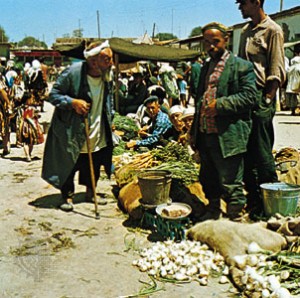
Market in Uzbekistan
Four stories are about writers. Miguel Auristos Blanco, the author of popular self-help books about serenity, inner grace, and the meaning of life, is famous for his book Ask the Cosmos, It will Speak. (A gun-lover, he is also the author of A Steady Hand Makes a Calm Spirit.) Then he receives a letter from an abbess at a Carmelite Convent asking him why suffering exists, why loneliness, why God is so distant. As he contemplates an answer, he considers the effects of what he says on both his own life and on his fame. Author Maria Rubinstein substitutes for another writer at a conference in Uzbekistan or Turkmenistan (it doesn’t seem to make a difference to the participants) and cannot make anyone believe she really is who she says she is. Her novel Dark Rain, available in the country, does not contain her picture to prove her identity.
The third author, Leo Richter, whose stories about Dr. Lara Gaspard have brought him fame, is now living with Elisabeth, a real doctor with Doctors Without Borders who does not want to tell him anything about her life because she does not want to appear in any of his stories.

Physician from Doctors Without Borders in central Africa
When Leo accompanies Elisabeth to equatorial Africa to investigate the ominous disappearance of three doctors, the limitations of this fiction writer become obvious. In my favorite bit of dialogue from the whole book, Leo asks one of the veteran physicians, “Have you read Hemingway? I think about him all the time here. Can you work here without thinking of him?” “Yes,” the weary physician replies. “Easily.”
Kehlmann writes like a sorcerer here, hiding fundamental metaphysical ideas within sentences which are simple, concise, and straightforward and within stories which are exciting to read. Kehlmann never lets the reader forget that his own stories, too, must be evaluated—he is, after all, a real person telling fictional stories which reflect real themes using fictional characters, some of whom are fictitiously involved in writing books and some of whom are involved in telecommunications which affect their readers’ real lives. “Stories within stories within stories. You never know where one ends and another begins! In truth they all flow into one another.” One of the most surprising and satisfying books of the year for me. (Near the top of my Favorites List for 2010)
Note: Doctors without  Borders (Medecins Sans Frontieres) is described on Wiki here: http://en.wikipedia.org/ Their Facebook video may be found here: www.youtube.com. The rating for this organization as a philanthropy is here: www.charitynavigator.org Their logo appears at the end of the review.
Photos, in order: The photo of Daniel Kehlmann is here: www.fr-online.de
A market in Uzbekistan is from www.britannica.com
http://web.mit.edu Dr. Jonathan Spector examines a child in central Africa. He has worked with Doctors Without Borders in Angola, Sudan, and Liberia.
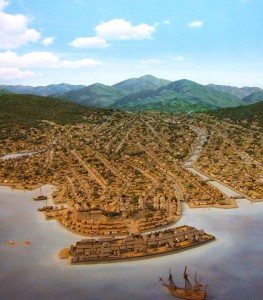
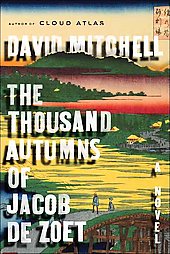 itchell’s past work, full of literary excitement, has been almost universally lauded for its originality and experimentation, and two of his novels, number9dream (2001), and Cloud Atlas (2004) have been shortlisted for the Man Booker Prize. Ghostwritten (1999) won the John Llewellyn Rhys Prize, and in 2007, Mitchell was named one of Time magazine’s 100 Most Influential People in the World. This novel will come as a surprise to many of his long-time fans. Here, Mitchell writes a historical novel—a HUGE historical novel—set in Nagasaki at the turn of the 19th century, when the Dutch East India Company was Nagasaki’s only trading partner. In an unusual change, Mitchell writes in the 3rd person here, taking an omniscient point of view which allows him to unfurl fascinating tales and re-imagine historical events in dense prose packed full of energy and local color. Using a straight chronology which begins in 1799 and ends in 1817, Mitchell introduces a young Dutch seaman who is trying to earn enough money to marry his Dutch sweetheart; a pioneering Dutch physician; a scarred Japanese woman who has become a brilliant midwife; a samurai magistrate; a venal Japanese abbot in charge of a home-grown monastery; an ape named William Pitt, and an assortment of dishonest traders as they engage in the hurly-burly world of Nagasaki trade.
 Part II shifts the focus to the inhabitants of a remote monastery on Mount Shiranui, ruled by an abbot whose sadism knows no bounds. The women there, all poor, are imprisoned, forcibly impregnated and required to give their babies as “gifts” to the monastery. When Jacob de Zoet’s interpreter, Ogawa, hears what is happening there, he and a samurai friend set out to liberate the monastery, which allows Mitchell to explore other aspects of the culture, the samurai tradition, the changing loyalties of friends, and the difficulty of creating change in a traditional society in which connections to powerful people are the key to action.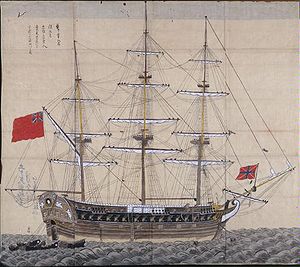
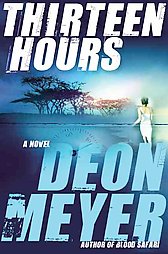 nd most complex novel yet, Afrikaans-writer Deon Meyer recreates a mere thirteen hours of life in Cape Town, South Africa, hour by terrifying hour, and those thirteen hours reveal more about the city’s many criminal cultures than you may want to know. The police are only partially effective. Following scandals which plagued the police department and resulted in corruption convictions for some key officers, the National Commissioner has established a new police force, the South African Police Service (SAPS), retaining their best and most experienced officers within new departments, the duties of which are not always clear. As one of the force’s best detectives says, “I’ve been working with the Provincial Task Force for four months now, and I still don’t have a portfolio. No people, no job description…I’m getting too old for all the Commissioner’s monkey business, the racial quotas that change every year; everything is politicized. And if Zuma becomes President, the Xhosas will be out and the Zulus will be in and everything will change again—a new hierarchy, new agenda, new troubles.”
 suspense at fever pitch, as Rachel Anderson, the girl trying to escape, manages to evade discovery for many hours as she races through the areas around Table Mountain, and as Benny Griessel tries to keep all the leads for two separate cases, and all the investigating officers, going in the right direction.
 s’…power corrupted them. The signs are there that the black government is going the same way. I am afraid they will make the same mistakes. It would be such a pity. We are a country of potential, of wonderful, good people who all want only one thing: a future for our children. Here. Not in Canada.”
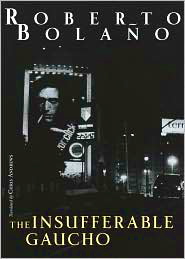 he speaker’s friend makes this statement in “Jim,” the first story in this small but unforgettable collection of five stories and two essays by Chilean author Roberto Bolano, the reader cannot help but feel that Jim is in many ways the author’s alterego. Bolano also began his writing life as a poet, something that is obvious in his recognition of the tiny, seemingly insignificant moment or detail which becomes extraordinary within its context. Such “extraordinary” moments or details are worthy of notice, and even wonder, but as the author shows, they are not necessarily “wonderful” in the felicitous definition of the word.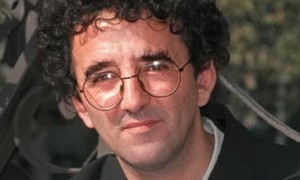



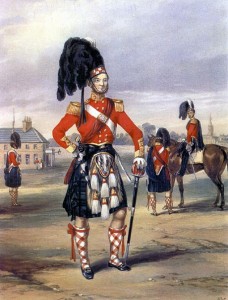
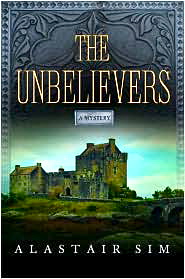 Lovers of Victorian Gothic mysteries will have loads of fun with this one, quite different in tone from the norm, and lovers of literary fiction will admire the author’s ability to describe and bring the period to life while also conveying important sociological and religious issues. Written by Alastair Sim, great-nephew of the famed actor of the same name, while he was still a student at the University of Glasgow, the novel takes the Victorian police procedural in new directions. Inspector Archibald Allerdyce, an emotionally damaged man who no longer believes in God, and Sergeant Hector McGillivray, even more damaged from his army experiences during the colonial rebellion in India and the Crimean War, have been ordered by the highest levels of government to solve the disappearance of William Bothwell-Scott, the Duke of Dornoch, wealthiest man in Scotland.
 title, the socio-religious changes in Victorian society can be seen in the conflicts faced by some of the main characters here, especially Allerdyce. Darwin’s Origin of the Species, published in 1859, has challenged the traditional church beliefs in Separate Creation and the Chain of Being, with man at the top of the chain and rich men at the very top. Spiritualism, a new movement, is becoming popular. Trade unions are beginning to form, and communism, also new, is gaining followers among the poor. Colonial wars, and the country’s involvement in the Crimea, in which the poor have been used as cannon fodder by their aristocratic officers, have further exacerbated class divisions. Allerdyce, despite his agnosticism and awareness of the social inequities, still sees the world in black and white, however: The law is the law, and no compromises are possible, even if the results make no sense on a grander scale. “Sometimes,” he says grandly, “your duty to the law doesn’t seem to do justice to the people you encounter,” but he does his duty anyway.