“We have no time to waste on insignificant books, hollow books, books that are here to please…We want books that cost their authors a great deal, books where you can feel the years of work, the backache, the writer’s block, the author’s panic at the thought that he might be lost…We want books that immerse us in the splendor of reality and keep us there…We want good novels.”
Probabl y every lover of literary fiction has had a fantasy about creating or finding the ideal bookstore—one which is dedicated to exactly the kinds of novels we like to read, where we can enter and spend an afternoon browsing, reading whatever strikes our eye, all the while knowing that every book there has the potential to become one of our favorites. It is a fantasy in which all the other browser-readers there enjoy reading and talking about the same kinds of books we do, and the helpful staff has read most of the books and can make recommendations. The main characters in this novel by Laurence Cosse have created just such a bookstore. Ivan (Van) Georg, who manages a shop called The Good Novel, and Francesca Aldo-Valbelli, the heiress who is supporting it financially, have committed themselves to a shop which is not “an ordinary bookstore…[and] our customers [are not] ordinary customers.”
A committee of eight writers representing different styles of novels is chosen in secret to make the selections of books for the shop, each member having a pen name so that no one, not even other committee members, knows their identities. With a choice Parisian location near the famed Odeon Theatre, the shop opens to customers in August, with the biggest percentage of their “good books” representing the best of French literature. The shop is mobbed from the outset, with seven hundred eleven novels being sold on the first day alone. By Christmas time, the shop is a huge success.

But success has come at a price. Large numbers of new customers have begun to order pop novels, then fail to pick them up, leaving the shop to pay for them. Nasty comments appear on their internet forum, and a seemingly organized attack is mounted in the press, with accusations of elitism taking up whole pages, At one point the shop is described as a “totalitarian undertaking,” an attempt by a small group of elite to control the reading done by the public. Fascist accusations result. Ugly posters are plastered all over town, and demands are made that the shop’s financial backer be unmasked.
Eventually, three attempts to murder members of the secret selection committee, described in the opening pages of the novel, involve the police. Throughout the attacks, both physical and in print, the author raises questions of who benefits from the destruction of one small bookstore and its people. Resentful owners of other bookstores? A general public insulted by the shop’s cultural snobbery? Publishers of new novels which have not “made the cut” for inclusion at the shop? A cabal of disaffected authors whose books are not carried by the shop? When several new bookstores open adjacent to or across the street from The Good Novel, sales at The Good Novel plummet.
A combination of myster y, fantasy, philosophical analysis, and economic treatise on the book industry, A NOVEL BOOKSTORE raises many interesting questions within a unique story. The novel does have its problems, however. A love story involving manager Van and Anis, a wispy and only vaguely attentive young woman, is unsatisfying on every level, as Van seems to have no understanding of himself or of her. She, in turn, seems to be equally dim, an almost ghostly presence flitting through the novel. The mystery is not well integrated. The attempts at murder described in the beginning of the novel gain little attention for most of the novel as the ins and outs of book shop business and publishing dominate the “action.” In fact, some of the most interesting sections of the novel are those related to the decisions of what books to include on the shelves, Cormac McCarthy being the most popular choice among American authors.
A peripheral issue may provide more insight into publishing than the novel itself. A website at http://www.thegoodnovel.com/ appears to be the real life equivalent of the shop in this book. This website and its Facebook equivalent appear in every way to be real—until the reader looks up the details and discovers that there is no bookshop listed at this address in Paris, the quotations from “famous people” exist only on the website, the quoted magazines or papers do not exist, and there is no phone number or way to place orders. I do not know who is responsible for this web page or the Facebook page, but it is the cleverest, most imaginative book advertising I’ve seen since Orhan Pamuk created a real Museum of Innocence after writing his novel of that title. The website will certainly generate more publicity for great writing and “Good Novels,” and that’s what we all want. Do take a look at it. It’s fun!
Photos, in order: The author’s photo is from www.arianne.fr
The streetscape near the Odeon, where The Good Novel is said to be located, might have looked like the one above at rue de l’Odeon, Paris, FR, Postal code: 75006. www.mapmonde.org
The profile for The Good Novel is here: http://www.thegoodnovel.com/
ALSO by Cosse: AN ACCIDENT IN AUGUST
 the Blitz in London in 1943, an event took place in Bethnal Green that was so extraordinary it is not understood completely even to this day. On March 3, 1943, when the air raid warning sirens went off, thousands of people headed, as usual, toward the nearest bomb shelter, the local Tube station, a one-entrance location which could accommodate up to ten thousand people within a few minutes of their arrival. Some had come here many times and knew that they could reserve cots and places to sleep for the night. Others just took their chances, hoping that the emergency would not last long and that they would be able to return to their homes soon afterward.
 Kane carefully reveals the facts of the case, but she does so within the context of the lives of her characters, always showing how and why these people say and do what they do, and always leaving the door open for other interpretations of their actions. As the characters become more fully understood, they elicit sympathy from the reader, and by the time that all the details are known, the reader feels the same sorts of conflicts that Sir Laurence Dunne felt when he wrote his report. James Low, the chief shelter warden, is unable to forgive himself because his conscientious efforts failed. An eight-year-old who lost her four-year-old sister has seen something that forever affects her life and her relationship with her mother, and she neither forgives nor forgets. Rev. McNeely, of St. John’s Church, across the street, is hard pressed to see the big moral picture which Sir Laurence Dunne feels is so important as he writes his inquiry, recognizing instead the individual issues which he feels have clear black and white answers.
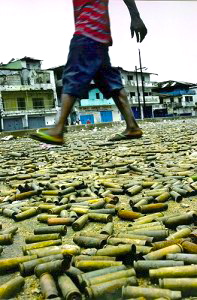
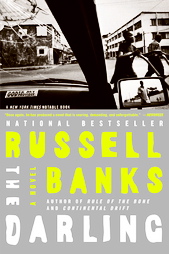 events which led to the catastrophic battles for power which engulfed Liberia from 1980 – 1996, author Russell Banks shows how four different home-grown armies, each with their own goals, aggressively engaged in atrocities to ensure victory for their own side. Employing child soldiers, and killing and maiming anyone who stood in their way, including women and tiny children who simply had the misfortune to belong to the wrong rural tribe, these armies massacred a quarter of a million people and displaced a million others.

 How long has it been since you have read a novel with a thematic line so unusual and so well explicated that reading the book changed your way of seeing the world? This novel was one such experience for me. Metaphysical, historical, and utterly different from anything I have ever read, Giles Foden’s Turbulence kept me (neither a mathematician nor a student of physics) turning the pages, no matter how theoretical and dense the novel sometimes became with its science. Fascinating personal stories are interwoven with the scientific plot, giving the novel immediacy, even for a devout non-scientist.
 physical measurements. Though he might have remained in his lab at the university forever, he wants to do something for Britain’s war effort, and when he sees an advertisement for a training post in the Meteorological Office, he applies, is accepted for the Central Forecasting Unit, and is eventually sent to Scotland. His job is to observe and eventually help forecast weather patterns over a five-day period for fifty miles of German-occupied French coastline so that an invasion can be planned and a window of opportunity identified for D-Day.
 hree thousand landing craft are depending on the accuracy of the forecast. The Germans are expecting an invasion, and Allied surprise and ultimate success depend on finding a window which the Germans will not also foresee. Only one person has found a way to deal with this kind of turbulence and its effects on forecasting—Wallace Ryman, a famed mathematical researcher who is also a pacifist. Henry Meadows hopes to convince him to share the application of his “Ryman number” in the pursuit of a weather equation to aid in meteorological forecasting.
 cepts behind it have actual bases in reality and science. Where the novel may raise some questions for some people is in the subplots. Some “researchers” in the novel believe that the formula for dealing with turbulence in the weather can also be applied to problems in sociological and interpersonal relationships—from the tendency of countries to go to war to the disagreements among lovers. This makes the subplots seem sensational and unrealistic, at times, an attempt to show that turbulence is responsible for the random events which affect the personal lives of the characters, an attempt also to show that “random” events may not be random at all.
 born Linda Le, one of France’s most popular authors, moved to Paris in 1997 when she was fourteen, accompanying her mother, grandmother, and three sisters soon after the fall of Saigon. In this energetic, sometimes raucous, and always surprising novel, Le describes the lives of three other young Vietnamese women who are also living in France—now totally assimilated after twenty years of living there. Two sisters, known as Elder Cousin, or Potbelly, who is pregnant, and her younger sister, Long Legs, a “cutie” who is living with someone she hopes is a ticket to wealth, have decided to invite their estranged father, King Lear, to come from Saigon to Paris for a three-week visit. Potbelly will pay for the trip, since she is married to a wealthy French “Hardware Man” in the “nutsandbolts business” who will be away during the visit; Long Legs has no money, spending her small salary on clothes, makeup, and trinkets. The third member of the Three Fates, Southpaw, referred to at one point at Albatrocious, is their cousin, a young woman who has lost a hand.
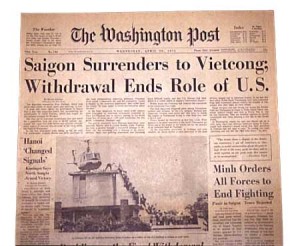 Many great scenes will stick in the reader’s mind, especially as King Lear remembers the reunification of Vietnam and the departure of the American soldiers, but among the most memorable are those which connect to the characters with whom the reader can really identify. When Elder Cousin (Potbelly) gets married, for example, she sends the lonely King Lear photographs from the wedding, but he cannot bear to open them, leaving them in their envelope for days until he can get dressed in his “swanky suit,” more appropriate for the occasion, when he finally opens them. That one scene does more to convey emotion than almost any other scene in the novel, and it is among the most “honest” scenes in the book.