“They hate women. They hate them and they fear them….There’s an old Islamic saying…that heaven is crowded with beggars, and hell is overflowing with women.”
If you have ever wond ered what it would really be like to be a woman living in Saudi Arabia, then this novel may answer most of your questions. Confined to a black burqa which covers every inch of skin except for her eyes whenever she leaves her house, even when it is over a hundred twenty degrees outside, an unmarried woman must never be alone with a man. She must always be accompanied by a male member of her family, even, as occurs in one scene here, if the member of the family is only seven years old. Each week a list of new fatwahs is released—prohibitions regarding even the smallest aspects of behavior (including one against the reading of fiction)—and the “religious police” are empowered to arrest and detain anyone, even foreigners, who violates these rules. Women may not drive cars in Saudi Arabia, and they are discouraged from working outside the house. A conflict of values arises when women need to buy underwear – from male shopkeepers. Sometimes their husbands must purchase it for them; at other times, a shop will hire a woman specifically to wait on other women.

Women who do work outside the home often work for the media or for the police, but these women are nearly always married (because single women cannot interact with men), and whoever hires them must provide separate offices for them. Leila Nawar, whose grotesquely tortured body is found washed up along the Corniche in Jeddah as the novel opens, works as a videographer for a television station, but she is also secretly working on her own project about women and their sometimes miserable lives in Jeddah. Because she has made many enemies among those who do not wish to appear in her compromising videos, she keeps most of her film at home, storing it on her computer or on discs. When her body is actually identified, a rare event for women victims who have no fingerprints available and who wear veils outside the home, the police are anxious to study her recent films for clues to her death.
Detective Inspector Osama Ibrahim of the Jeddah Police/Security Department, needs women officers to help him by interviewing female witnesses or victims without their male escorts present. He depends on Faiza, and later Katya, within his department, to bridge the communication gap with the women who need help, women like Miriam Walker, an American whose husband has vanished. The US consulate has been unable to find him.
As the death 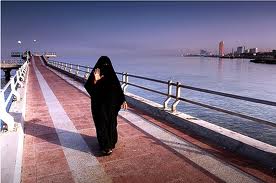 of Leila Nawar and the disappearance of Eric Walker, the American, are investigated, several other plot lines also unfold, involving a large number of overlapping characters who are dealing with other kinds issues. Two unusual love stories provide personal interest and fascinating perceptions of Saudi religious culture. In one, the husband discovers that his adored wife has been using birth control pills, contrary to his religion, and he is devastated at what he regards as her betrayal. In the other, a young couple, very attracted to each other, separate for months, maybe permanently, because the man is more religious than the woman, and he fears that loving her will make him less worthy in the eyes of Allah.
Author Zoe Ferraris writes this compelling and insightful novel from experience. Having lived in Saudi Arabia for several years with her then-husband, a Saudi-Palestinian-Bedouin, she has packed her novel with information about the Saudis’ unique culture, one which has become more strict over the past ten years. We learn, for example, that organized sports for young girls are now banned, though they had been popular. At the age of eleven or twelve, the girls now disappear from view, becoming part of the women’s culture and wearing full burqas from then on. Even small details are revelatory—one woman is excused from “im modesty” in her conversation because, having reached the advanced age of thirty-seven, she has “passed into the sanctuary of perceived sexlessness.” One cleric even approves “summer holiday marriages” for men, marriages of convenience contracted for short periods of time—because he does not regard women as people.
As the daily lives of the women here become increasingly claustrophobic and frustrating, the limitations and, more importantly, the seeming impossibility of any change becomes increasingly obvious and increasingly difficult for the western reader to understand. The death of Leila reveals the hidden underside of Jeddah society, while the disappearance of Eric Walker reveals the attitudes toward foreigners (regarded as infidels under religious law) and the inabilities of the US government to solve his disappearance within the Saudi system. Her prose is efficient, and she keeps the story moving, in part through her strong reliance on coincidence to connect characters and resolve plot issues. Characters just happen to know other characters—or find their lives unexpectedly overlapping with them in surprising ways that bear no resemblance to reality. A number of subplots and many new characters, some of them extraneous, seem to have been included to allow the author to show more aspects of Saudi life, rather than because they contribute to solving the mysteries at the heart of the novel. City of Veils is compelling, intricate, exciting, and sometimes violent – and readers of this novel will never again wonder why these women do not rebel.
Photos, in order: The author’s photo is from www.kqed.org
The photo of the Corniche in Jeddah, where Leila’s body is discovered, is from http://www.anneofcarversville.com
The photo of Jeddah women (with cell phone) is from: www.hyscience.com
Note: For novel written by a Saudi about the society, see Munira’s Bottle by Yousef al-Mohaimeed, reviewed here.
 members these lines, he is reminiscing about his past in Oslo, when, as a youth, he was a devout Communist with a photo of Mao above his bed, a photo in which Mao is writing. “I always…hoped,” he says, “that it was not one of his political or philosophical articles he was writing, but one of his poems…for it showed the human Mao, someone I was drawn to, someone who had felt time battling his body, as I had felt it so often myself…”
 nowhere, and falcons hanging cruciform in the air before hurtling down, and there were owls in the oak tress, all quiet at night, where they perched on a branch in the dark and stared their prey to death, and in the black night a marten darted between the trees and up across our roof, and we could hear it.”
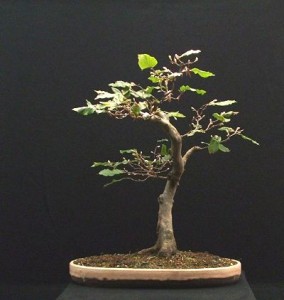
 s “the greatest writer of Chile’s younger generation,” Alejandro Zambra has won numerous prizes, including Chile’s National Critics’ Prize for his previous novella, Bonsai. Like that novella, The Private Life of Trees is also a small, carefully constructed work which achieves elegance and significance through its careful pruning of unnecessary detail from the story at its heart. Like Bonsai, too, this novel calls little attention to itself, preferring to let its reflection of universal truths and its grounding in reality speak for themselves.
 author Zambra continues. Using the point of view of Daniela, he shows her as an older woman as she considers reading Julian’s novel, which she thinks may be, like all fiction, just “novelists’ absurd farces.” As Zambra touches on the process of writing fiction, what it means, and whether it is important, however, he moves into the future, giving a conclusion to Julian’s thoughts and demonstrating the power of fiction to create whole worlds.
 t, the narrator of this clever, black-humored character study, hooks the reader from the opening scene, which opens with Annie sending a van containing all her possessions to a new address, after which she strips off all her clothes and viciously attacks the “bloody sofa” which she has left behind. It is the sofa on which her husband proposed to her more than a decade ago, when she was seventeen and he, thirty-two: “I filled the room: as large and white as the removal van…My thighs wobbled, dimpled with fat and puckered with stretch marks, and I saw myself kick again….[and] at the sound of his voice [in my head] I kicked it again…My little episode went on some time; could have gone on longer but I stubbed my toe and had to stop, gasping, eyes watering, laughing in spite of the pain.” Then she takes the tags off a completely new wardrobe and gets dressed: “I didn’t want to smell like this house, or even like the fabric conditioner Will and I used. Had used…I wanted to leave all reminders of my old life behind me.”
 onversations between Annie and everyone else are classics of dramatic irony. The reader recognizes bits of the truth while the real story of Annie and her past are withheld for most of the book, thereby sustaining suspense while drawing the reader into Annie’s twisted world. Though her actions from the beginning are one step beyond what is “normal,” and the reader knows this, the cumulative picture of Annie’s mind as the plot develops further becomes positively terrifying—and pathetic. Her childhood, as it unfolds, does elicit sympathy for her, but at the same time, Annie is dropping hints about what will unfold in the future, increasing the ironies, since the reader does not want to be tricked into believing in someone as devious (and deviant) as Annie. When the author finally begins to reveal details of Annie’s past which one must accept as true, the reader still cannot help wondering how the author will ever reconcile the information gleaned from several scenes which seem to conflict with one another. The conclusion is sly – brilliant, even – with the full impact coming very gradually.
 Author Carmine Abate grew up in Carfizzi, a small Arberesh village in the toe of Italy, and he returns to that area again* in this novel with a warm and embracing story of a young man’s growing up and his search for his place in the world. Marco has a different life from that of boys in other parts of Italy. Like his father, he may be destined to leave his home in Hora, one day, to spend long periods of time in the mines and fields of France earning enough money to support a family in Italy. Marco and his family are Arberesh, descendants of Albanians who emigrated to southern Italy from the fifteenth through eighteenth centuries, citizens who keep their ethnic ties, their language, and their culture alive within their small communities, which remain poor “while the world outside [gets] better. While the rest of Italy progresse[s].” As his father explains to the son who desperately misses him for the large part year that he is in France, “If I come back [home to stay], who’ll send us money so that Elisa can go to University? What are we going to eat if I come home: nails?” For Marco, however, “My father was a chronic source of pain under my skin.”
 Throughout his early life, his sister Elisa and her relationships become Marco’s introduction to love and sex, and he must defend her to his friends while also trying to figure out what is going on with “the man with the light blue eyes,” a man who is much older than she, with “salt-and-pepper hair.” When Marco becomes deathly ill and misses two and a half months of school, his father is away, and it is the man with the light blue eyes who assumes the role of his missing father, teaching him how to swim, getting him caught up on his schoolwork, and hoping to ensure that Marco will not reveal his illicit relationship with Elisa.
 Abate has created a book with epic themes in a novel which is almost as short as a novella, using clear and often poetic imagery, natural dialogue, a limited number of characters, and meticulously planned, non-linear chronology to allow him to say all he needs to say in very few words. The novel never becomes saccharine and never patronizes the reader, despite the emotional connections the author deliberately cultivates. By emphasizing the characters’ natural, uncomplicated reactions to important events, and keeping those reactions consistent with the ages of the characters, he allows readers from other parts of the world to participate in a family whose culture is very different from their own.