“Outside, the pigeons on the roof were picking at each other, presumably removing insects. Perhaps this is all that we as human beings can do for each other, Letty thought.”
The subtle  and remarkably witty novelist Barbara Pym published her debut novel in 1950 when she was thirty-seven, publishing another novel every two years from then through 1961. In 1963, when she submitted An Unsuitable Attachment to her long-time publisher, however, the novel was rejected. She was suddenly considered “old-fashioned,” that novel being subsequently rejected by twenty more publishers. Sixteen years would elapse before any more of Pym’s novels saw the light of day, and it was not until 1977 that she emerged from her creative “wilderness” and succeeded in having a novel accepted for publication—Quartet in Autumn, which was subsequently shortlisted for the Booker Prize.
Filled with dry, ironic humor, Quartet in Autumn is a poignant depiction of the lives of four elderly people, who have worked together for several years. All of them live alone, and none of them have much of a life outside of their repetitive and intellectually deadening jobs. They treat each other only as colleagues and not as friends, both in and out of the office. The two women consider the two men to be merely “part of the furniture,” and the men have no interest in the women beyond their function in the office. As a result, they have never socialized, visited each other’s houses or apartments, shared a lunch hour together, or come to know each other as human beings.
Pym develops her wonderfully unique characters separately, rotating the point of view and the narrative among them. And just as these lonely characters keep to themselves at the office and share almost nothing about their private lives, they tell separate stories about their separate problems to the reader, and not to each other. Letty, “fluffy and faded, a Home Counties type,” is the most adventurous of them, having traveled to foreign countries. She regrets that she never had the opportunity to marry; by the time the war ended she was thirty and Opportunity had passed her by. She still has dreams of her earlier days, however, when she was able to lie on the grass with “Stephen.” Marcia, by contrast, is eccentric. She wears her dyed-too-dark hair cut almost like a helmet, and her “marmoset eyes” peer through thick glasses. Living in the decaying house which once belonged to her dead mother, she does not maintain even a semblance of neatness, and still has not bothered to remove from a bed a hairball that was coughed up by her long-dead cat.
Edwin, a large man with a pinkish face, is a widower with a married daughter who entertains him on holidays. He fills his free time with church activities, enjoying his “lunchtime church crawl” and his evenings filled with Masses which celebrate obscure church events. Norman, the least developed character, “never had a Mum,” and has no social skills. He alternates spending his lunch hour at the the library, where he reads the newspaper but little else, and at the British Museum, where he is observed viewing the mummified crocodiles.

Crocodile mummies
When the two women retire, life for all of them changes dramatically. Letty has to move, an unexpected development, and her long-time plans to move to the country with a friend change. Marcia becomes even more of a recluse, refusing to let the social worker assigned by the hospital come into the house. When the men decide to take the “old dears” to lunch several weeks after they retire, the four of them have their first social occasion, with mixed results.
Though the novel has little “plot,” it is an extraordinarily memorable and moving novel of characters who deal with their own aging and mortality. Pym is so good at capturing the real feelings of real people and revealing their unspoken needs that careful readers, regardless of their age, will be stunned at the amount of information Pym is able to convey within a few words, images, or sentences. The characters’ commitment to minding their own business and “not being any trouble to anyone” overwhelms their abilities to reach out. It is the death of one of the characters which eventually draws the three survivors together again, and as they consider what kind of funeral services the person would want, what memories each of the others has of that person, and what this implies regarding their own mortality that they finally begin to interact and become truly human.
Pym is very funny, her images and description of events incomparable. On one occasion, for example, Letty is in the Underground, where she sees an elderly woman who might have been a school contemporary slumped on a seat on the platform. Letty, shy and reserved, hesitates to offer help, but she is concerned. While she dithers, a caring young woman bends over the slumped woman and speaks to her. “At once, the figure reared itself up and shouted in a loud, dangerously uncontrolled voice, ‘F*ck off!” Pym calls a spade a spade, and her ironic depiction of old age is one that no one nearing that age will ever forget.
Notes: Also reviewed here: Pym’s EXCELLENT WOMEN
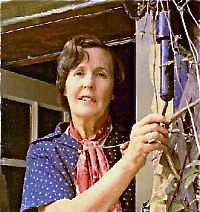
The photo of Barbara Pym is from www.fantasticfiction.co.uk.
The last photo is of mummified crocodiles, which, though a small image in the novel, could on many levels be a symbol for the characters themselves, especially Marcia. The colored photo is from http://hearstmuseum.berkeley.edu. The second pair, in which the heads and teeth are more obvious, appears on www.athenapub.com.
The many lovers of Barbara Pym’s work have formed the Barbara Pym Society: www.barbara-pym.org.
 ndred fifteen pages of this short, allegorical novel, Evelio Rosero creates a microcosm of Colombian rural life in the fictional community of San Jose, where no one knows who will attack them next—the army, the paramilitaries, the guerrillas, or the drug lords. Though the residents are peaceful small farmers and businessmen with few, if any, ties to the “outside” world and virtually no interest in the country’s politics, every militant faction vying for power in Colombia somehow believes that these residents constitute an imminent threat. They convince themselves that specific San Jose residents must certainly be allied with their enemies, since their “enemies” are whoever have not declared allegiance to their own vague goals. The four militant groups each want to dominate and control the area simply to prevent any other group from controlling it, and they are willing to massacre innocent men, women, and even babies to achieve their bloody but elusive goals.
 nude. Though Ismael likes to believe that no one notices, his own wife is humiliated by this behavior, and his neighbor, “the Brazilian,” is amused, considering him an inoffensive Peeping Tom. The scene on the ladder, however, is immediately juxtaposed against the story of how Ismael met his wife–on the same day that he saw a middle-aged man shot between the eyes by an eleven-year-old child at a bus station. This contrast of scenes sets the tone of the novel, emphasizing the contrasts between the sweetness of everyday life and the hopelessness of a political and social culture in which no one even bothers to chase the murderer.
 ear-old journalist Peter Niels, who has traveled the world since his youthful marriage ended, is touring Taiwan, a country he thoroughly enjoys, when he and his photographer, Josh Pickett, have a day free from professional responsibilities. Deciding to visit the famous Taroko Gorge, they become involved in a strange disappearance. A group of ninth grade Japanese students has come to Taroko for an end-of-the year class trip, and both Niels and Pickett hear three schoolgirls singing as they explore the area in their “sailor-suit” uniforms. Niels falls asleep, and when he awakens, he sees that Pickett has just returned from a sidetrip. Immediately afterward, he hears a Japanese boy and girl calling for some of their fellow students who have not returned from exploring.
 ective Hsien Chao, the stodgy Taiwanese policeman called in to investigate the disappearances. The chaperone of the Japanese trip, Mr. Tanaka, a physical education instructor who became their homeroom teacher, is under great pressure to find the girls and ensure a happy ending.
 ing with the missing students and their own issues, some of the young students left at the campsite are exploring the world of love and sex, and at this point, it may be difficult for some readers not to be reminded of Young Adult fiction. Throughout the emergency, spiritual portents and religious references emerge. A monk from the nearby Buddhist temple appears and offers help, Neils hears a mysterious voice, and the ghost of one of the missing students appears. A mixture of commentary from Catholicism, Buddhism, and other New Age religions adds some spiritual significance to the inner searches which the participants engage in during the crisis.
 in Wisla, the rural Polish town where author Jerzy Pilch himself grew up, A THOUSAND PEACEFUL CITIES feels as much like a real memoir as a satirical, fictional retelling of life in Poland in the years preceding the Student Revolt of 1968. In 1963, the Communist party is in power, and the country is under Soviet influence but not control. A strong, independent spirit and the residual respect of the populace for First Secretary Wladysaw Gomulka, who successfully challenged Nikita Khrushchev in 1956, has encouraged the populace to live as they have always lived, though economically they are becoming poorer. The churches, both Catholic and Protestant, are still open and are a major part of life, not just in terms of religion but in the communities’ regular social gatherings. Under the increasing influence of the Soviets, however, Gomulka has become more dictatorial, imposing further limits on his people.
 In a scene that resembles classical farce, the three conspirators go to the church and defend their plans against every possible moral, ethical, and religious argument the community can offer. The conspirators are Protestants—Lutherans—in a largely Catholic country, and “Not taking part is the chief characteristic of Protestants, especially in Poland.” In a classic example of twisted logic, Traba announces that “As a Protestant who doesn’t exist, I can kill without hesitation, since the act will remain in the realm of nothingness. If as some say, Poland is a Catholic country, then, there you have it! It follows clearly from this that, if lese-mageste is perpetrated in a Catholic country by a non-Catholic, that is by nobody, or by a foreigner, then the good name of our holy fatherland, the holy mother of all fatherlands, to whom the tradition of assassinating kings is foreign, will remain unsullied, and at the same time she will gain the name of one who, as the first of the oppressed, raised her hand against the usurper,” an argument Traba refers to as “the dialectic of my patriotism.”
 nguage, even his dialogue, elegantly written and artful. A student of philology, the author fills his novel with biblical and historical argument, at the same time that he develops memorable characters. On the way to kill Gomulka, for example, Jerzyk’s father and Traba tell stories, which prompts Jerzyk to note that “The invention of stories about oneself is the duty and irresistible temptation of the true man. The made-up story is the song of his life and death. The story of the loser, the invented story of the loser, is the sign of the winner.” Challenging and intriguing, at the same time that it is often hilariously funny and crazily absurd, Pilch’s third novel to be translated into English is a memorable visit to 1960s Poland as the country and the author are about to reach a turning point.
 he world of Trevor Comerford, you will not re-emerge unscathed. Formerly employed in Dublin at the Central Remedial Clinic, Trevor was empathetic and anxious to help his students in his English classes there, creating firm bonds of friendship with them by making them laugh at his vulgarity, by refusing to recognize their physical challenges as “limitations,” and by taking them on day-trips (which became shoplifting expeditions to the local shops). His departure from Dublin for a new life in New York City was made in full knowledge of the challenges he would have dealing with the chaos of that city’s street life, which, in many ways parallels the chaos in his own life.
 profane and casual stream-of-consciousness style, Trevor reveals all his thoughts as they occur. By correlating these scattered thoughts, the reader soon becomes aware that Trevor is an exceptionally unreliable narrator, a young man with serious problems finding his place in the world. His family is almost totally hostile to him–only his mother is close, and he adores her. All of Trevor’s knowledge of kindness and empathy has come to him through his relationship with his mother, and he has been able to apply this knowledge to his work at the clinic and with Ed. He has also, however, learned the opposite of these characteristics from others, and his anger against those who oppose him is always just under the surface, begging to be released. He wonders why he is so angry: “Is it because I came to save [Ed] and realize now I cannot save myself?” He wrestles with his conscience, which “niggles” him on many different levels, and he has difficulties trusting that “what [I am] doing is right.”