Note: This novel was WINNER of France’s Le Grand Prix de Litterature Policier for Best International Crime Novel of the Year when it was published in Sweden (2008).
“Peace was illusory. Under the surface there was just as much evil as anywhere else inhabited by human beings….but it was even more sinister here. Hatred, envy, greed and revenge, all of it concealed underneath a huge lid that was created by sentiments such as: ‘What would people say?’ ”
At age thirty -six, Swedish author Camilla Lackberg is not only winner of the French Grand Prix de Litterature Policier (2008) but also winner of the People’s Literature Award and the Author of the Year Award in Sweden. Second only to Stieg Larsson in sales in Sweden, she is the sixth most popular author in Europe. Her unique style and sense of plot have made her an international standout, and this book, the first of her seven novels to released in the United States, has already been translated into twenty five languages.
The Ice Princess begins mysteriously with an unnamed person finding the body of a woman in a filled bathtub in a house so cold that ice has formed around her. Her wrists are slashed in an apparent suicide, but despite the gory scene and the rivers of frozen blood, the visitor believes that “his love for her had never been stronger.” When the body is re-discovered by someone more responsible, who then calls the police, the woman is identified as Alexandra “Alex” Wijkner, nee Carlgren, a gallery owner from out of town who had grown up in the house and whose family still owns it. Recently, she had been in the habit of coming to this house in rural Fjallbacka on weekends, and she has been dead about a week.

Erica Falck had been her best friend until Alex unexpectedly abandoned Fjallbacka and moved away without warning when she was ten. When Erica visits Alex’s parents to express her condolences, they ask her to write an article about Alex for the local newspaper. As she begins to look into Alex’s life at the time that she and her family suddenly disappeared from town and in the years afterward, Erica begins to find that the writer’s block she has been fighting while working on a biography, overdue at the publisher, begins to disappear. Erica, now age thirty-five, soon finds herself working informally with Patrik Hedstrom, a local policeman who had loved her from afar when they were schoolmates, and this love is rekindled.
In the course of the novel, the lives of many people in town unfold. Though they are of different social levels, the town is small; everyone knows everyone else and has contact with everyone else. Lackberg creates her characters from the inside out, letting the characters drive her story. The plot develops in a leisurely way as the author presents scenes from the characters’ lives and lets the reader see them as people. Each has some secret life that is not shared with the rest of the town. Eilert Berg, for example, the fisherman who finds Alex’s body and reports her death, is henpecked, but he has secret plans to escape after fifty years of marriage. Anders Nilsson, an alcoholic artist who never bathes or changes his clothes, has been having an affair. Henrik Wijkner, Alex’s husband, may not be the suave and buttoned-up man he seems to be. Elderly Nelly Lorentz, cold and wealthy, despises Alex–for unknown reasons–though she seems to like her unlikeable sister Julia. Artist Anders Nilsson’s mother Vera has worked for Nelly Lorentz for many years but wishes her dead. And Alex, herself, has secrets which, when revealed, will change the lives of many people in Fjallbacka.

Fjallbacka, photo by Markus Kallender
For readers accustomed to crime novels filled with macho heroes, extravagant action, chases, shoot-outs, and fights to the death, Lackberg may come as a bit of a surprise, though the novel certainly has plenty of action. Her characters are not larger than life—they reflect real life. They are generally ordinary people, rooted in reality, who, when faced with extraordinary events, try to deal with them in their own ordinary way. On a few occasions, when a character does something that might be construed as “dangerous,” the character does so out of a kind of naïve curiosity, rather than through any heroic sense of breast-beating and “doing this to save humanity.” As the various characters live their lives and discover tiny pieces of information, which they sometimes keep to themselves, thinking them unimportant, the reader, begins to acquire a bigger picture of the circumstances surrounding Alex’s death which the police are not privy to. The suspense is enhanced by five anonymous, first person passages, scattered throughout the novel, which reveal the inner world of one or more characters. As information is slowly revealed, the source(s) of these meditations become clear.

Steven Murray, translator of the novel
As in real life, there are some small issues which do not get resolved, and we do not know why one or two people just don’t tell the truth. Did they make a mistake? Or is this deliberate? And when two or more people get together here, there are often psychological discordances which the reader feels and which hinder the characters’ communication on all levels—as in real life. Lackberg, the literary juggler, keeps many balls in the air at once, and as an additional death occurs and deaths from the past are explained, resolution, if not reconciliation, occurs. The final revelation of the biggest secret, which underlies all the action in the novel, stuns with its depth of depravity and the lengths to which certain people will go to preserve secrecy–a sophisticated and carefully conceived mystery which will delight those whose interests lean toward the inner worlds of the characters rather than their willingness to take up the sword.
Photos, in order: The author’s photo is from the Gothenburg Book Fair: http://commons.wikimedia.org
Her website is here: http://www.camillalackberg.com
The photo of Fjallbacka is by Markus Kallender, here: http://www.panoramio.com
Steven T. Murray, in the last photo (from his blog: http://www.blogger.com, is the translator of this novel. Murray has also been the translator for all of the Stieg Larsson novels (under the pen name of Reg Keeland), five novels by Henning Mankell, three by Camilla Lackberg, and three by Karin Alvtegen, among many others. His bio is here: http://freshfiction.com A story explaining why he uses a pen name for the Larsson books is here: http://seattletimes.nwsource.c0m
 house example of the very best Irish noir, Alan Glynn exposes the venality that sometimes drives politicians, builders, contractors, and power brokers to abandon any pretense of morality and act solely in their own best interests. Everyone has an “angle” here, even those who are supposedly on the side of “right,” and violence is not only possible but likely when someone is threatened. Dramatic, smart, action-filled, and slyly understated in its literary style, this novel is a can’t-put-it-downer of the first order, one of the best I’ve read in a very long time.
 Rafferty was a partner in BCM, a structural engineering firm involved in the Richmond Plaza development. BCM was hired to work with Paddy Norton, chairman of Winterland Properties, the developers of Richmond Plaza, and with Martin “Fitz” Fitzpatrick, his security expert. Before long, the reader, like Gina, suspects that there was an error, and that the wrong Sean Rafferty may have been killed first.

 nd film from the Millenium Trilogy of novels by Stieg Larsson, The Girl Who Played with Fire, like its predecessor, The Girl with the Dragon Tattoo, hews closely to the plot line of the novel. Without any introduction, the life story of Lisbeth Salander continues where it left off, as she tries to navigate a world which damaged her to the point that she has difficulty relating to all humans. This film features the same cast in the lead roles as The Girl with the Dragon Tattoo though both the director and the cinematographers have changed. Lisbeth Salander (Noomi Rapace), a computer hacker extraordinaire, has returned from a year of traveling the world, during which time Mikael Blomqvist (Michael Nyqvist), publisher of Millenium magazine, moved on with his life. Millenium Magazine is investigating the sex trade and its relationship to the drug trade, and a young freelancer who has been hired by Millenium has uncovered evidence that officials at the highest levels of the legal and political system are involved.


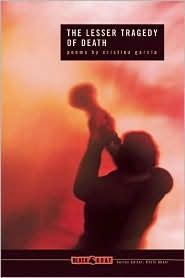 to explore the complex and agonizing story of her brother’s life, Cuban author Cristina Garcia abandons her usual prose and writes in poetry, a form more appropriate for the intense feelings she bears toward her brother, a sick and broken man who was routinely victimized by his family as a child. Tracing her brother’s life from his birth in 1960, when the family became one of the first families to escape to New York from Castro’s Cuba, she recreates his life through poetry, up to 2007, when this book was first published. The short poems in free verse require the reader to fill in some blanks, and as one does, the growing horrors of this child’s life; the author’s own feelings of guilt for being unable (for whatever reason) to stop the torments her brother endured; her intense resentments against her parents, especially her mother; and her abiding sadness for the shell of a man her brother has become threaten to overwhelm the reader in the same degree that they must have overwhelmed the author.
 ng of the poems allows the author to create a loose narrative that explains the hostility and dysfunction in the Garcia family and shows how a gentle, sweet, and trusting boy became an addled wreck of a man. On the day he was born, according to his aunt, his mother asked “Quien es?”—“Who are you?”—when her son was put into her arms. She blamed him for the fact that he was her third child in thirty-five months, that her teeth fell out, that she became fat, and that no one thought she was pretty anymore. As a child anxious to please, the boy gave away toys and candy to friends, learned to dance from his sisters, nearly killed himself trying to learn how to ride a bike, but failed to star when he had a chance to score the winning run in Little League baseball. After that, he “kept on losing.”
 In her powerful, often overwhelming, examination of a life utterly destroyed, Garcia unflinchingly examines the role of their cold, unfeeling parents; the streets into which her brother was thrust and in which he had to try to make a life even before he became a teenager; of her brother’s own responsibility for many of his problems; and, ultimately the responsibility she and her sister may bear for failing him in moments of his youth when their actions might have made a difference. Her poems are all the more intense because the author compresses so much into so few words and because she is so clearly agonizing over her brother’s fate and her own level of responsibility, if any, for it. THE LESSER TRAGEDY OF DEATH is a heartfelt exploration of a dysfunctional family who did not have the ability or the will to act any differently, a collection of poems which attempts to give meaning to a life that might otherwise have been lost completely.
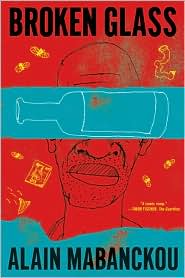 nckou, a Congolese author who now teaches French literature at UCLA, writes an often hilarious, non-stop narrative full of life and excitement, a narrative which, at the same time, is also mordant in its depictions of life. His story, much like life itself, is one constantly unreeling narrative in which there are no periods, the only words deserving of capital letters being names and places. Unlike the more “literary” stream of consciousness novels with which we are more familiar, this one is so unpretentious, so natural, and so conversational that the reader never has to stop to puzzle about where ideas begin and end or what the author might mean.