Note: This novel was WINNER of the Grand Prix de Littérature Policière in France for being the Best Crime novel of the year in 2008. It also was WINNER of four other prizes, including the Novel Obs Crime Fiction Prize, the Critics’ Prize for Mystery, the Elle Readers Grand Prix, and the Quais du Polar Readers Prize. Newly translated into English, this novel has just recently become available in English for the first time.
“Listen, I can’t start an investigation into a street robbery when I have twelve rapes, one homicide, and dozens of assaults reported last night alone. But tell your mother not to worry. Usually, anyone who attacks an old lady doesn’t have long to live.” –Police Captain Walter Sanogo.
Winner o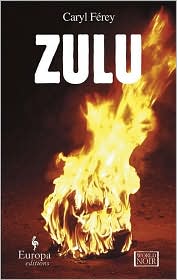 f major literary awards throughout France, where author Caryl Ferey lives, Zulu is a powerful novel set in South Africa in the early 1990s when the country is in its transition between the rule of apartheid, governed by white Boers, and the rule of Africans, under the leadership of Nelson Mandela, newly released from prison. The transition is not exactly smooth, no matter how much the leadership may have hoped for it, and the transfer of power is not automatic. The ANC (African National Congress, under Mandela) needs the former white rulers to maintain control in many areas – presumably, to preserve the peace – and these whites quickly establish their own militias to protect themselves and to act on “infractions” or threats to the “peace” as they see it. To the surprise of many, the defeat of apartheid inspires other African movements, like Inkatha, also to challenge the ANC, leading to civil conflict for power within the black movements. These conflicts, in addition to the long-standing resentments against apartheid, lead ordinary black citizens to be unsure where their loyalties really lie, and as violence grows, not only between the conflicting black movements but also among the conservative Boers and the black community, no one can be really sure where the violence afflicting the cities really originates.
With this as his background, author Caryl Ferey writes a powerful novel focused on three Cape Town police officers—Ali Neuman, a black officer who has survived an inhuman massacre which killed his parents and his fifteen-year-old brother (who was “necklaced with a tire filled with gasoline, which, when ignited, burned him in an agonizing death); Brian Epkeen, a free-wheeling white officer whose family was involved originally in the establishment of apartheid and who looks for solace now within the department as a way to assuage the emotional conflicts brought on by his faithless wife and his teenage son, who not only disrespects him but also has robbed him; and Dan Fletcher, their white protégé, whose wife has just undergone chemo for cancer, and who has two small children dependent upon him.
The story unwinds with the tension one would expect of a novel which has won as many prizes as this one has, and the glimpses of South African life keep the reader intrigued as the investigation of the death of a young woman, found mutilated in the Botanical Gardens of Kirstenbosch unfolds. Soon the team is investigating yet another, similar death. Life is so uncertain in Cape Town, at this point, that “Fear of criminals has replaced fear of blacks in most well-to-do whites, who had retreated to their laager,” and many wonder “How could the leading democracy in Africa be the most dangerous country in the world?” With 18,000 murders a year, 26,000 serious assaults, and 60,000 (reported) rapes, it is no wonder that there are over five million guns are in the hands of just forty-five million citizens.
 Investigation of the seemingly clear-cut murders soon expands, revealing that these deaths are not so simple. Both women had high levels of an unusual chemical in their systems, which, in both cases, would have led to an inevitably quick infection and death from an endemic disease, and it becomes clear to investigators that someone or a group of someones is using these victims, and others who soon turn up dead, as guinea pigs for some bizarre and sadistic medical experiment. As the action unfolds, the involvement at high levels of society becomes clear, and the complicated interactions among all facets of society both protect and threaten to reveal the complicity of important members of society.
The action moves at warp speed, and the high body count, both as a result of the police action and as a result of militia activity grows exponentially. The author keeps the suspense and tension high as he shows the many levels of corruption which are involved with a couple of seemingly simple murders. The pharmaceutical industry, the local Mafia, and many high-level Boers do not benefit from a legitimate black government, and these opponents of peace have more money at its disposal than do other, more legitimate powers.

As powerful and dramatic as this novel is, it is also so upsetting in its depiction of sadistic cruelty against human beings that many readers will be sickened by the level of violence. How human beings could inure themselves, participate in, or tolerate such horrendous cruelty is a question which many readers will ponder. How others could hold out hope for any kind of reconciliation with the practitioners of such inhumanity on both sides will remain an open question. Readers will find this a fine, many-leveled novel as South Africa becomes a democratic nation, but many will also be appalled by the depths to which some characters will descend as the new “democracy” takes hold.
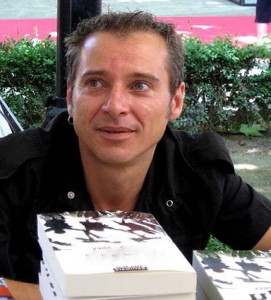
Notes: The author’s photo appears on http://bibliotheques.agglo-annecy.fr
Table Mountain, referred to many times in the novel, is shown in this photo by Martin Wiercbicki, from www.photosbymartin.com
The men who are involved in the pharmaceutical experiments in this novel are constantly connected to the ownership of a Pinzgauer Steyr Puch 712 K off-road vehicle. The K series is the hard-top version of the soft-top M series, which is shown here: www.allcarcentral.com. For “car nuts,” like me, here’s a terrific video of the Pinzgauer Steyr Puch 712K in action, as it goes from high speed on the road to off-road driving over rough terrain, high water, and challenging conditions. http://www.youtube.com The video was taken in September, 2009, in Vancouver. (Wish I’d been there.)
ALSO by Ferey, UTU
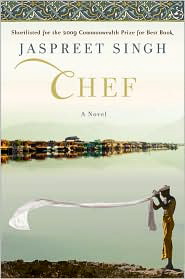 m the opening pages of this kaleidoscopic debut novel, Canadian author Jaspreet Singh works his magic, setting the opening scene on a train from Delhi to Srinagar, in Kashmir. A born story-teller, gifted with the ability to describe the sights, sounds, and smells of his many Indian settings, Singh also creates, at the same time, lively characters and interconnected plot lines which span two generations. Anyone who has read other novels concerned with the partition of India and the perennial conflicts between mostly Hindu India and Muslim Pakistan over the fate of Kashmir knows how complex and emotionally fraught these conflicts are, but Singh explores the conflict through the eyes of Kirpal (Kip) Singh, a chef who once worked for Lt. Gen. Ashwini Kumar, formerly chief of the Northern Command in Kashmir. With his limited focus, Kip is able to convey all the tensions and conflicts of the area without getting bogged down in the logistical technicalities. His vision is personal, and because he is an honorable person, he becomes the conscience of the novel.
 gy that has never come. Nevertheless, he would like to revisit Srinagar, now considered a war zone, and he is happy to do the wedding, always hoping that the general will, at last, recognize that he has been unjust to Kip. Kip has a serious illness, and he also believes that if he does the wedding, the general may respond by helping him get necessary medical treatment.
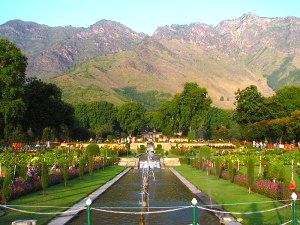 major strategic error by talking too much, he is sent to a remote outpost on the Siachen Glacier, north along the border with Pakistan–a snow field eighty miles long, twenty thousand feet above sea level, and the second coldest place on earth. Kip soon follows him. There among the officers, troops, and the general himself, Kip discovers how the army “works,” the compromises people make, the dishonesties, and the lengths the army will go to gain information from Muslims who might be caught on the Indian side of the border. Even small kindnesses extended to Muslim civilians are punishable. When the narrative returns to the present and the wedding preparations, Kip becomes all too aware that both sides have ratcheted up the rhetoric over the years, and that dinner table conversation may even include unconscionable references to the “N-option.” Muslims have begun suicide bombings, and Indian army corruption still exists.
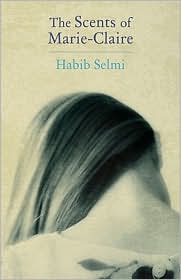 Tunisian author Habib Selmi, who has criticized the Arab novel in general because it “overwhelmingly emphasizes the social aspect,”* takes the opposite tack in his own novel, creating an intimate portrait of a years-long relationship between a French woman and a Tunisian man, seven years her senior. Selmi believes that “the novel should be a novel of the self as it intersects with its surroundings….[It] is not a sack full of occurrences and changes.”* Not surprisingly, then, his own novel deals almost exclusively with the thoughts of one of the partners in the relationship–Mahfouth, who has a doctorate in Arabic literature and who is currently working in a Parisian hotel and working part-time as a university lecturer. His lover, Marie-Claire, is a devoted but somewhat more free-wheeling partner who loved college but now works at the post office. Everything we learn of Marie-Claire, we discover through Mahfouth’s point of view, and when, after the initial bloom of love wears off, he becomes annoyed with her for doing or saying something he does not like, readers will have no problem understanding why she becomes annoyed with him in turn.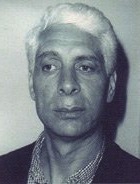
 Readers know from the outset that the relationship lasts for several years before Marie-Claire finally leaves, but it is the slow deterioration of that relationship from Mahfouth’s point of view that becomes the fascination here. Chronically unable to bear any responsibility for the failure of any aspect of the relationship, Mahfouth has learned little from the years during which Marie-Claire has tried to show him the meaning of love. The essence of the relationship becomes clearer if one re-reads the opening quotation: After emphasizing how ecstatic he was when Marie-Claire moved in with him, Mahfouth’s next sentence reads: “Never in my whole life had a woman loved me as much as Marie-Claire did.” He could never believe that this beautiful woman was “Mine. And mine alone.” And that was the problem. It was always all about him.
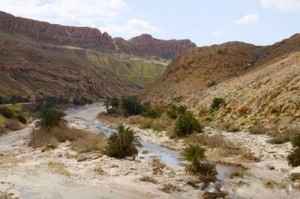 o feel. How and why he is unable to trust and share is a question for the reader to decide. Despite the fact that the main character is unlikable and the ending of the relationship is announced early, Selmi manages to keep the reader involved in his detailed story of a relationship gone bad.
 Ramotswe never changes, and that is one of her most obvious charms. “Traditionally built,” and focused on the traditional values of Gaborone, Botswana, where she runs the #1 Ladies’ Detective Agency, Mma Ramotswe is genuinely “nice”–always believing in the goodness inherent in even the most challenging adversary, sympathetic without being a pushover when someone needs help, and thoughtful and intuitive in sniffing out the motives which underlie the behavior of people who consult her. Married to Mr. J. L. B. Matakone, a kindly auto mechanic whose garage adjoins her office, she is also the devoted mother of two adopted children, both of whom need special attention, and a mentor to anyone who seeks her advice. As relaxed and considerate as the society she appears to represent, Mma Ramotswe believes that almost any problem can be made better if it is discussed over a cup of bush tea.
 ot lines keep the reader involved and often amused as Mma Ramotswe tries to help her clients resolve their problems. Her husband, Mr. J. L. B. Matekone, providing road service to a local woman whose car has broken down, suspects that another driver who has stopped to help her may, in fact, be her lover, but before long, that same woman appears in Mma Ramotswe’s office, wanting help because she believes that her husband may be having an affair. While this story is unfolding, Mma Ramotswe receives a letter from a lawyer in the US, telling her that an elderly woman who had been on a safari to the Okavango delta four years ago is now “late,” and that in her will she has left a sizable inheritance to the camp guide who was so helpful to her. The only problem is that the old woman could not remember the name of the guide or the name of the safari camp when she made her will. This requires Mma Ramotswe and Mma Makutsi to take a trip to the delta for a few days, a trip neither of them has ever made.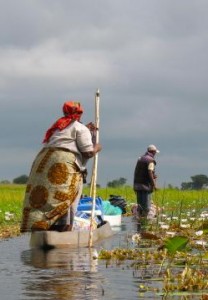
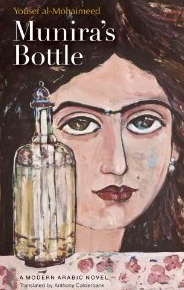 uthor Yousef al-Mohaimeed, whose book, according to Scott Wilson of the Washington Post, sold five hundred copies in just three days at one bookshop in Riyadh, is certain to gain western readers with his intense and often moving story of a love gone wrong. Munira al-Sahi, a beautiful thirty-year-old woman, has been studying for her graduate degree and working at a counseling center for abused girls and women in Riyadh. She also writes a once-a-week column for a local newspaper. Though she has heard all manner of terrible life stories from the women she counsels, she never suspects she herself will become another sad statistic: the man who has been courting her is an impostor, someone who is using her to gain revenge on one of her brothers by ruining her life and making her his legal and emotional prisoner forever.
 r more freedom. Though Munira has been attending graduate school and has many women friends who are much more rebellious than she is, she remains true to the cultural traditions of her family and religion, rejecting the plea that she join thirteen women who plan to demonstrate by driving cars in Riyadh. She describes her life this way: “I am a female. Just a female with clipped wings. That’s how people see me in this country. A female with no power and no strength. My sole purpose is to receive, like the earth receives the rain and the sunlight and the plough.”
 which Munira pens and places in a painted bottle given to her by her grandmother. Through changing points of view, the reader is taken on a journey through the lives of Saudi women of all classes, even as Munira’s own disastrous engagement to Ali al-Dahhal is rocketing back and forth between the catastrophe at the end of the relationship and the passionate lead-up to it. These personal stories assume additional power through the author’s creation of parallels to aspects of the Gulf War against Saddam Hussein and Kuwait. Though Munira has adhered to religious and cultural strictures regarding her virginity, she feels, understandably, that she has been assaulted, her hopes and anticipation of marriage sabotaged. Honor and the perception of honor are everything in her world.