“The day had hardly begun, and Harry already felt drained of energy, like an old, dying lion who hung back from the pack when once he could have challenged the leader. Not that he had ever nurtured ambitions of leading the pack, but things had taken a nosedive anyway. All he could do was lie low and hope that someone would throw him a bone.”
In the third  novel in this outstanding mystery series to be released in the US, alcoholic police inspector Harry Hole, “the lone wolf, the drunk, the [Oslo Police] department’s enfant terrible…and the best detective on the sixth floor” has been AWOL from his job for a month, on a bender which he seems unable to end. He has been so obsessed with identifying and finding the killer of Ellen Gjelten, his former partner and friend, who was murdered on the job not long ago, that he has been unable to deal with other cases. His own life is a disaster from which he seeks temporary solace by drinking himself into oblivion. Rakel, the woman he dearly loves, has told him to stay away from her and her young son until he gets his problems sorted out and solved. He is in big trouble with his department and may be fired.
When Bjarne Moller, the Crime Squad Chief, who has been covering for him, calls him on a summer weekend to investigate the death of a young woman, Moller is so short-handed that he is compelled to put Harry on an investigation team with Tom Waaler, a man Harry despises and believes to be involved in serious criminal enterprises. Beate Lonn, a tech with a memory for faces, with whom Harry has worked well in the past, is also going to be investigating this death.
 Norwegian author Jo Nesbo begins this novel with the best three introductory paragraphs that I have read in years. Ostensibly a description of a water leak which works its way from a fifth floor apartment into the apartment below, it is, in reality a menace-filled mood-setter which presages real horror. And when the ceiling in the fourth floor apartment starts to leak on the young couple preparing a pot of potatoes on the stove, Nesbo’s truly wicked sense of humor kicks in, to re-emerge at other critical points in the novel.
Before long the police have two more murders and a missing persons case which seems to be related to it. A “devil’s star,” a star with one point on the bottom and two at the top, has been found at every crime scene, and each victim has been found with a finger missing. Each also has a star-shaped red diamond inserted under the eyelid.
The  mystery here is compelling–the story of a twisted killer being sought by policemen who also have their own problems–but Nesbo is at least as concerned with character. Harry Hole is in much worse shape than he has been in previous novels, and his relationships with his formerly supportive superiors have reached the breaking point. In the midst of his most drunken “sleeps,” he dreams of Rakel, and of his little sister, who died in his company when she was only seven. His nightmares become at least as terrifying as the actions of the serial killer, since the nightmares reflect Harry’s mental state and his issues, unresolved by Harry on any level. Italicized inserts into the action give the point of view of the killer, a man who hates being “spat upon” when he has “no one to spit on in return.” Tom Waaler, with whom Harry is working on the case, becomes even more sinister than he has been in the past as Harry becomes increasingly vulnerable. Issues regarding Tom and his possible criminal activities, which came up in previous novels, are smoothly incorporated into this novel. As the search for a “well-integrated sociopath” develops, Nesbo creates an unusually large number of red herrings, even playing with the chronology of the case in order to create more suspense about the suspect.

“Good tragedies always have a little humour,” one character says, and in this novel we see Nesbo’s darkest humor, with some details so over-the-top and close to horror that the reader will smile even while being repulsed. His repetition of some motifs at other places in the novel reinforces his imagery, preparing the reader for a classic “gotcha” moment at the end. Nesbo creates a compelling mystery with even more compelling characters, and he does so with literary skill and great panache. Those who have loved The Redbreast and Nemesis will be as caught up in this novel as in those, and newbies to Nesbo may discover his novels to be at least as addictive as those by Stieg Larsson.
Notes: More by Nesbo, reviewed here: THE REDBREAST, NEMESIS, THE REDEEMER, THE SNOWMAN , HEADHUNTERS, THE LEOPARD, PHANTOM, THE BAT, POLICE, COCKROACHES (1998), THE SON (2014), BLOOD ON SNOW (2015), MIDNIGHT SUN (2016), THE THIRST (2017), KNIFE (2019)
The author’s photo appears on www.fantasticfiction.co.uk.
Red diamonds are the rarest colored diamonds in the world, with only three known examples of a stone larger than 5.0 carats. The stone pictured here is the Moussaieff Diamond: www.whittierjewelrymart.com
The photo of the fountain in Frogner Park, a favorite meeting place in the novel, is by C Brown, here: www.trinity.edu
The author’s website is here: www.jonesbo.com
 say that I have never sat down before with a new book of poetry and found myself so engrossed that I have read the entire book in one leisurely sitting. Sure, as a student, I may have come close to imitating that experience during an all-nighter with a paper due the next morning, but then I didn’t experience the poems’ pleasure, and probably didn’t read the whole collection, preferring instead to pan for nuggets I could quote for credit. This collection by Andrea Cohen is different—special—so fresh, so accessible, and so exciting in its imagery, irony, humor, and honest sentiment, that time became irrelevant for me when I was reading. In the course of three hours, I was laughing, smiling in knowing agreement at new insights, loving the “a-ha” moments when I finally “got” what the poet’s image was all about, weeping at the unvarnished treatment of death in some poems which evoked sorrows of my own, and loving the intimacy of sharing so many events with a woman I had never met but now know better than some of my “closest” friends.
 I have reread most of these poems now, and have found ever more subtleties to admire in each line. I have read them to my (former English major) husband while he has been driving the car (though I had to be reminded to speak more slowly so he could savor the images), and I have recommended them to several friends who also love wonderful writing. Cohen’s writing is absolutely clear (no fuzzy images and contorted syntax) and clean in its structure—the poems are carefully composed, not the result of unstructured free writing in which a poet so often celebrates himself and the primacy of his every utterance. These poems often consist of stanzas of equal lengths, with a single line at the end to secure the final idea and give it emphasis. “Current Events,” for example, consists of three-line stanzas, each line having three stresses, as the poet lists perfect moments in time—Asian pears at peak, starlings stringing their nests with hairnet and Christmas lights, a paperboy happy at the weight of his papers, following them with a single line, ordering the reader to “praise, and praise, and praise.”
 Andrea Cohen is a communicator, a woman who speaks from the heart without treacle-y sentiment, a poet so skilled in all the arts of poesy that she can match her metrics to the cadences of everyday speech. In the quotation from “In a Haystack,” at the top of this review, for example, six two-stress lines are read as one easily understood sentence, without all the pauses and heavy beats of most nineteenth century poetry and without the blankness of much twentieth century verse. Many poems offer unique points of view. A poem written from the point of view of a needle (with the literal image of a needle “point” and “eye-view” perhaps intended), is amusing in its own right, and in this case the needle is on an adventure, imagining its “one good eye [filled] with the filament of pasture,” or itself as “pillow to the weary,” or as “supper to the bell-necklaced goats.” Here Cohen offers a cheerful and unusual comment on imagination, adventure, and daring to be different.
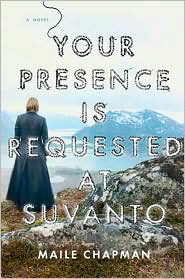 Suvanto in rural Finland, sometime in the late 1920s, has drawn female patients from all Europe and America. The “up-patients,” primarily wealthy women who enjoy the specialized spa treatments and the chance to escape from their everyday lives for periods of up to six months, live on the top floor above those who are physically ill. One physician asserts that “these are bored women, powdered and perfumed for dinner….They like being sick. That’s all they talk about. Even at dinner they keep talking about…personal details not appropriate for the dinner table.” A young American nurse, Sunny Taylor, who has taken a job here to escape the difficult memories of her own life up to this point, is also hard pressed to be completely sympathetic of those who go “too far into self-indulgence, [those who] won’t do much more than eat cookies and make conversation with the nurses…Real need is one thing, but choosing frailty is another.” Yet Sunny sees beyond the physical details, recognizing that though some “are here only to have their pain–or their discomfort–cultivated and indulged,” they all do experience real pain, some more intensely than others. They may react to pain differently and try to assuage it differently, but they are all unhappy with their lives “outside.”



 ille, in his first “literary” novel since his Booker Prize-winning novel
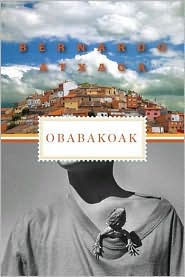 eone had told me that I’d be able to take only one book of short stories with me on a long trip to a desert island, I’d have looked first at all the powerful and intriguing stories by Andre Dubus II. Then I’d have thought about the stories of John Updike, another favorite story writer, pausing for a long time over the volume which contains “Pigeon Feathers,” one of my favorite stories. Today, however, I’d be gravitating toward this book, completely different from any collection of stories I’ve ever read, a volume containing so much variety and color in its subject matter, so many overlapping themes, such strange and ultimately intriguing characters (who peek in at various points throughout the book and revisit us in new stories throughout), and so much fascinating discussion about the nature of stories and story-writing that ultimately, I’d probably choose this one for the island trip. The Dubus and Updike collections are among the best in the world, but on my desert island I think I’d want the stimulation, excitement, humor, uniqueness, and, especially, the sense of wonder that are all contained in this one volume.
 stories, a nine-year-old boy meets a man who cannot stop talking and cannot function because his memories are so vivid, and then later meets an old friend in a psychiatric hospital who has had electroshock treatment and now has no memories at all. A young boy is seduced by the village teacher, frustrated because she has not heard from her lover at home, wantonly destroying the boy’s life. Angels appear and disappear, dreams and nightmares become real, and characters become incarnations of the devil. While religion seems to inform the lives of the characters, religion here is a cultural characteristic built from the stories the characters have shared from their own lives, and not a religion based on external doctrine. The deaths, and even murders, which are at the root of many of these stories are often attributed more to fate or superstition than to any sense of religious destiny, and as the stories of these deaths are repeated a village heritage and history are formed.
 One section, entitled “How to Write a Story in Five Minutes,” a playful and teasing examination of the creative process, is hilarious, while another, “How to Plagiarize,” gets into the ironies and humor of developing themes that have existed for generations. The conclusion will leave the reader with a huge smile of recognition as old characters come back for an encore, not necessarily pleasant. Ultimately, “Life,” however, “is a journey full of difficulties in which Chance and Free Will intervene in equal measure, a journey, in which, despite those difficulties…it is possible to advance and safely reach that final pond where the Great Mother Goose awaits us.” Stories within stories within stories take the reader on dozens of journeys to discover new places, new and strange characters, and old themes seen in new incarnations. And the book is really fun! Definitely a collection that will give pleasure whether you are on a desert island or just looking for some great stories at home.