Note: Thomas E. Kennedy was WINNER of the Expatriate Writing Award in 2002, his citation saying, “Kennedy has done for Copenhagen what Joyce did for Dublin.” This book, originally published in Ireland as Greene’s Summer (and now edited and expanded into a new novel), was WINNER of the 2007 Eric Hoffer Award for books from independent publishers.
“How much of a survivor, in fact, survives? How much must remain of a survivor for him also to be called a man? Some of us who are still present and accounted for perhaps are desaparecido nonetheless, invisible pieces missing from the whole. You tell me to remember… Perhaps there is nothing left …Perhaps it is all gone. Perhaps all that is left is the screaming. Empty screaming to fill empty ears.”
It is diff icult to know even where to begin in reviewing this novel, a novel so broad in its themes and scope and so sensitive to the details which make it come alive that other American readers, like me, will undoubtedly be waiting as impatiently as I am for the rest of the novels which make up the “Copenhagen Quartet.” Author Thomas E. Kennedy is an expatriate, born in New York, who has been living in Copenhagen for many years, and though he has achieved remarkable success in Europe, and has won many prizes there for his twenty novels, his work has not been readily available in the United States–until now. This novel deserves wide readership and will appeal to readers from around the world who care about the right of all humans to live freely, able to speak their minds, even when they disagree with the current governments of their countries.
Main character Bernardo (Nardo) Greene, an “ordinary” Chilean school teacher, was tortured for two years during the Pinochet government because he varied from the assigned curriculum in order to expand the minds of his students. Through him, Kennedy takes a close look at Chile during the Pinochet government (1973 – 1980). He also, however, examines the similarities between government-sanctioned (and encouraged) torture there, which brought the victims close to death before they were suddenly revived (if they could be revived), and other forms of torture, including spousal abuse, the repression of women, and the inaction of people who might, with stronger commitments, have changed the course of history if they had listened to their consciences and challenged authority.

Ostensibly a love story between Nardo, a widower whose wife and son were “desaparecido” during his incarceration and torture, and Michela Ibsen, a forty-year-old Danish woman whose ex-husband abused her and whose seventeen-year-old daughter committed suicide, the novel examines many themes related to love and death, freedom and forced confinement, and the worldly and the spiritual. Green is getting treatment in Copenhagen at a center devoted to the rehabilitation of torture victims, so traumatized that he is unable to look at his Chilean imprisonment with any kind of objectivity. He wonders if he will ever be able to trust a human again. His nightmares about “Frog-eyes,” his torturer, still haunt him. His psychiatrist, Thorkild Kristensen, dedicated to Nardo’s recovery, has his own problems.

Cafe Bopa
When Nardo and Michela meet, she has just told her younger lover, Voss, that she will not tolerate his recent instance of abuse. She sees him as too immature to know what love is, but she also recognizes that she, herself, is also naive, a woman who has been abused to the point that she no longer understands what it is to love. As the story of Michela and Nardo unfold, each is reluctant to make any commitment, fearful that the past will impose on the present and end the budding love that is unfolding. The reader becomes totally consumed with the stories of these characters, hoping for their happiness at the same time that s/he recognizes their personal limitations.
Kennedy’s novel is not “just” a love story. Nardo has survived his torture because at the moment that he might have given up, he is visited by angels who take him out of his imprisonment long enough to show him a happier life, telling him that though he has to return to his prison, that he will one day be free. Throughout his time in Copenhagen, Nardo notices birds and feeds them, the symbol of freedom and escape from the earth’s limitations; the rain is cleansing. Music and dance become a major pleasure and memory for him.

Midsummer Night's Eve burning of witches, traditional in Denmark
Every detail here is completely integrated into the thematic structure of the novel, with symbols adding to the novel’s power and involving the reader on new levels. Even the location of the cafe where Nardo dances the tango with Michela, Cafe Bopa, is the site where the Gestapo executed Danes who challenged the German occupation during World War II. How seemingly civilized human beings can torture and kill and enjoy it, becomes a major question during the course of the novel, at the same time that the author is examining the meaning of love and how to achieve it. Elegant, subtly constructed so that every level expands the themes, and beautifully descriptive of Copenhagen and its surroundings, In the Company of Angels is a book so good that it is hard for me to imagine another book displacing it from the top of my Favorites for 2010.
Notes: Also by Thomas E. Kennedy: FALLING SIDEWAYS, KERRIGAN IN COPENHAGEN , BENEATH THE NEON EGG
The author’s photo by Finja Desler is from http://www.washingtonpost.com/wp-dyn/content/article/2010/03/19/AR2010031901397.html
The photo of the Cafe Bopa, the real place where Nardo and Michela met and did the tango, is from www.cafebopa.dk. Bopa is the location where the Gestapo executed Danes who challenged the Occupation.
The burning of straw witches, which takes place in this book, is traditional in Denmark during Midsummer Night’s Eve. This photo is from Wikimedia.
During the novel, Nardo listens to the music of Finnish composer Rautavaara, “Angels and Visitations.” Brief samples of this music are available on Amazon: www.amazon.com
A video interview with the author appears here: www.amazon.com
 ubtitle, “A Passionate Life,” epitomizes everything Edith Piaf believed in and stood for. Perhaps because of her impoverished childhood, in which even a small kindness meant everything, Piaf grew up craving attention and love. Abandoned by her mother, she grew up in Pigalle, doing whatever she could to stay alive and find happiness, however fleeting. If that meant doing a quick trick to get enough money to eat, she did that. If she could get enough money singing on a corner, she did that instead. Uneducated and unloved, she developed few, if any, inner resources, intellectually or emotionally, to deal with the fame that was to become her fate, and with her need for love, she was fair game for every manipulator, sleazy operator, and parasite who came her way. “What is so utterly remarkable,” Bret notes, “is that she hardly ever seemed to mind, so long as she was getting something in return.”
 with her reputation, such as it was, in tatters. She was then mentored by Raymond Asso, whom she ordered to leave his common-law wife–or else. Their affair was, not surprisingly, a wild one. “She was short-tempered, vulgar, loudmouthed, but above all, exceptionally gifted…He was impatient, sometimes violent, and stubborn.” When this affair, like her many subsequent affairs, broke off, she immediately found a replacement, always with someone who could advance her career, either as a songwriter or as a promoter. It was love at first sight (again) when she met Paul Meurisse, though their physical altercations (“Edith never had any respect for a man until he slapped her.”) were legendary. Eventually, Edith became part of the theatre crowd which included Jean Cocteau, who adored her, and she acted in several plays and films.
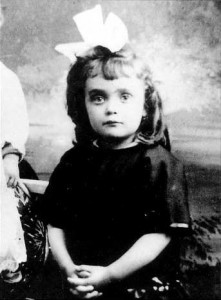 rld War II, she miraculously managed to stay on the good side of the Germans, visiting internment camps to sing for the imprisoned French soldiers. Because the guards knew little or no French and knew of her talent, she was regularly allowed to sing her own lyrics to a Hitlerian anthem, the translation of which reads, “Up your arse! Up your arse!/ We shall have victory!/ They’ve lost all hope of glory!/ They’re f*cked!/ And the world rejoices.” During her many visits, she was allowed to have her photo taken with prisoners and guards, and she used those photos of prisoners to have phony identification cards made. Each time she left the camps, she left with a larger entourage than she had arrived with, regularly taking six or seven men out with her. Ultimately, through the visits and the new identity cards, she helped three hundred prisoners out of the stalags, out of France, and to the Unoccupied Zone.
 e survived car crashes, a host of medical problems–rheumatism, acute agoraphobia, intestinal adhesions, pneumonia–overdoses of prescription drugs and serious addiction to alcohol and drugs. At the end of her life, at 47, she married a man in his twenties, whom she mentored as a singer, though he was wildly unpopular and believed to be taking advantage of her. Those who saw them together, however, could see the genuine love between them, and he seems to have made her happy as the end drew near.
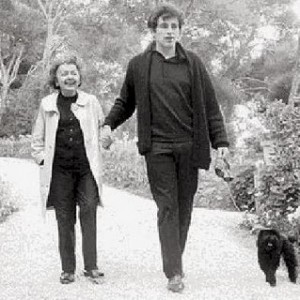 mentored, and with the great Marlene Dietrich stand out as human moments in this otherwise straightforward presentation about this unforgettable star and her legacy. She sang until near the very end of her life. On September 20, 1963, less than three weeks before she died, she gave an interview to France-Soir and allowed herself to be photographed walking outside with Theo and their black poodle. According to Bret, Edith had penned a loving message for Theo for their first anniversary, Oct. 9, and it was while he was reading this that she lapsed into the coma that would take her life the next day. She devoted her life to passion, always at the expense of reason, but she lived her life her way, and as she sings so famously, “Je ne regrette rien.”
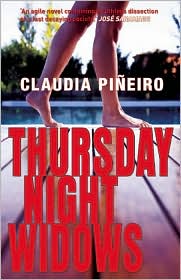 e tacky cover, with its closeup of perfect, cellulite-free legs and the suggestion of other enhanced body parts, this book is no “penny dreadful.” Instead, the cover accurately reflects the values of the beautiful people of Cascade Heights, a gated and walled residential community thirty miles outside Buenos Aires with full-service security–along with a golf course and top-quality tennis. The wealthy residents of The Cascade, as they call the community, have left their old lives behind, and many of them are delighted to have escaped some unpleasant memories. Living in elaborately built houses with spectacular landscaping, the three hundred residents have created a world apart, their children leaving for brief periods each day to attend an equally elite school outside the community, and then returning home, where they can wander the grounds at will, without supervision. The women have few, if any, interests outside the community.
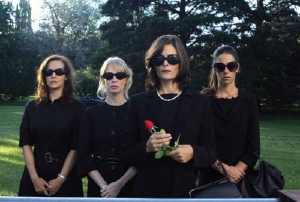 By the time the reader discovers how the men have died, that revelation comes as no surprise. And as the burials begin, Virginia Guevara, brings together the many ironies in the novel, commenting on the “immortal intruders” which will also be buried with all the characters and which, unlike the bodies, will never decay–replaced hips and knees, pins for broken bones, new false teeth and dental implants, pacemakers. “I thought of silicone implants, too,” she remarks. “Implants would survive burial, the body’s wastage….I imagine the private cemetery where they bury the women from Cascade Heights sown with silicone globes, orphaned now from the breasts that had owned them, six feet below that immaculate lawn. Bones, mud and silicone. And teeth. And pins.”
 More like a fiendish sudoku puzzle than a traditional police procedural, this blockbuster novel, set in Oslo, challenges alcoholic Inspector Harry Hole to find solutions to four cold-blooded murders, which may or may not be related. A “square peg” in the police department, Hole does jot hesitate to do things his own way, often infuriating his peers while still inspiring (sometimes grudging) respect for his honesty.
 vals within the police department work to solve the most recent murders, the author considers the psychology of the characters as much as their actions, often switching points of view between paragraphs and scenes. The meticulously constructed plot moves at breakneck pace, and as Nesbo draws in new characters, each of whom has a past to be investigated, he juggles bits and pieces of information—and surprises—which change direction and focus.
 In this extraordinary debut novel, author Lucia Orth uses the five years she worked for a non-profit organization in Manila to provide information, background, sensitive description, and color, however dark, about life in Manila for all levels of society. With an eye for the “unbelievable” and an ear for the absurd, she recreates Manila society in the early 1980s, the last years of the reign of Ferdinand and Imelda Marcos. Focusing on Trace Caldwell and his wife Rue, Americans working for US National Security interests in the Philippines during the Reagan years, the author uses a microscope, one with no “politically correct lens,” to examine US policy regarding this third world country.
 In setting up the action, Orth spends the first hundred or more pages slowly describing the country–with its starving zoo animals, its poor people scavenging in the dumps for food, the purchase and sale of babies, the deliberate crippling of young children to make them more effective beggars, the outrageous bribes that are necessary, the wanton appropriation of land and property by the administration at the expense of the poor who have only their land as assets, and the arrest and torture of anyone who even suggests an alternate way of thinking. At times the reader may become impatient for the action to begin, but when it finally does, it moves like lightning. And as the desperate populace, many of whom are now revolutionaries, tries to avoid being caught by all the spies, including children, who get rewarded for reporting on their neighbors to the police, a massive underground movement, with weapons and tactical plans for overcoming the Marcos regime takes root, with Ninoy Aquino as its center. Gradually, as Rue allows herself to love the people around her, including Doming, she becomes a more “human” character.