Note: This novel was WINNER of the National Award for Best Greek Novel of 2007.
“An Avgoustis does not die on dry land, and [Mitsos Avgoustis], in particular, would never take part in that old age which slowly and wordlessly undulates from one train stop to the next, from the left side of the sidewalk to the opposite, from the morning bench of this square to the afternoon bench of that one.”
Dimitrios Avgous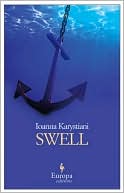 tis, now seventy-five, has been a seaman in the Greek merchant marine for 58 years, a captain for much of that time, well respected by his crew. He is less respected by his family, however, especially by his less than steadfast wife Flora, an embittered, angry woman who was going to separate from him before she became pregnant with their son Andonis, twenty-two years ago. Dimitrios, known to various acquaintances as Mitsos or Mimi, has not seen his family for years, has two daughters who hate him, a five-year-old granddaughter he has never seen, and a twenty-two year-old son who desperately wants a father but has never known him. Mitsos has not written a letter home or looked at any photographs of his family in years. “I love my family but from a distance of ten thousand miles,” he says, and for the last ten years, he has remained rooted to his ship, not even going ashore when the ship lands in port.
Telling Avgoustis’s story obliquely from several points of view, including that of Litsa, the true love of his life, whom he has also abandoned in Greece, author Ioanna Karystiani creates a tender portrait of a proud man in thrall to the “swell,” with little to draw him home. It is only when the reader discovers (early in the novel) that Mitsos is actually blind, something that he has been able to keep secret from everyone, including his crew, that some of his deliberate self-isolation begins to make sense. He knows every foot of his ship, the Athos III, eats every meal alone in his cabin, stares at maps “from memory, ” grows a beard so he will not need to shave, and lets his hair grow to shoulder length. He runs the ship by feel, through the “swell,” even bringing the ship safely through bad storms and equipment failures. As long as he does not return to Greece or be available to meet company representatives, they cannot force him to give up his ship.
Mitsos believes he is safe in his job, despite his blindness and his age, because he once saved the life of the Athos III’s owner, a man who wrote into his will that Mitsos would serve as long as Mitsos himself saw fit, and that when he finally did retire, he would receive one hundred thousand pounds promised, cash in hand, from the owner. The owner, however, has just died, at age 88, and his son, who has only made one trip to sea in his life, is anxious to get rid of Mitsos: He can replace the crew with Asians who will work for lower wages. When Mitsos’s wife Flora is enlisted by the owner’s heir to talk Mitsos into retiring, she meets the ship and quickly discovers his real problem. She knows she must get him to retire on his own and return to port in Pireas, in order to get the one hundred thousand pounds. Though Flora leaves the ship, she sees to it that she has her own representative on board to help Mitsos make the “right” decision.
 In the course of the novel, the author successfully creates strong feelings for Mitsos, however selfish he may have been, but these feelings for the main character develop slowly. Because the novel is impressionistic, the reader must fill in a great many blanks and make many connections with little help from the author before reaching a level of identification with Mitsos. Whole sections of the novel, printed in a different type, are the voice of someone who is not completely identified till fairly late, and it can sometimes be a bit frustrating reading these thoughts without knowing for sure whose they are. Are they by his lover? His wife? His hairdresser? Names and the people to whom they refer are not always clear (many have unfamiliar nicknames), and some dialogue is difficult to follow because the names of the speakers are only rarely included with their comments. (At one point, I wondered who “Elefsina” was, since Mitsos mentions returning to her, only to discover that it is a place.) The author does present all the necessary information during the novel but leaves it up to the reader to process it, without the usual transitions.
For the patient reader, however, Mitsos becomes an unforgettable character, proud and much more complex, emotionally, than he seems at first to be. Somehow he has achieved the absolute loyalty of his crew, which never questions his actions and never suspects his blindness: “Having served under Avgoustis was tantamount to two or three Harvard degrees.” The people he has hurt most seem willing to forgive him, proving that “No one ever falls by the wayside, justice keeps slowly burning out of sight, and works itself out, all in good time.” This challenging novel rewards careful reading–and re-reading–and gives dramatic proof that for people like Mitsos Avgoustis, “The swell was everything.”
Notes: The author’s photo by Mike Kuder appears on the site of the International Literature Festival in Berlin where Ioanna Karystiani was guest speaker in September, 2010. An excellent biography is also included: www.literaturfestival.com
The Athos I, which may resemble the Athos III, is seen here: www.ceoe.udel.edu
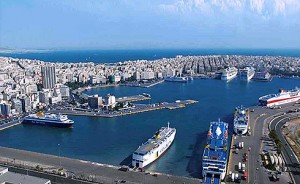
The port of Pireas is shown here: http://www.onlinegreekferries.com
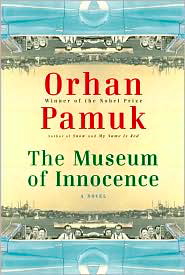 Turkish author Orhan Pamuk’s latest novel soars to new heights, taking fiction itself to an exhilarating new level and blurring the lines between fiction and reality in new ways. Ostensibly the obsessive love story of Kemal Basmaci, age thirty, for a beautiful shop-girl named Fusun, eighteen, the novel explores much more than that, examining not only the physical passion which underlies their relationship and their lives, but also broader themes involving the connections between love and memory, between memory and reality, and between love and reality.
 ional family “lived.” In essence, we have author Pamuk creating a fictional story about fictional people, whose real house and the objects in it (described fully in the fictional story) become a real physical memorial to the fictional characters in the love story which Kemal has “asked” Pamuk to write for him. In creating a real-life memorial to the lives of fictional characters, then, Pamuk is ultimately freeing the reader’s imagination from the constraints of fiction–giving “reality” greater meaning by allowing fiction to be part of it. The reader’s memories of the novel’s characters will endow the museum with life as visitors discover items which have been important in the story. The museum, in turn, will make the words on paper become the “real” people who have used these real objects.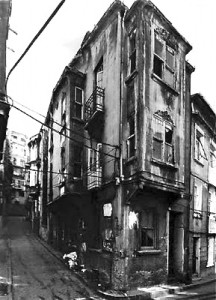
 e but, seemingly from all the neighborhoods in which she has lived. Absolutely obsessed with her, Kemal begins to exhibit signs of severe emotional problems as the wedding gets closer, and he and Sibel go off to a secluded, private “yali,” a beach house on the water, where they live for months trying to rekindle the love that they once had.
 x Chadwick is the Information Officer for the British army on Malta during World War II. “Loyal Little Malta,” a British colony strategically located between Sicily and North Africa, has been bombarded non-stop by the Germans and Italians for many months. Though British submarines based on Malta have been interrupting German shipping in the Mediterranean since the war began, the British are almost helpless against the Axis air power. In April, 1941, “the Luftwaffe flew a staggering 9600 sorties against the island, almost double the number for March, which itself had shattered all previous records.” The British have three hardy biplanes–Faith, Hope, and Charity–which have been in the air around the clock in an effort to delude the Italians and Germans into thinking they have more planes than they really do. Virtually all their Spitfires and Hurricanes have been destroyed, many while still parked at the airport, and new planes have not arrived. The total number of aircraft available to defend Malta, at this point, is a mere ten, including Faith, Hope, and Charity, while masses of Junker 88s “with a covering fighter force of sixty” attack one or more times a day, bombing the island into rubble.
 uthor Mark Mills creates an atmospheric and ambitious novel of Malta, which, during World War II, was “the most bombed place on earth,” and he attempts a wide scope in less than three hundred pages. Unfortunately, this allows him little opportunity for full development of any of his plot lines. Though the novel takes place during a horrendous period of carpet bombing, it is not a war novel in the traditional sense, as the strategizing and maneuvering which one sees in most war novels are not significant here. How the Maltese survived, and the inbred traits which kept driving them would have been a vibrant topic for discussion and illustration in this novel, but nearly all the important characters here are British (with one American), the Maltese remaining on the periphery. A section which appears at the end of each chapter takes us into the mind of the killer of the sherry queens, suggesting a psychological emphasis, but the killer’s personality does not jell, and the reader does not get a sense of his compulsion to kill and why. When the killer’s identity is learned, it comes as a surprise, rather than from a growing awareness of clues. The three women who are killed and details of their deaths are presented as facts, rather than as stories within stories.

 It is 1979, and Noman knows that “sooner or later, everyone is liable to run afoul of the regime or be mistaken for someone who has. Being free only means one thing: imminent arrest.” Though he is completely innocent, Noman spends the next year being moved from prison to prison, where he and those with him are tortured by some of the most painful methods ever devised. As Noman moves around the country, he observes that ninety-nine percent of those arrested, tortured, or executed are completely innocent, yet none can prove their innocence since all are assumed to be liars from the outset. The best any innocent person can hope for is a lighter sentence, and lighter abuse, until his eventual release, weeks, months, or years hence–if he survives prison at all. As one of eighteen men in a cell measuring six by eight feet, Noman asserts that “despite the exhaustion, restraints, and reduction of my humanity to the banality of a mere number, I found myself in a space suffused with human warmth. These men might have violated the laws of society or they might have been criminals from the point of view of the state, but I believed in their innocence partly because I knew my own and partly because they received me with open arms; I felt I was one of them.”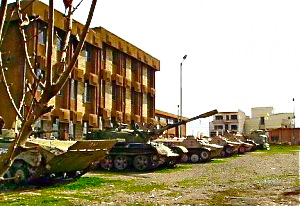
 Dunfree gets her first hint of some of the difficulties she will face during an ornithological research project in the San Blas Islands, off the coast of Panama, when the ticket agent at the airport refuses to sell her a one-way ticket. Insisting that she does not want to return the following day, Jenny is unable to convince anyone at the airport that she will stay on Sugatupu for an extended period of time. Her duties, funded by a foundation, are to study a nest of harpy eagles, a rare species, and keep notes on their behavior, their feeding habits, and any eaglets which may appear. Exhausted when she finally makes her way to Sugatupu by canoe, she is immediately accosted by a young boy who drags her through the night-time forest to the village meeting house. There, she must list her genealogy for the village elders. She is not allowed to tell her own name, however, nor is anyone else allowed to ask it. “Without a name, do I have a soul? Am I a real person?” she wonders.
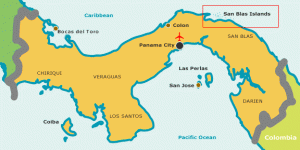 Because Jenny obviously appreciates nature, which is the basis of all the Kuna beliefs, she is watched over and somewhat protected by the Kuna. San Blas has also been recognized as a dropping point for cocaine, and Jenny has become friends with a white man who sometimes shows up to chat with her, armed with a pistol. As her research work continues, she becomes more and more convinced that the eagles that she is observing are not harpy eagles at all, a fact that could jeopardize the whole project.
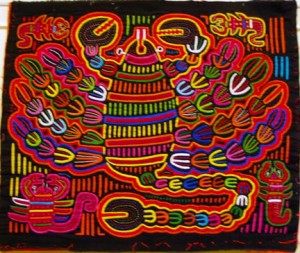 The novel becomes deeper as it progresses, and the reader’s fascination with the culture grows. Ultimately, it is Jenny’s respect for the culture and beliefs which make the novel work. Though it is clear that some aspects of the culture of these islands will inevitably change, the author’s own work there as a “cultural guide” and “technical advisor to a women’s cooperative” will help preserve the essence of their way of life.