Note: This novel was WINNER of the (US) National Book Award in 2009, and WINNER in 2011 of the IMPAC Dublin Award, the literary world’s most valuable prize.
“At his center [Philippe Petit] never moved…He felt for the curve of the cable with the arch and then sole of his foot [as he began walking the tightrope strung between the Twin Towers of the World Trade Center, a quarter of a mile above the ground]. A second step and a third. Within seconds he was pureness moving, and he could do anything he liked. He was inside and outside his body at the same time, indulging in what it meant to belong to the air, no future, no past, and this gave him the offhand vaunt to his walk.” —August 1974.
Philippe Petit’s  heart-stopping performance, as he walks the tightrope between the two World Trade Center towers, becomes the pivotal event of this magnificent (and monumental) “New York novel” in which Irish novelist Colum McCann examines many facets of the city’s life in 1974. Focusing first on the down-and-outers—prostitutes, the desperately poor, the drug- and alcohol-addicted homeless, the infirm elderly, gang members, casual thieves, and bright young people with no futures—he recreates the lower depths of New York, a place where its citizens every day walk the fine line between survival and death on a completely different tightrope from that of Philippe Petit. Like Petit, however, all of them also rejoice in moments of beauty, the only thing that can make their lives worth living—an unexpected kindness, the helpfulness of a friend (who happens to be a monk), and even the bright graffiti that shows up overnight, deep inside the tunnels of the subway. Unfortunately, for some, it also appears at the end of a needle.

Misery is not limited by economic boundaries here, however, as McCann also shows through other characters, in other parts of the city. The emotional paralysis of Claire Soderberg, a Park Avenue matron, unable to resume her life after the death of her only child in Vietnam, is shared by her support group of four other mothers from all over the city, who have similar devastating losses. An artist from upstate New York, involved in a terrible accident in the city, is overwhelmed by her sense of guilt, and an educated Guatemalan immigrant, who had hoped to finish medical school in the U.S., must let go of her dreams.

Petit walks between the Twin Towers
The novel begins with the arrival in the South Bronx of Ciaran Corrigan from Ireland, seeking his younger brother John Andrew, known simply as “Corrigan” or “Corry,” a monk who has studied in Belgium and who now lives a bare-bones life among addicts and prostitutes in the projects in the South Bronx. Often the brunt of their jokes and sometimes of fists, he provides a way-station for the prostitutes who need a place to stop between tricks. Two of them, Tillie and her daughter Jazzlyn, have good intentions and great street smarts, but they are unable to escape their surroundings, which offer a much-needed quick buck and help them to support Jazzlyn’s two little girls, and her dangerous drug habit.
Ciaran, afraid for the physical and emotional welfare of Corry, tries to persuade him to return home, but Corry, in the midst of a spiritual crisis, will not take the easy way out of the ministry he believes he was meant for, and Ciaran eventually decides that Corry is one of the world’s thirty-six “hidden saints…one who has lost his line with God: He bore the sorrows on his own.” Corry’s accident while driving Jazzlyn home from jail, adds two new characters to the novel, both of them artists in search of new inspiration and understanding of beauty.

Iconic photo of Petit on wire as plane looks as if it’s crashing into the World Trade Center
Dense and impressionistic in style, McCann illuminates the lives of many well-developed characters living in various parts of New York City, always doubling back to images of Phillipe Petit on his tightrope, and always showing his characters’ overlaps, which supersede social class and neighborhood and eventually begin to resemble the “six degrees of separation.” Life in general is “nasty, brutish, and short” here, with no guarantees that it will ever improve, and as Tillie says of her life, “I don’t know who God is, but if I meet him anytime soon I’m going to get Him in the corner until He tells me the truth. I’m going to slap Him stupid.” As she sees it, “If you think of the world without people it’s about the most perfect thing there ever is. It’s all balanced and shit. But then come the people, and they fuck it up. It’s like you got Aretha Franklin in your bedroom and she’s just giving it her all, she’s singing just for you, she’s on fire, this is a special request for Tillie H., and then all of a sudden out pops Barry Manilow from behind the curtains.”

Image of the South Bronx
In the final section of the novel, McCann switches to 2006, as a character holds an inspirational photo of Phillipe Petit walking on his tightrope, with a low-flying plane above him that appears to be just a few feet from flying into the World Trade Center—“one small scrap of history meeting a larger one. As if the walking man were somehow anticipating what would come later…[But] the plane passes, the tightrope walker gets to the end of the wire. Things don’t fall apart…the man alone against scale, still capable of myth in the face of all other evidence.” In his gorgeous, lyrical descriptions of Philippe Petit’s walk, McCann suggests that this walk may be considered an extraordinary “gift” of beauty to the city below. And with this novel, McCann also makes such a gift, an extraordinary homage to New York, with all its flaws, its traumas, its heartbreak—and its beauty. (My Favorite Novel of 2009)
A video news report of Petit’s (real) tightrope walk appears below.
ALSO by Colum McCann: DANCER TRANSATLANTIC THIRTEEN WAYS OF LOOKING
Notes: The author’s photo is from the Guardian UK: http://static.guim.co.uk
The image of Phillipe Petit appears on http://www.miamiartzine.com
The motif of Petit’s walk while a plane goes overhead, appearing to be aiming for the World Trade Centers, appears as a still photograph on http://cube1986.blogspot.com
An image on this website by Sarah Nelson shows the South Bronx, where Ciaran Corrigan worked: http://www.aboutmyplanet.com
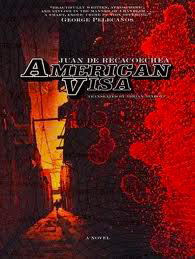 h Mario Alvarez, in Juan de Recacoechea’s novel American Visa, likes to think of himself as a hero created by one of the great writers of hard-boiled crime stories, he recognizes that, in reality, he is something of a romantic, “a lover of the impossible, a dreamer who never can choose his dream, an incomplete man.” He has come from Oruro to La Paz, Bolivia, to get a tourist visa for the United States, and he has only enough money for a week’s stay at the Hotel California, a seedy hotel in which his room is like “a cell for a Trappist monk.” While he’s awaiting his interview with U.S. officials, he comes to know some of the other inhabitants of the hotel, all of them with their own problems. Don Antonio Alcorta is an elderly asthmatic who, though dependent on handouts, is a person “without visible frustrations.” Senor Antelo is a gigantic former soccer goalie who is hoping to get a job in the Customs Department, where his life will be secure. Alfonso, “or Gardenia, depending on circumstances,” is a transvestite heavily involved in the gay bar scene. Mario also visits with his uncle, a barber who does not recognize him, and he spends time with Blanca, a prostitute who wants him to be her pimp.
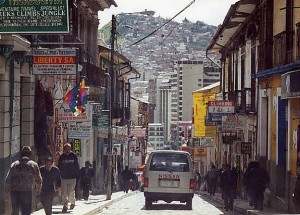 money he needs, the reader learns Mario’s family history and follows him as he wanders La Paz, a city which has changed dramatically in recent years with the arrival of half a million peasants, many of them Indian. He meets a former friend from the army, now a miner, who is part of a protest that has been going on for a week—a protest in which the miners have crucified themselves on a public fence. He meets an author at a book-signing, along with a beautiful and wealthy woman. He attends an elegant party, and he spends nights getting drunk in the sleaziest bars in the city. By the time he finally decides what he must do to get the money he needs, the reader is rooting for his success, even as he is showing himself to be an undesirable candidate for a visa.
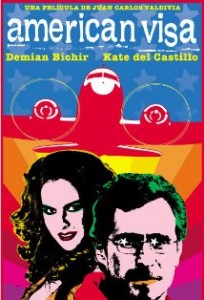 kind of farce–and Mario himself knows that only by committing a major crime “can I redeem myself in my own eyes.”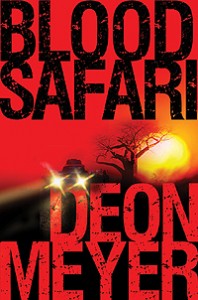

 As Lemmer and his client, Emma le Roux, try to find out if the Jacobus de Villiers whom she saw on TV is, in fact, her brother, they are exposed to the life-or-death infighting among the various conservation groups, the sometimes mysterious relationships between conservation police and local law enforcement, and the relationships and conflicts of these groups with developers and local tribes who want a piece of the tourist game-park action. Violence is a way of life for these people, and Lemmer is often in the crosshairs of his and Emma’s unknown enemies.
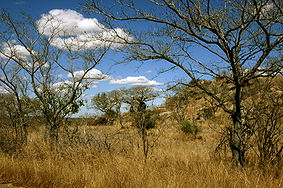 nes, describing the environment, the local settings, the animals, and the racial interactions of South Africa’s citizens in vivid detail. The people who oppose Lemmer’s investigation are understandably reluctant to go along with him, and their points of view are broad and not tritely black or white. Irony abounds, and the political and social repercussions of the resolution become understandable even if they do not always draw the reader’s sympathy. This is a terrific and unusual thriller, the fifth of Meyer’s novels, all of which are written in Afrikaans and translated, and each of which has been better than the last.
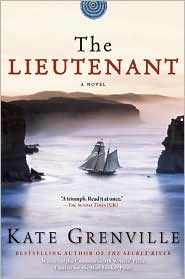 g this fine novel about the settlement of Australia’s New South Wales on the real life and notebooks made by Lt. William Dawes from 1788 – 1790, author Kate Grenville subjects the empire-building attitudes of the Crown and its representatives to careful scrutiny and creates a novel filled with conflicts and well-developed themes. New South Wales was already inhabited by an aboriginal population which had its own language and culture when a thousand British officers and prisoners, both male and female, landed their eleven ships in Sydney Cove and took over land which had been the traditional homelands of the aborigines. Demonstrating the arrogance of conquerors, these officers and officials imposed their harsh “justice” upon anyone who challenged their will and their national “destiny.” Convinced that they were superior, not equals, they introduced themselves to the exceedingly shy native population through a demonstration of power, forever losing the opportunity to communicate with a culture they regarded as inferior.
 ours.” Stunned by the cruelty, Rooke realizes that an opportunity to create some sort of relationship between the Crown and the natives has been lost forever, and he can only wonder what he would have done if he had been directed to give the order to seize the two captives. He recognizes that he is in conflict with his peers at the most basic level in his attitudes toward these people . For one former military friend, “the impulse was to make the strange familiar, to transform it,” while for Rooke the objective was “to enter that strangeness and lose himself in it.”
 leave behind everything you thought you knew. Until you could put yourself at some point beyond your own world, looking back at it, you would never see how everything worked together.” A well-developed novel which explores the human costs to both sides of colonial conquest.
 arkable impressionistic novel, author Kent Meyers focuses not on plot development and not on character analysis (however well developed the characters may be), but on the rippling effects of the death of young Hayley Jo Zimmerman on her community. Meyers does not dwell on Hayley Jo’s fate for its drama or its sadness but for its seeming inevitability, a main theme throughout the novel. Hayley Jo’s death, in turn, illuminates the choices the other residents make in their own lives and highlights the inevitability of their own fates. As Meyers explores his metaphysical themes in earthy, naturalistic detail, Twisted Tree comes alive. In this small South Dakota town, everyone lives close to nature and close to the bone, a place where nothing is easy, and even less is certain. Working hard does not guarantee success, religion does not guarantee peace, and random events can make and destroy lives without warning. As Hayley Jo’s abductor himself observes very early in the novel, “Too much coincidence should raise suspicion, but it doesn’t work that way. People will insist on meaning—in falling stars, rolls of dice, any kind of randomness. It makes so much possible.” And it is human nature, of course, for those in the community who have had any contact with Hayley Jo to insist on looking for meaning in the aftermath of her disappearance, often blaming themselves for what they did not do to prevent it, as if they might have changed her fate.
 Dividing his novel into sixteen sections narrated by fifteen different characters, author Meyers shows their interrelationships with each other and their connections with Hayley Jo, ignoring the whole concept of time as he alternately explores past and present, shows how the diverse characters have known Hayley Jo, and builds the story of her death obliquely. Hayley Jo was a championship rodeo rider, excelling in barrel races, and she had been working hard to become a long-distance runner, pushing herself to the limit on every practice run. An anorexic, she had decided not to go to college, preferring to pursue her more physical goals instead. Her best friend Laura Mattingly, a running partner, worried about her anorexia but never informed anyone else, and Hayley Jo’s parents seem to have been oblivious to it.
 s become mentally disturbed through caring for her speechless, wheelchair-bound father for years, hears about Hayley Jo’s death and connects the details with her own fantasies. Eddie Little Feather knew Hayley Jo through the rodeo, and Shane Valen saw Hayley Jo being born when her parents could not make it to the hospital. Her parents agonize over her death, and her boyfriend, with whom she enjoyed fishing at age thirteen, has still not reconciled her breakup with him many years later.