“El Bahja [Algiers] is sick…Everywhere, slovenly cops harass their people, except when there’s a riot and immense crowds gather in public places…The fundamentalists are inching ahead, good people are pulling down walls and the young are seeking the terrible darkness of despair in shadowy doorways.”
Set in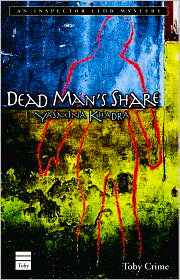 1988, twenty-five years after Algeria’s independence from France, the country is still suffering from political instability, corruption, and the residual rivalries and hatreds between those who supported French rule during the war and the FLN and other groups, socialist and otherwise, which fought against French rule. The internecine rivalries and hatreds among a multitude of these local groups, many of which shared the same general goals during the war, have divided families and continued into the next generation with even more bloodshed. The devastated economy at the end of the war has not been improved, people are living in poverty, religious fundamentalism is growing, the young have no future, and citizens everywhere are casting jaded eyes on those who reek of success—shady businessmen, corrupt politicians, and those who have achieved their wealth at the expense of their fellow citizens.
In this newest installment of the Inspector Llob series, chronologically the “pre-quel” to the series, author Yasmina Khadra turns a spotlight on Algeria’s devastated country and its demoralized citizens. Khadra, who admitted his real identity in 2001, is, in reality, Mohammed Moulessehoul, an Algerian army officer/writer who escaped censorship by seeking refug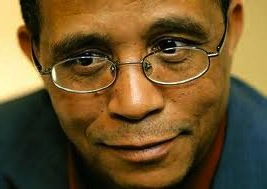 e in France in 2000, where he has lived in seclusion ever since. His main character, Superintendent Llob, is also a writer—an honest police official who does not compromise. Smart-mouthed, with a cynical sense of humor and an understanding of the ironies of everyday life, Llob manages to stay afloat in the murky waters of Algerian bureaucracy, supported by Mina, his loving wife. His assistant, Lieutenant Lino, is completely ineffective as this novel opens. He has fallen in love with a gorgeous woman, and as a result, he is spending lavishly on his clothes and appearance, going to restaurants he cannot afford, calling in sick when he is at his fittest, and creating disturbances while drunk and disorderly.
Llob wants to help Lino, but even he becomes impatient when Lino’s excesses come to the attention of the powers that be and start to affect Llob’s own job. In the meantime, SNP (for “sans nom patronymique,” meaning “no family name”), a serial killer, has received a presidential pardon and is about to be released after spending seven years in an asylum and additional years in jail. Llob is horrified, especially when he hears tapes of SNP declaring: “I kill to understand. And I’ll go on killing as  long as I don’t understand what pushes a human being to excel in the art of lavishing the most excruciating torments on his fellow men.” Llob cannot stop the release since an influential a member of the Political Bureau, has signed the papers. The unusual calm which has permeated Algiers for the past several weeks changes.
In Part II, Lino is back at work, temporarily, but when the chauffeur of a wealthy and influential man is shot to death and the gun used matches Lino’s gun, Lino is arrested, sent to a hellish dungeon, and kept incommunicado, even from Llob. Another murder sends Llob into the hinterlands with journalist/history professor Soria Karadach, a researcher studying events from August 1962, immediately following the end of the war, especially in Sidi Ba, a small town in which a massacre occurred. There Llob meets with harkis (Muslim Algerians who worked with the French), maquisards (rural guerrillas who worked with the French Resistance), mujahids, and people claiming to be members of the FLN, socialist freedom-fighters. None of these people trust any of the others to remember “correctly” what happened in the town, but gradually, the past of one of Algeria’s most famous citizens begins to emerge.
Eventually, the events of Sidi Ba and the arrest of Lino converge, and though the details of the plot are extremely complex, the novel is carefully constructed, and the mystery is fully resolved. Khadra is an accomplished novelist who creates fully-developed characters, endowing them with deeply human failings and giving them a kind of dark humor which allows them to survive the violence and irrationality they face every day in Algiers. The betrayals of individuals by each other, of citizens by their leaders, of the law by police, of innocent victims by the judicial system–all contribute to the darkest of noir fiction and a vision of Algiers which makes one want to weep for the victims.
Notes: According to Wiki: “In 2004, Newsweek acclaimed [the author] as “one of the rare writers capable of giving a meaning to the violence in Algeria today.” http://en.wikipedia.org
His photo is from http://penatlas.org
The flag of the FLN (National Liberation Front, a socialist organization) during the Algerian Civil War appears on http://flagspot.net
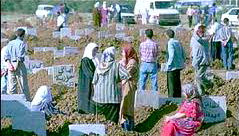
Mourning the victims of the continuing Algerian violence: http://news.bbc.co.uk
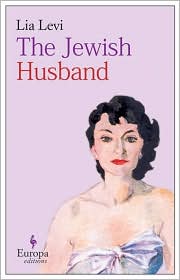 nnamed writer begins writing a long letter to an unknown recipient in Italy, a letter he knows will take weeks, if not months to conclude. The writer’s references to the Six Day War and to the fact that “here most of the people have no past and no one is surprised” quickly establish the letter writer’s home as Israel, but there are no clues about the person being addressed. Writing from Tel Aviv, the narrator reconstructs that time in his life “before Israel,” when he lived in Rome and where his parents owned the Albergo della Magnolia, an elegant hotel.
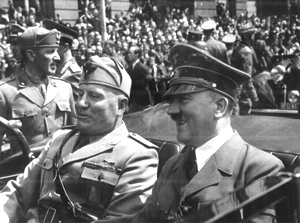 A census in which every resident must indicate his race, the declaration that Jewish students cannot attend public schools, a new law prohibiting Jews from owning property worth more than a certain amount and forbidding of Jews from running businesses, inevitably change the fabric of the society, but the change is gradual and for most of the characters, all of whom are engaged in active everyday lives, the long-term impact is not fully grasped. The love of Sonia and Dino is increasingly tested by political forces, and their families begin to exert ever more pressure on their relationship.
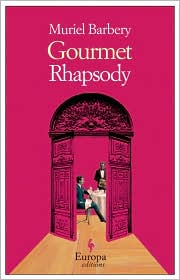 re Arthens, a French food critic who regards himself as “the greatest food critic in the world,” has just discovered that he is dying, with only forty-eight hours to live. A resident of the Rue de Grenelle apartment building which is the center of Barbery’s
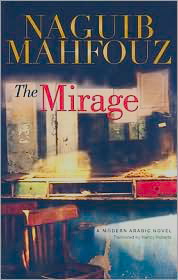 z is a never-ending source of literary surprises. In this unusual and often charming novel from 1948, newly translated and republished by the American University of Cairo, Mahfouz writes his only Freudian, psychological study, an analysis of Kamil Ru’ba Laz, a young Egyptian man so dominated by his mother that he is unable to make a single decision or form a single successful relationship with the outside world. When the novel opens, his mother has just died, and Kamil, in his mid-twenties, is devastated. Though he believes that “people who write are, generally speaking, people who aren’t alive,” he recognizes that he was not really alive before his mother’s death. He hopes that writing will allow him “to remember her and to recover her life…[so that] I may be able to repair the thread of my life that’s been broken.”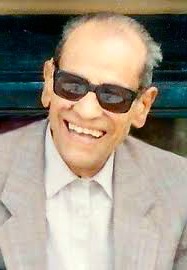
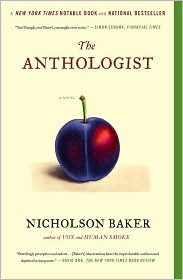 mor of the cover, with its luscious plum, sets the tone for this rich, iconoclastic novel about poetry and the writing life. Paul Chowder, the speaker, has achieved modest success by writing “plums…That’s what I call a poem that doesn’t rhyme…We who write and publish our nonrhyming plums aren’t poets, we’re plummets.” Chowder has just compiled an anthology of poetry which he hopes will, one day, be used as the comprehensive anthology for college students and as a source of pleasure by all those who savor the music of language. Choosing the poems for the anthology was, for him, “like [being] that blond bitch-goddess on Project Runway,” and he must now write the forty-page introduction. His publisher is desperate for it, and Chowder has writer’s block.
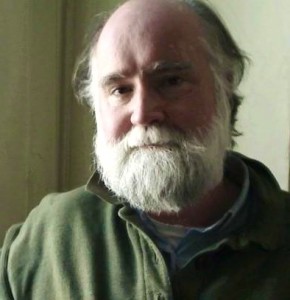 likely subjects which keep the reader surprised and entertained. In two successive sentences, for example, he remarks that “You have to suffer to be a human being who can help people understand suffering. I have a mouse in my kitchen.” Later, while eating a messy egg salad sandwich, he “wiped some of the night’s kinked mouse droppings from the stovetop…and thought of a poet named Ed Ochester.”
 Not satiric and not anti-academic, so much as “anti-ponderous” and “anti-pompous,” Chowder is a true believer in the importance of good poetry and its ability to connect directly with our essential human nature by conveying unique visions of the world in a unique “music.” “My life is necessary,” he asserts, “because I sustain the idea of poetry through thick and thin. That’s my job.” For him, being a great poet just means that you “wrote one or two great poems. Or great parts of poems. That’s all it means.” Conferences, workshops, and readings are “nonsense…a joke.”