“[Her mother] saw the world in images, and the images came from the Old Testament. Before August 29, 2943, the German soldiers were like the swarms of locusts in Egypt, a gray-green penance imposed on an unbelieving people, and when they came into the shop to buy milk, it was the eighth plague she saw.”
Firmly r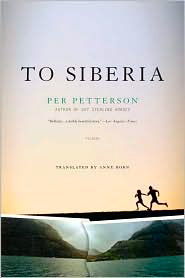 ooted in the harsh Scandinavian landscape which informs every aspect of his writing, Norwegian author Per Petterson creates novels that appears to spring fully grown from the rocky soil of his Norwegian background. His characters are hardy people who rein in their passions, except when under the influence of alcohol, subduing their private griefs in the cold and brittle emotional climate which surrounds them. His plots, like life, consist mainly of fragile moments—moments of great significance for the individuals living them, but often lacking in drama on a grander scale, and when traumas occur, they are simply accepted as part of life. The overwhelming feeling one gets from reading these novels is a kind of claustrophobia—a feeling of characters being hemmed in, frozen alive, with no escape from the serious business of living, despite the fact that the gray oceans they see all around them appear endless, and the snow-covered fields go on forever.
To Siberia, the latest of Petterson’s novels to be translated into English, continues these themes. Nominated upon its publication in 1996 for the Nordic Council’s Literature Prize (which Petterson won in 2009 for I Curse the River of Time), it is set in Skagen, in Denmark, at the tip of Jutland. The unnamed speaker, who is aged five when the novel opens, is a worrier—a little girl worried about the fierce-looking lions who guard the gate to a nearby house and about her father’s ears freezing and falling off when he does not wear a hat. Her father is a carpenter/joiner, one of the best; her extremely religious mother creates and sings hymns. Neither pays much attention to her.

Almost anonymous, the little girl comes closest to having a name when her devoted brother Jesper refers to her as “Sistermine.” The two are extremely close, though Jesper is three years older, and they spend much time together, sharing their dreams. Jesper plans to become a Socialist and go to Morocco, while Sistermine intends to travel from Moscow to Vladivostok on the Trans-Siberian Railway. Though she knows that Siberia is cold, she also believes that the Siberians have furs to keep them warm, and that’s all that is important to her at this stage of her life.
Time moves back and forth here, and we know very early that the entire novel consists of reminiscences by a sixty-year-old woman whose brother died thirty years before. As we meet her friends, one of whom dies of a mysterious illness when she is a child, we also watch Sistermine and Jesper grow through their teen years, go to a dance, begin to have feelings for the opposite sex, and, more importantly, learn about why their parents remained in a place which enslaved them.
On April 9, 1940, Germany overruns Denmark, killing five Danish soldiers at the border but encountering no resistance, and life does not change very much for the child until two years later, when she is told that she will have to leave school because of lack of money and the war. “What War?” she cries. “Hardly anyone fights in this country…NO ONE DARES TO FIGHT IN THIS COUNTRY.” The Germans have not learned their language and have done nothing except march, dig trenches, bathe in the Frydenstrand, and make suggestive remarks to the wo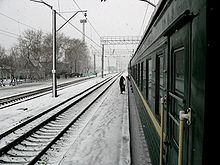 men. Jesper has become involved with a group that ferries Jews out of Denmark to other countries, successful to the point that very few Jews from Denmark were ever captured. Eventually, Jesper escapes Denmark to Morocco, and Sistermine moves to Copenhagen, Stockholm, and Oslo, having a number of meaningless affairs to feel “alive.”
Dark and often bleak, To Siberia uses its title as a symbol of the yearnings of the main character, and the reader recognizes almost from the outset that she is already in Siberia, emotionally. The denouement, in which the fate of Jesper in Morocco is revealed and the prospects for the speaker are unraveled, keeps the reader firmly grounded in Siberia, that cold and unsympathetic environment similar to the life the speaker knows among her family in northern Denmark. This novel evokes feeling of unmitigated admiration for the skills of the author in creating and telling a story, though the characters remain too distant and private to evoke similar feelings. Siberia wins here.
ALSO reviewed here: Petterson’s I CURSE THE RIVER OF TIME, IT’S FINE BY ME, I REFUSE, ASHES IN MY MOUTH, SAND IN MY SHOES, OUT STEALING HORSES
PHOTOS. The author’s photo by Torunn Nilsen appears on http://www.boston.com
This photo of the Trans-Siberian Railway at Nazivaevskaya (Называевская) station, Siberia, is from http://en.wikipedia.org
 thic” novel with dark, religious overtones, John the Revelator by Peter Murphy is set in rural southeast Ireland, where the author himself grew up. The “revelator” of the title, “someone who reveals divine will,” is a boy named John Devine, for the “beloved disciple,” the only one of the apostles who escaped martyrdom, and the patron saint of writing. Born to an exceptionally religious single mother, a house cleaner, John’s childhood seems relatively normal, despite his poverty, though he is pre-occupied with worms. He has nightmares in which he combines his daily life and his worries into horrific tales involving crows. By the age of fifteen, however, John is “content with his own company,” and not terribly rebellious.
 At this point, halfway through the book, John resembles teenagers around the world, though perhaps a bit more introspective. The novel, until now, is well organized and exceptionally well written, with unique characters and a setting which allows the author to plumb the myths, folklore, and beliefs of rural Ireland. Every detail counts and relates to every other detail, and the author obviously has a big picture in mind for his themes. The turning point, however, suddenly introduces dramatic new elements which many readers will not be prepared for–changing what might have been an unusual coming-of-age novel with a provocative setting into a fast-paced horror novel, filled with violent details which many readers will find revolting.
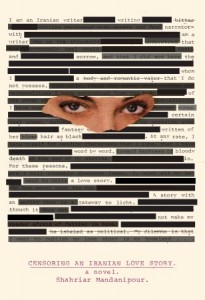 I picked up this book, written by a Iranian author, my only expectation was that it would be an interesting view of life in Iran today, and, in particular, the life of a writer trying to avoid the “thought police.” What I never expected was that the book would be so funny! Witty, cleverly constructed, satiric, and full of the absurdities that always underlie great satire, Censoring an Iranian Love Story is a unique metafiction that draws in the reader, sits him down in the company of an immensely talented and very charming author, and completely enthralls him.
 Gradually, the two young people begin to have “whispering computer chats,” and eventually meet secretly, including once in a cemetery and once in the emergency room of a hospital, avoiding situations in which anyone from the Ministry of Islamic Culture and Guidance will see them, since the meeting of a young man and woman who are not related is prohibited. Though they fall deeply in love, Sara is also being courted by Sinbad, a very wealthy older man, and her family knows that if she marries him, they will all be better off, financially.
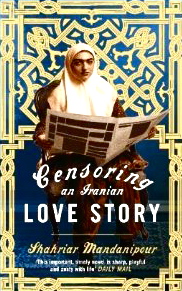 As the story progresses, Shariar Mandanipour comments about censorship in his own life. Though the Iranian Constitution allows free speech, it does not say that books and publications can “freely leave the print shop.” Hence, many books get printed and then never released, unable to get the required permit. Major film masterpieces are banned or censored, and headscarves unexpectedly appear in traditional stories for six-year-olds.
 Saturday morning in April, the Yale campus discovers that more than two dozen students have gone missing in the past thirty-six hours, many of them the children of parents prominent in industry and government. Most of them have recently been “tapped” for one of Yale’s secret societies—such as Skull and Bones, Scroll and Key, and Book and Snake. All these societies own elaborate Greek edifices on campus, the most prominent architectural feature of which is the complete lack of windows. Inside these “tombs,” the societies’ secrets remain absolute. This morning, however, all the attention is on the tomb of Book and Snake, where, it appears, the missing students are being held hostage.
 e develops his suspense, revealing the names and backgrounds of some of the hostages and their parents. When Ann Summers Calderon receives a recorded message from the kidnapper, she persuades Sam Purdy to go to New Haven to act as her eyes and ears. She will tell him nothing more about what she plans to do, and he will have no traceable contact with her. The nature of the terror plot is so unusual, that FBI agent Christopher Coe also decides to go to New Haven. As special teams and hostage rescue teams arrive from various departments in the federal government, they take over from the Campus Police and the New Haven Police. The alphabet soup of agencies becomes daunting, and exactly who will make the final decisions is unclear to all. Soon students start to be released from the tomb to face their varying fates—some killed and some freed, seemingly at random.
 important up in the air, some question unanswered, some unexpected new drama unfolding. The reader can never feel comfortable with what is happening on campus, what may happen in the future, and what has already happened, either to the hostages in the tomb or to the frantic parents, police, and federal investigators. His psychologically vulnerable characters behave in plausible fashion, often sharing their emotional wounds with the reader and inspiring great empathy. The level of tension never wanes.
 nd in many cases, the memories of the aged, infuse this collection of fourteen stories with surprises. Author Jane Gardam, two-time winner of the Whitbread Prize, creates ironies and absurdities for her readers, at the same time that she creates poignant and often moving scenes. Filled with wry humor and clever turns of phrase, this collection, like Gardam’s novels, asks questions about whether we are the people we think we are, whether we are the people other people think we are, and whether we are the people we want to be. The secret lives and not so secret lives, the realities and the fantasies, and the faces we keep firmly fixed for the outside world–all become fertile soil for Gardam’s exploration of her characters.
 Other characters illustrate the accidents of survival and the inability of each of us to control our lives. In “Babette,” the story of a writer, a bathtub stored in the attic runs amok and creates disaster. In “The Flight Path,” which takes place in 1941, a young man makes a life or death choice, barely thinking about it at the time. “The Virgin of Bruges” is a nun who goes to church one night, only to discover that it is being used for a wild, drug-filled orgy. In “The Last Reunion” four elderly women, one of whom is senile, gather at the school they attended to talk, argue, and complain.