“The Turks are killing hundreds of thousands of people, everyone knows it, and the only way Americans come to their aid is by cleaning their plates (‘Remember the starving Armenians’), gobbling down every last slice of peach pie, slurping up every last drop of cherry ice cream. America gorges on behalf of dark, swarthy Armenia but storms into battle [during World War I] for blond, blue-eyed Belgium.”
 Although most Americans know that World War I began in 1914, far fewer know that while that war was being fought in Europe, a million Armenians were being exterminated by the Turks. In a series of massacres over a period of more than twenty years, most notably between 1894 and 1915, the Armenians were forced from their land, marched across barren plains under deplorable conditions, and subjected to depredations from which death was often a merciful release. Hope came at the end of World War I, when Armenia was promised self-rule and the Turks were forced by the world community to punish those responsible for the massacres, but by that time many killers had escaped to Europe. Turkey indicted them, but few were punished.
Author Judith Mitchell seizes on the fact that many Armenian-Americans, referred to as “hyphenates” by President Wilson, fought in the war in Europe but were also committed to making Turkey pay for its crimes against their families and culture. She creates a fascinating plot which brings to life the efforts by Armenians in Europe and America to address the wrongs done to them by bringing the Turkish leaders of the massacres to justice, either legal or ad hoc.

Doubleday (Dub) Hagopian, given his first name when he arrived in the United States as a small child, is from Providence, Rhode Island, an American living in a city with a sizable Armenian population. Speaking both Armenian and English, he grows up in the Armenian culture but does his duty as an American by fighting in the war in Europe, and working as a translator during the Paris Peace Conference. He is also part of a secret society of Armenians, dedicated to capturing three leaders of the massacres who have escaped to Germany, along with the former police chief of Adana, Kerim Bey, now in Paris. Bey was responsible for locking the doors to the church where Armenian families were worshipping, and then lighting it on fire, burning to death all the men, women, and children who were inside.
Yale White, formerly Yael Weiss, an adventurous eighteen-year-old from St. Louis, meets Dub briefly when he is in St. Louis to acquire weapons, and is so smitten she then lies about her age and religion and changes her name in order to follow him to Europe, where she works as a “canteen lady” for the YMCA. She and her unconventional best friend, Mary “Brennan” White, who pretends to be her sister, presage the “flapper” attitudes that will develop after the war, while Dub and Raffi Soghokian, an acquaintance from Providence, serve the serious cause of Erinyes, a secret organization seeking to avenge the massacres.
As the action m oves forward, the author presents flashbacks, which reveal the terrible history of the Armenians, not in generic terms, but in its effects on individuals in the novel. Yale’s Jewish background, the Irish Catholic background of Mary “Brennan” White, and the fundamentalist background of Rev. Alban Bliss and Amo Wilson, leaders of the YMCA, broaden the scope of the novel and put the Armenian massacres into historical perspective. Though the Irish suffered under the British, and the Jews will later suffer massively under the Germans, the western world knows little about the systematic extermination of a million Armenians.
The plot is exciting, as the love story of Dub and Yale develops and Yale commits herself to Dub’s cause. Europeans with whom Yale, Dub, and Brennan reside are also dedicated to bringing the leaders of the genocide to justice, while, at the same time, saving children who have been orphaned by bringing them to France and finding new homes for them in the United States. One of the older orphans, Shushan, herself has a memorable story which few readers will be able to forget. Interspersed throughout the novel, these stories of atrocity make the plight of the Armenians particularly vivid.
 The novel depends to a great extent on coincidences to resolve the action, with the right people being in exactly the right places at the right times, and the story loses its focus, occasionally. The use of more foreshadowing, which would unify the plot and prepare the reader for the twists and turns of the action, would have strengthened the plot line by reducing the reliance on coincidence. Though the characters are at a critical period of history, they are not very introspective, and at several points, the author steps out of “character” to teach the reader history—the basics about how World War I got started, along with details of the peace treaties at the end of World War I, which promised sovereignty to the Armenian people.
The novel is fast paced and compulsive reading, however, and it brings attention to a subject which has only rarely been the subject of novels. As the reader’s knowledge and understanding of the Armenian people and their history grows, and as the relationship between Dub and Yale blossoms, Dub’s comment in a Catholic church takes on special meaning. “Armenians don’t kneel,” he says to Yale. “Neither do Jews,” she replies.
Notes: The author’s photo appears on http://www.english.wisc.edu, where she teaches creative writing.
The map of Armenia is from http://www.lonelyplanet.com
The photo of Armenian Resistance fighters in 1918, led by a seventy-year-old priest, appears as part of an entry on http://en.wikipedia.org
 Author Elizabeth Kostova’s unusual debut novel combines her ten years of scholarly research on Vlad Tepes, the Impaler of Wallachia, sometimes known as Drakulya, with the stories that have become part of local folklore in Bulgaria and Rumania, and the legends created and perpetuated by Bram Stoker (in his novel Dracula). A sadistic prince from the mid-fifteenth century who killed up to 15,000 of his own people, often impaling them on stakes and leaving them to die horrible deaths, Vlad terrified his enemies from the Ottoman Empire, though it was Stoker who created the belief that he was a vampire.
 ose looking for a fast-paced blood-and-gore thriller may be disappointed by the author’s serious approach. Though the story is often exciting—and has a conclusion which packs a wallop–the characters themselves are undeveloped, and the constant shifting of location as the points of view change makes the stories difficult to follow, at times. Foreshadowing is often obvious, and the use melodramatic elements is sometimes unnecessary and intrusive–a gypsy curse, ghostly appearances in a photograph, feelings of “presences,” convenient letters and postcards, and frequent use of coincidence. At almost seven hundred pages, the story sometimes lags because the dramatic tension cannot be maintained when the focus shifts suddenly from action to research. A unique and fascinating story, filled with odd occurrences, this is an interesting combination of scholarship and legend, a debut novel from an author with a promising future.
 rst of Brazilian author Verissimo’s novels to be translated into English, The Club of Angels is a fascinating, carefully detailed, and darkly humorous study of ten deaths, the deaths of ten gourmands following their favorite meals. The men have been friends for more than twenty years, meeting once a month for sumptuous feasts together. They represent all levels of society and have achieved differing degrees of professional success, enjoying and respecting each other because of their shared love of food and their long friendship.
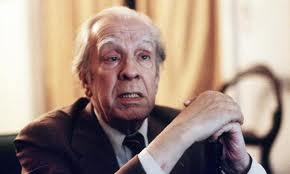
 ost original and delightful novels of 2005, Borges and the Eternal Orangutans is simultaneously a literary detective thriller, a parody of the detective story, and an anti-detective story. Taking its title (and one of its primary images) from Elizabethan writer John Dee, who wrote that if an orangutan were given enough time, he would eventually produce all the books in the world, the novel takes place in Buenos Aires, where an international group of Edgar Allan Poe specialists gathers for a meeting of the mysterious Israfel Society.
 , when his first novel, The Restraint of Beasts was nominated for both the Booker Prize and the Whitbread Award, Magnus Mills suddenly burst upon the literary world—and gave up his job as a London bus driver forever. In the ensuing eight years, he has published four more novels and a book of short stories, establishing a well deserved reputation for witty satire and social commentary. His short novels surprise and delight the reader at the same time that they often offer dark visions of humanity. His minimalist prose and terse dialogue complement the often bleak settings and set his messages into high relief, often accompanied by humor.
 Mills’s presentation of the rush to the AFP is fascinating in its own right, as the reader sees the contrasts between the parties, enjoys the excitement of the action, and identifies with some of the participants. But there is a much bigger story here–the real reason the two groups are hurrying to the AFP. When, more than halfway through the novel, the reader discovers what it is (and any attempt to describe it here would spoil the novel), a whole new set of parallels becomes obvious. The novel ceases to be “just” an action novel, with its accompanying study of the mindset of explorers and pioneers, and becomes instead a serious analysis of twentieth century social history. Dramatically broadening his scope, Mills introduces larger themes–the arrogance of power, man’s inhumanity toward others, and the intolerance of differences–issues which have dominated twentieth century history. At the same time, he also recognizes and celebrates those moments, rare and often brief, when man succeeds in making emotional commitments to the world at large.