“I love hell. I can’t wait to get back there.”
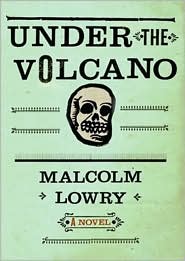 Geoffrey Firmin, the former British consul to Mexico, is a prisoner of alcoholism. A victim of the shakes, he hears voices, talks to people who are not there, and hallucinates, though he is often able to hide the extent of his drinking. “True, he might lie down in the street, but he would never reel.” On The Day of the Dead in 1938, his recently divorced wife Yvonne returns to Quauhnahuac, over which two smoking volcanoes loom, to try to persuade him to reconcile.
Coincidentally, Geoffrey’s half-brother Hugh, with whom Yvonne apparently had a brief affair, also arrives that day, and the three share quarters, each hoping to recapture the past. When they take the bus to Tomalin to a bull-riding event, they see a wounded peasant dying beside the road, the peasant’s horse with the number 7 branded on its rump, a tricky pesado, and a group of vigilantes, all of whom play a role in the climax which follows.
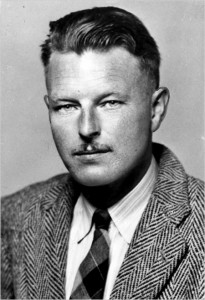
Rich with details, both of the external world of Quauhnahuac and the internal world of Geoffrey, the novel, first published in 1947, reflects Lowry’s own experiences as an alcoholic. Geoffrey, a fully-rounded character, knows that he must stop drinking in order to function effectively, but he is unable to function at all without drinking. He both loves and despises Yvonne, wants to leave Mexico but wants to stay, and wants to find peace but creates chaos.
As Lowry reconstructs this one day in Geoffrey’s life, the Day of the Dead, the pervasive symbolism adds to the feeling of overpowering doom–the smoking volcanoes ready to erupt, the “hideous pariah dog” that follows Geoffrey and Yvonne to the house, a barranca (chasm) which exists beside the house and which contains a dead dog, an Indian carrying “the weight of the past,” vultures in the forest, Yvonne’s release of an eagle in a cage, and sudden storms. All add weight and intensity to this powerful story of dissolution.
Despite the depressing subject matter and a frustrating main character who cannot or will not help himself during the novel’s four hundred pages, the novel is breath-taking–elegant both in language and construction. Carefully plotted, filled with unique imagery, and enhanced by symbolism which brings it alive on new levels, it overwhelms the reader with its impact and approaches classical tragedy as the inevitable, doom-filled events play out. Though the novel includes peripheral political issues of the day–Mexico’s instability and the philosophical conflicts between fascism and socialism–it is primarily a variation on the story of the Garden of Eden and the fall of man–full, rich, dense, and rewarding, despite its pervasive sadness.
Notes: The author’s photo from 1947 appeared in the New York Times: http://www.nytimes.com
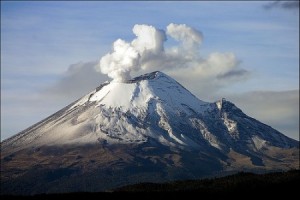
Popocatepetl, the lively volcano closest to Cuernavaca, the model for Quauhnahuac, has been active since 1994, having been dormant for fifty years prior to that. http://explorevolcanoesnow.com
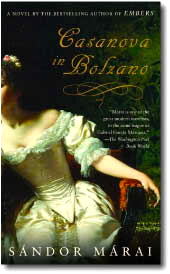 after sixteen months in a Venice jail, Giacomo Casanova, “all seven deadly sins in one accursed body,” arrives in Bolzano, where the Doge and the Inquisition cannot reach him. Seeing himself as “that rare creature, a writer with a life to write about,” he and a defrocked priest, Balbi, move into a hotel, not far from where the Duke of Parma and his young bride Francesca reside. Casanova was wounded by the duke in a duel over Francesca three years before and has promised never to see her again. When the Duke arrives at Casanova’s hotel with a letter from Francesca, asking to see him, the stage is set for the action and a surprising ending.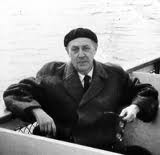
 dramatic tension as anything written by Poe, this masterpiece of character development idealizes the personal values of a lost world, and celebrates the rewards and obligations of friendship.
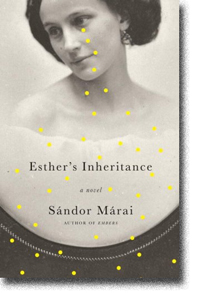 of the kind of dramatic tension and intimacy usually associated with great stage plays, Hungarian author Sandor Marai’s newest novel to be translated into English plumbs the depths of a love thwarted and then revisited years later. Twenty-three years before the book opens, sensible Esther, now in her mid-forties, shared a once-in-a-lifetime passion with Lajos, a man who bewitched everyone who came into contact with him—her brother, her family, and her friends—a man so full of energy—and lies—that life became a dangerous, exciting adventure for everyone around him. As persuasive as he was charming, he lived the good life, often “borrowing” valuable items or money from friends, and they, just as often, excusing him, wanting to believe that he would eventually return or replace what he borrowed (or not caring enough to challenge him).
 When he first meets Charles Strickland, a London stockbroker, the young narrator of this novel thinks of him as “good, honest, dull, and plain.” When Strickland suddenly abandons his wife and children and takes off for Paris, however, the narrator decides he is a cad. Though he has had no training, Strickland has decided to become an artist, a drive so strong that he is willing to sacrifice everything toward that end. Anti-social, and feeling no obligation to observe even the smallest social decencies, Strickland becomes increasingly boorish as he practices his art. Eventually, he makes his way to Tahiti, where he “marries,” moves to a remote cottage, and spends the rest of his life devoted to his painting.