“The emancipation of a white person from colour prejudice is very seldom a sudden conversion. It is rather the result of a number of experiences. Yet there is one experience that lives in my memory. Through it I knew that I was no longer primarily a white person. I had never been militantly white, but now I became militantly non-racial. I saw a vision, there is no other word for it.”
 In “A Deep Experience,” a memorable short story from this new, complete collection of South African writer Alan Paton’s short fiction, Paton introduces Edith Rheinallt Jones, an elderly white woman from Johannesburg who, though told she had a heart problem for which there was then no cure, continued to do the work she believed in for more than ten years. Her efforts on behalf of the Wayfarers (a Girl Guide organization for non-white children, the Helping Hand Club (a hostel for African girls in Johannesburg), and many other activities in the 1940s, inspired fierce love and unwavering loyalty among the people she visited. A big supporter of the programs that Paton himself was instituting at the Diepkloof Reformatory for African Boys (where Paton was Principal from 1935 – 1948), Edith sometimes needed help on weekends visiting the Wayfarer troops in remote villages, and she asked Paton to drive her to them. On one of these trips, shortly before Edith succumbed to her heart ailments, Paton’s life was changed irrevocably by the warm and honest interactions he saw between Edith and the local people. “I was seeing a vision,” he says, “which was never to leave me, illuminating the darkness of the days through which we live now.”
Published by Random House of South Africa, The Hero of Currie Road reveals this vision, presenting two kinds of stories. About half of them are about individual boys under Paton’s care at the reformatory–sensitive and insightful tales about young teenagers at crossroads, often inspired to lead honorable lives but without the ability, always, to make the right choices. The second group of stories is about the white world, mostly adults, who reflect the ingrained insensitivities of apartheid which Paton believes have permanently limited the attitudes, aspirations, and achievements of the native majority population–and which Paton sometimes despairs of ever changing. All the stories from his first collection, Debbie Go Home (known as Tales from a Troubled Land in the US), from 1961, are included here, as are the stories from his 1975 collection, Knocking on the Door. Together they show Alan Paton in his most personal, most revealing moments, in which he frankly states opinions that he cannot make in his novels, a form for which “the inexorable rule is that you must put your story first, not your politics or religion or your anger about the Group Areas Act.”
Many of these stories show the effects of exclusion on children, and Paton often reveals the paternal feelings he has for the reformatory’s youngest boys, in particular, bemoaning the fact that these ten- or eleven-year-olds don’t belong in a reformatory with boys who are in their late teens. He is trying, vainly, to set up a separate industrial school for the youngsters so they can learn a trade, and in the meantime, he becomes almost fatherly toward them. He persists in trying to institute reforms, but with only limited success. In “Ha’penny,”a powerfully moving story, an orphan makes up stories about his “family,” in order to be like other children. In “The Divided House,” young Jacky, always in trouble, suddenly experiences religious conversion, spending long hours in prayer and reflection, his determination to become a priest interrupted only by sessions of dagga, a wild cannabis found in South Africa. “Death of a Totsi” tells of an inmate’s terrible fears of a gang to which he once belonged–and which continues to make claims on his person.
In each of these and other related stories about young Africans, Paton shares his personal meditations, showing himself to be sensitive and understanding of what young Africans think, how they behave, why they react as they do, and what they need in their lives to be successful, but he is also practical, knowing when he can not afford to give “third chances” to his charges, however personally wrenching these decisions may be.
 The exclusion theme, pervasive throughout South Africa at the time, continues into the “white” stories. In “Debbie Go Home,” he shows a family in which a mother wants her black daughter to attend the black debutante ball, perhaps the only time in her life in which she can be a “princess’ who is received by the Administrator and his wife. Her husband and son object, believing they should not “lick the hand that whips us.” In “The Magistrate’s Daughter,” a young white boy, the village school’s hero, the son of a blacksmith, is attracted to the pale daughter of the magistrate, who, with her friends goes to a private school. Befriending the son in the magistrate’s family, Archie plays cricket and tennis with him all summer, until it comes time for a summer dance, a turning point for him. In “Life for a Life,” the harshest of the stories, an innocent man pays for the murder of “the master of Kroon,” and as the story unfolds, Paton gives new meaning to the term “helpless.” Other stories reflect the desperate moves made by white administrators to prevent even the mildest rebellion, moves which simply make the determination to rebel and revolt stronger. “Injustice” takes on new meanings in these stories.
Anyone who has ever read Cry the Beloved Country, Too Late the Phalarope, or Ah, But Your Land is Beautiful will find these stories to be among Paton’s most intimate commentaries on the 1960s and 1970s in South Africa, before the country’s independence, a time when apartheid was still in full sway and institutionalized injustice was a way of life. Paton’s ability to reveal characters from all walks of life makes this collection–and his powerful legacy–come alive.
Notes: Paton’s biography is on Wiki, here
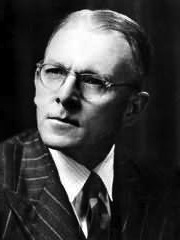
His photo is from his Amazon page.
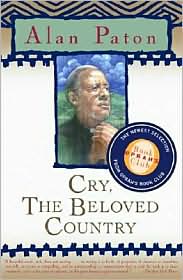
Cry, the Beloved Country (1948), Paton’s most famous novel, sold over fifteen million copies before Paton’s death in 1988.
 An extended Anglo-Irish family living in the vicinity of Dublin on the eve of the Easter Rebellion of 1916 reflects the attitudes and pressures that lead eventually to the cataclysmic events at the Dublin Post Office. Andrew Chase-White, a young officer in the British Cavalry, has been assigned to Dublin, where he has often spent holidays and where he has an almost-fiancee. His idolized cousin Patrick Dumay, “the iron man,” is secretly a member of the Irish Volunteers and an admirer of Padraig Pearse. His teenaged cousin, hot-headed Cathal, supports the Citizen’s Army under James Connolly.

 comic novel by one of England’s most under-recognized novelists depicts the life of its main character so poignantly that readers will find themselves as close to tears as they may be to chuckles. Mildred Lathbury, at thirty-one, already regards herself as a spinster, a woman who has completely repressed her inner self so that she can lead an “excellent” life. Working for the Society for the Care for Aged Gentlewomen during the day, she also helps Fr. Julian Malory and his sister Winifred at the rectory and in church during her spare time. Except for these activities and a few outings with similarly “excellent” single women, she has no social life, except for her once-a-year dinner date with a male friend.
 ault’s great Greek novel of early Greek history/mythology begins when Theseus, the mythical founder of Athens is a young man in Troizen, a well-bred youth who has never known his father’s identity. When, with the help of the gods, he succeeds in lifting a stone to reclaim his father’s sword, Theseus discovers that he is the son of Aigeus, King of Athens. On his way to Athens to meet him, Theseus arrives in Eleusis, where after wrestling the king in a fight to the death, he finds himself, unexpectedly, the King of Eleusis. Later, in Athens, when fourteen young men and women are chosen by lot to become bull-dancers in Crete, fulfilling a tribute demanded by the King of Crete, Theseus listens to his god and joins the group, never knowing if he will survive to return to his father.
 Whether Theseus was a real man whose strength and reputation grew to mythical proportions, as Renault illustrates, or whether he was, in fact, a mythical character whom she places in a realistic context in ancient Greece is less important than the fact that she creates a plausible life for this monumental character. Few, if any, other authors are so successful in recreating an entire era, its people, its beliefs, and its culture.
 This is a masterpiece to be savored, celebrated, and shared. Straddling the nineteenth and twentieth centuries, The Radetzky March uniquely combines the color, pomp, pageantry, and military maneuvering of the last days of the Austro-Hungarian Empire with the more modern political and psychological insights of the twentieth century, giving this short book a panoramic geographical and historical scope with fully rounded characters you can truly feel for.