Individual freedom vs. cultural traditions
Written in 19 29, Some Prefer Nettles is as relevant and fresh today as it was more than eighty years ago. Illuminating the conflict between the old, traditional ways of Japan and western, “modern” influences, obvious in Tokyo even in the 1920’s, this story of an unsuccessful marriage could be contemporary, except in the details. The social unacceptability of divorce in Japanese culture and the resulting tensions felt by three generations of a Japanese family allow the western reader to enter an emotional world, a world of conflict rarely shared with outsiders and almost never understood.
Kaname and his wife Misako “do not excite each other,” but they are stuck, perhaps permanently, in their loveless marriage. If Misako leaves Kaname, she will have to return to her father’s home, a social outcast, without her son, who will stay with his father. Kaname will also suffer–he has failed as a husband. Considering himself “modern,” Kaname has allowed Misako to take a lover, while he finds satisfaction in geisha houses and with prostitutes.

As we follow this unhappy couple, we watch Kaname come increasingly under the influence of his conservative, traditional father-in-law, becoming more and more fascinated with old traditions–wearing the kimono, visiting the Bunraku puppet theatre, and appreciating the behavior of O-hisa, his father-in-law’s doll-like mistress–while Misako relentlessly pursues materialistic and selfish goals, presumably western.

The Bunraku Puppet Theatre
Tanazaki creates beautifully realized domestic scenes, and his subtle dialogue reveals character by what is not said as much by what is said. Kaname is a sympathetic character torn by his culture and loyalties, a man at the mercy of a cultural tradition which he also embraces. The culture itself is presented lucidly, allowing the reader to admire both the depth of its traditions and the forms, artistic and otherwise, through which it is expressed. This fascinating novel offers a westerner much to contemplate as we see how our emphasis on the individual engenders inevitable conflicts with societies valuing tradition and cultural uniformity.
ALSO by Tanizaki: DEVILS IN DAYLIGHT, A CAT, A MAN, AND TWO WOMEN, THE MAIDS, IN BLACK AND WHITE
Notes: The author’s photo comes from http://swiftywriting.blogspot.com
The Bunraku Puppet Theatre is illustrated on this site: http://news.byu.edu
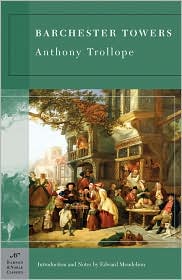 eed, follow his own advice, filling the ending of this delightful social satire with all the “sweetmeats” any reader could desire. Between the introduction and conclusion are so many moments of wry humor, genuine thoughtfulness, and satisfying come-uppances that the extra sweetness at the end is actually a bonus. In this second of the Chronicles of Barsetshire, published in 1857, Trollope continues the story of Mr. Septimus Harding, the gentle and unambitious clergyman who, in The Warden (1855), resigned his appointment as warden of Hiram’s Hospital for the poor and became the vicar of a small church, living frugally above a chemist’s shop. His daughter Eleanor, who married reformer John Bolt at the end of The Warden, is now a widow with a small son–and considerable inheritance.
 ceding volume of this edition of Dr. Thorne, the third novel in the Chronicles of Barsetshire, establishes the characters and conflict and takes the reader up to the turning point of the novel, the death of Sir Roger Scratcherd. This volume resolves the novel’s action and conflicts in the traditions of the Victorian melodrama.
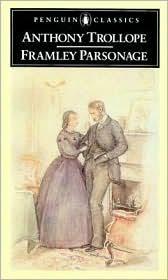 f the Chronicles of Barsetshire, Framley Parsonage (1861) is a gentle novel filled with memorable characters, including many characters from The Warden, Barchester Towers, and Doctor Thorne. Mark Robarts, a young vicar with a devoted wife, has a comfortable situation at Framley Parsonage on the estate of the indomitable Lady Lufton. Her son, now Lord Lufton, had been a friend of Mark Robarts at school, and it was their friendship which resulted in Mark’s position. Mark, though conscientious in his duties and grateful for his situation, is ambitious, however, anxious to expand his horizons beyond Framley.
 incisive look at love, money, and marriage, this 1864 novel is the fifth of Anthony Trollope’s six Barsetshire novels, with some of his best characters. Lily Dale, somewhat reminiscent of Jane Austen’s women, lives with her widowed mother and sister Bell in the Small House on her uncle’s estate. Both girls are of marriageable age, though they have no fortunes, and as the novel develops, the reader sees the extent to which marriage in Victorian England is often a business transaction, negotiated by families to ensure their daughters’ welfare and continuing standard of living. Because Lily and Bell have no fortunes, their courtships become the primary vehicle through which Trollope examines the contrasts between marriages for love and marriages for convenience.
 Other subplots continue this money/marriage theme. Johnny Eames, a young London clerk, loves Lily to the same degree that she loves Adolphus Crosbie, but he has made a rash promise to marry Amelia Roper, the daughter of his boarding house owner. Marriage to Johnny would greatly improve Amelia’s way of life. As the fates of Lily, Bell, Adolphus Crosbie, Lady Alexandrina, Johnny Eames, Amelia Roper, and their parents and friends intertwine, Trollope depicts a cross-section of society, their attitudes toward love and marriage, and the economic impact of marriage. Minor characters reveal their attitudes toward work and their employers, and Trollope uses these to show sly parallels between marriage and work.