Feed on
Posts
Comments

“Basil needs this war. He’s not suited to peace.”

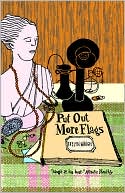
Basil Seal, familiar to readers of Black Mischief (1932) as the man hired to become the ruler of an African nation and to modernize it, has returned to England, his ludicrous efforts at modernization for naught. It is the autumn of 1939 (in this 1942 novel), just as war is breaking out, and Basil, one of the “bright, young things” on whom Waugh casts his satiric eye and biting wit, is bored. Penniless, he accepts his sister Barbara’s suggestion to help her to place urban children with rural families to protect them from the incipient bombings. Soon he has turned this in to a profitable business – country house residents are more than willing to pay Basil NOT to bring three especially monstrous children, to live with them.
Strong on character, grim humor, and satire, and short on overall plot, Waugh has created in this novel characters who represent the worst of upperclass young people – their shallow interests, indifferent education, frivolous behavior, lack of long-term goals, and seeming absence of any values except pleasure. Basil has had a long affair with Angela Lyne, but dallies with other women. Angela’s cuckolded husband Cedric enlists in the war effort, while she, lonely, turns to drink. Ambrose Silk, half-Jewish and openly gay, works to establish a literary magazine until he runs afoul of the censors (in the person of Basil). Two writers, Parsnip and Pimpernel, reputed to have been modeled on W. H. Auden and Christopher Isherwood, run off to the States to avoid the war completely.
As the novel moves from autumn, 1939, to the summer of 1940, when the mobilization is fully underway, Waugh skewers the naivete of his subjects and their universal desire to use the war to get ahead. None of them take the war seriously, nor do they realize that the very fabric of their country is at stake. Basil and friends want to be among “the hard-faced men [of 1919] who did well out of the war.” Image is more important than reality, which they seem determined to ignore.

The last of Waugh’s satiric novels (since his later novels become far more serious), this one is full of ironic humor directed at the (usually) wealthy young people who allow life to happen to them, assuming that they will always be able to make lemonade from lemons. In the course of the novel, all will come to new understandings, and when France falls, the scene is set for reversals and revelations. Fun to read and historically important for the attitudes it records among this group, Put Out More Flags is classic Waugh satire.

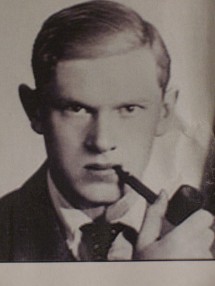
Notes: The author’s photo as a young man appears on Ox Barrio: http://iki7.wordpress.com/

Also reviewed here:  VILE BODIES,     BRIDESHEAD REVISITED
PUT OUT MORE FLAGS
REVIEW. Classic Novel, England, Humor, Satire, Absurdity
Written by: Evelyn Waugh
Published by: Back Bay Books
Edition: Reprint
ISBN: 978-0316216425
Available in: Ebook Paperback

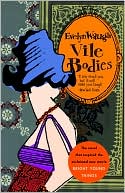
Evelyn Waugh–VILE BODIES

“Faster, faster!”

Focused on the “bright, young things” whose frantic pursuits of pleasure led to constant and ever more frivolous parties in the years leading up to World War II, Vile Bodies offers a satiric look at every aspect of upper class British society. From the hilarious opening chapter, in which an assortment of British travelers is crossing the Channel from France during especially rough weather, through innumerable parties, dances, weekend visits to country houses, automobile races, airplane trips, a movie set, and ultimately, “the biggest battlefield in the history of the world,” Waugh skewers his characters and their values (or lack of values) and, in the process casts a jaundiced eye on society as a whole.

Adam Fenwick-Symes, an author living on the largesse of his friends, has been courting wealthy Nina Blount, and their blasé, back-and-forth relationship serves as the loose framework for the novel, which is more a collage of pitch-perfect scenes than it is an organized story. Mrs. Melrose Ape, an evangelist “who had no beard to speak of”; Walter Outrage, “last week’s Prime Minister”; Lady Throbbing and her sister Mrs. Blackwater, whose youthful portrait set a record for rock-bottom prices at Christie’s; Miles Malpractice, Lady Circumference, and a host of other absurd characters populate the novel and keep the novel moving smartly, though not in a straight narrative line. Gradually, as war draws closer and the characters remain resolutely oblivious, the humor darkens, and when war is finally declared, the shock is all the greater because the Prime Minister himself seems not to have known about it.

Waugh’s wit, seen in his sparkling but often mordant dialogue, his inclusion of wicked gossip columns penned by Mr. Chatterbox, his imitations of high flown jargon, and his observations about “progress,” as illustrated by the motorcar and airplane, keep the reader constantly amused. At the same time, Waugh’s preference for the traditional and the civilized over the new and the vulgar is obvious. When the final chapter, the ironically titled “Happy Ending,” is reached, the scene takes place on a battlefield in France, where several familiar characters resolve some of the unfinished business of Waugh’s satire and re-emphasize the ludicrous behavior of so many of Waugh’s people.

Though the characters are superficial and their behavior even more so, as one would expect in a satire, Waugh manages to keep the reader’s interest high through his rapid changes of focus and scene and his keen observations of society in the years just prior to the war. Amazingly, this book was published in 1930, ten years before World War II actually took place, attesting to Waugh’s prescience about where the country was indeed headed and where the biggest battlefield would lie.

Notes: The author’s military photo appears on http://www.telegraph.co.uk

The recruiting poster for the RAF appears on http://en.wikipedia.org

Also reviewed here:  PUT OUT MORE FLAGS, BRIDESHEAD REVISITED

“Christ: the Miss Lonelyhearts of Miss Lonelyhearts.”

“Miss Lonelyhearts” is the 26-year-old son of a Baptist preacher, working in New York in 1933 as the writer of a gossip column. A sensitive person, he reads thirty or so traumatic letters from readers every day, ranging from women with too many children and abusive husbands, to people who have no idea where their next meal will come from, and he must offer some sort of hope to each one. Shrike, a features editor, is his antithesis, a nihilist who mocks Miss Lonelyhearts’s Christian faith, every other philosophy which might offer hope, and Miss Lonelyhearts’s every attempt to escape from the sadness of his life.Sex and alcohol do not help, and Miss Lonelyhearts gradually descends into obsessive behavior, hypochondria, and religious fanaticism while still trying to help his readers, several of whom he meets in person.

Though the novel is often described as having dark humor, its emotional power is so overwhelming that few people will find much to laugh about here. Shrike, whose name is both satiric and symbolic (shrikes are birds which impale their prey on thorns, much as a butcher hangs meat on a hook), is bent on destroying Miss Lonelyhearts and what he represents (the search for hope), and at a party Shrike has all the guests read aloud and mock the letters from Miss Lonelyhearts’s desk–about paralyzed children, a teenager without a nose, suicidal mothers, and exhausted caregivers.

Tautly constructed with overlapping motifs and symbols, the novel is firmly rooted in the Depression and the edge-of-disaster lives of ordinary Americans. As Miss Lonelyhearts becomes drawn into his readers’ heart-rending problems, he tries to become a rock, emotionally and symbolically, and as he examines the sadness around him, he also begins to think that God has sent him to perform the kinds of miracles that God performs. West’s satiric attitude toward religion here and the use of Miss Lonelyhearts as a Christ-figure, filled with agony and passion, also suggest some sort of satiric Christian martyrdom, but the ending, when it comes, is shocking and unexpected.

Obviously emotional and filled with cynicism and despair, the novel is the consummate example of Depression literature, firmly establishing the attitudes and philosophies that prevailed as people tried to deal with events so overwhelming that no philosophy, other than nihilism, could fully explain them. West’s focus on themes and philosophies and the symbols which illuminate them prevents this brilliant but often heart-rending novel from descending into melodrama and pathos.

Photos, in order: The author’s photo appears on http://www.nndb.com/people/679/000112343/


“Job hunters line up outside Newark City Hall in New Jersey on April 3, 1935, to apply for a chance to wield pick and shovel 10 hours a day for $4 to excavate the City Canal Railway.”  Photo and quotation from http://www.edweek.org/ew/articles/2009

Newland Archer: “a man to whom nothing was ever to happen.”

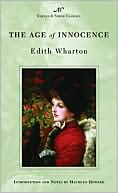
Newland Archer, the protagonist of this ironically entitled novel set in the late nineteenth century, is a proper New York gentleman, and part of a society which adheres to strict social codes, subordinating all aspects of life to doing what is expected, which is synonymous with doing what it right. As the author remarks early in the novel, “Few things were more awful than an offense against Taste.” Newland meets and marries May Welland, an unimaginative, shallow young woman whose upbringing has made her the perfect, inoffensive wife, one who knows how to behave and how to adhere to the “rules” of the society in which they live.

When Newland is reintroduced to May’s cousin, Countess Ellen Olenska, who has left her husband in Europe and now wants a divorce, he finds himself utterly captivated by her freedom and her willingness to risk all, socially, by flouting convention. Both Ellen and Newland, however, are products of their upbringing and their culture, and they dutifully resist their feelings because of their separate social obligations. Various meetings between them suggest that their feelings are far stronger than what is obvious on the surface, and the question of whether either of them will finally state their feelings pervades the novel.

Author Edith Wharton creates an exceptionally realistic picture of New York in the post-Civil War era, a time in which aristocrats of inherited wealth found themselves competing socially with parvenus, and social rules were changing. Her ability to show the conflict between a person’s desire for freedom and his/her need for social acceptance is striking. As the various characters make their peace with their decisions–either to conform to or to challenge social dictates–the novel achieves an unusual dramatic tension, subtle because of its lack of direct confrontation and powerful in its effects on individual destinies. This is, in fact, less an “age of innocence” than it is an age of social manipulation.

Wharton herself manipulates the reader–her best dialogues are those in which the characters never actually participate–conversations that they keep to themselves, confrontations which they never allow themselves to have, and resolutions which happen through inaction rather than through decision-making. Filled with acute social observations, the novel shows individuals convincing themselves that obeying social dictates is the right thing to do. Though the novel sometimes seems to smother the reader with its limitations on action, Age of Innocence brilliantly captures the age and attitudes of the era

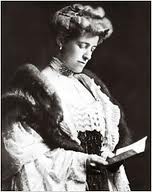
Notes: The author’s photo is from

http://topics.nytimes.com/topics/reference/timestopics

Also reviewed here:  SUMMER THE HOUSE OF MIRTH,     GLIMPSES OF THE MOON

“Doesn’t our being together depend on what we get out of people?”

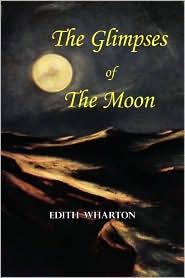
Set in the aftermath of World War I, this study of 1920s society, with its elements of social comedy and satire, follows Nick Lansing and his wife Susy, through the highest levels of European society. Though they have the credentials to be accepted, they are financially limited, always unsure where their next funds will come from. Nick and Susy have married for love, with the understanding that if either of them finds a more financially stable suitor with a long-term future, that each is free to dissolve the marriage. They spend their honeymoon year living in the empty European homes of their more affluent friends.

When they stay in the palazzo of Ellie Vanderlyn in Venice, early in the novel, Susy receives a note from Ellie asking her to mail four letters, one each week, to Ellie’s absent husband Nelson, so that he will not know she is away. Confronted with this thorny problem, which she has been sworn not to reveal to Nick, Ellie agrees, knowing no way around the problem, since she and Nick depend on Ellie’s hospitality.

It reveals no plot surprises to say that Susy’s deception eventually undermines her superficial but loving relationship with Nick. Wounded by Susy’s lack of trust and her deceit, Nick needs to get away. The separate comings-of-age of Nick and Susy occupy the bulk of the novel as each, still sharing the extravagant lifestyles of their friends, considers whether to honor the agreement to let the other person go if someone “better” comes along.

Author Edith Wharton presents their dilemmas clearly–their desire to experience the “good life,” their belief that they deserve to do so, the lengths they are willing to go to make it possible, the conflicts they face between their latent ethical sense and the realities of their lives, the belated discovery that each has the potential to support himself/herself, and the growing awareness that life offers many rewards that are not financial.

Filled with trenchant observations about society and the frivolous behavior of those committed to remaining part of it, Wharton’s novel draws attention to the conflict between real feelings and pretensions and between real goals and social expectations, presaging the novels of Fitzgerald. A sophisticated and elegantly written study of aristocratic society in the twenties in Europe, this is not Wharton’s most thoughtful novel, but it one of her best observed.

Note: The author’s photo appears on http://sarah-ball.tumblr.com

Also reviewed here:  SUMMER,   THE HOUSE OF MIRTH,  and  AGE OF INNOCENCE

GLIMPSES OF THE MOON
REVIEW. Classic Novel, Literary, US Regional
Written by: Edith Wharton
Published by: CreateSpace Independent Publishing Platform (April 22, 2014)
Date Published: 04/22/2014
Edition: Reprint.
ISBN: 978-1499216677
Available in: Ebook Paperback Hardcover

« Newer Posts - Older Posts »